On the evening of September 16, 2025, 35-year-old Daniel Navarro Dala-uit made a fateful, heartfelt decision. After a week of hard work at a construction site in Maguindanao del Norte, far from his home, he joined his co-workers for a few celebratory drinks. Filled with a longing to see his family, he decided he couldn’t wait another day as planned. He mounted his black motorcycle and set off into the night, intending to surprise his wife, Norina, and their children in Isulan, Sultan Kudarat. That journey home, born from love and anticipation, would be his last.
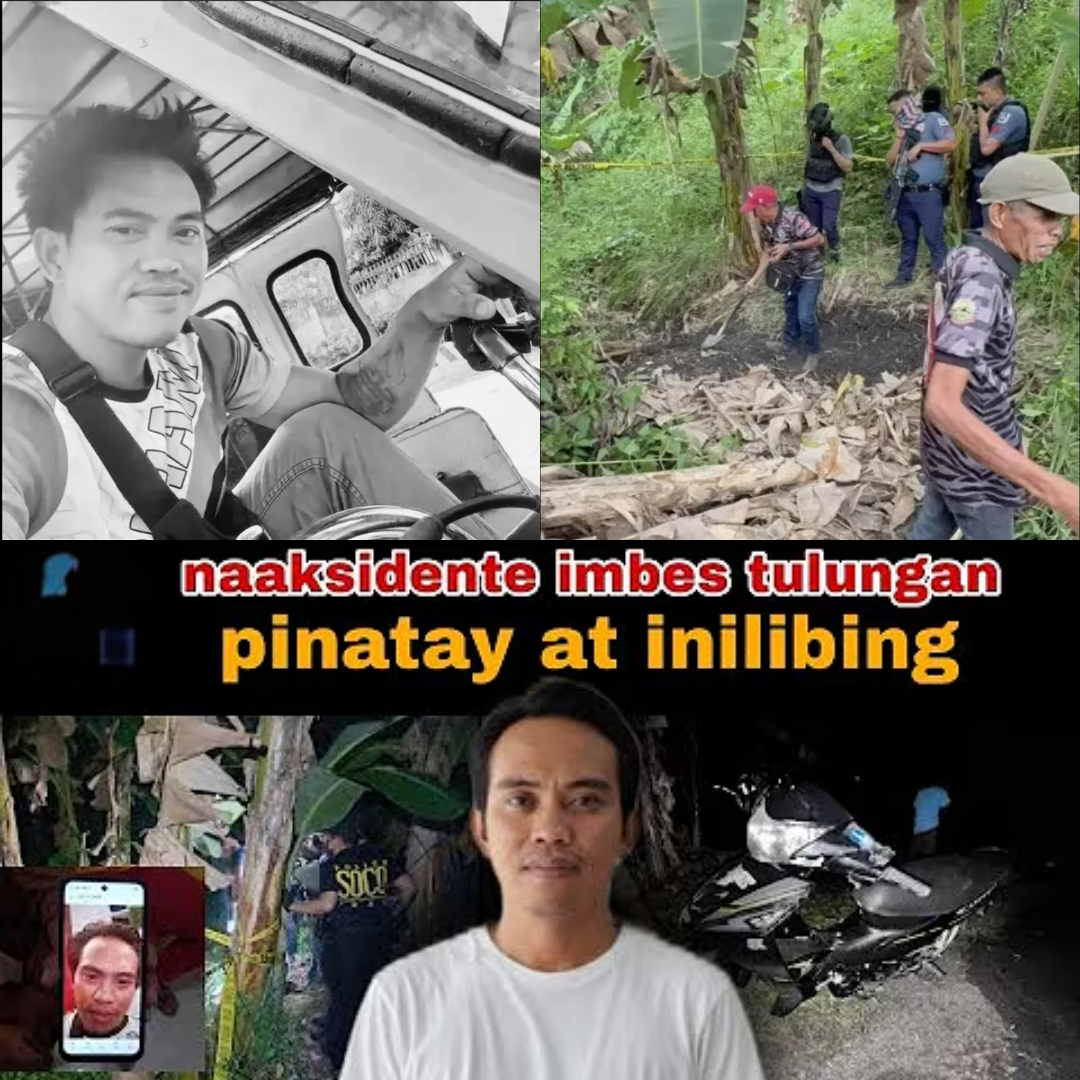
Daniel was the picture of a hardworking Filipino father. By trade, he was a construction worker, but his drive to provide for his family was relentless. He also toiled as a farmer and ran a side business selling second-hand vehicles and pedicabs. To those who knew him, he was a kind, responsible, and simple man, whose life revolved around his wife and children. He was in constant contact with them, so when he failed to arrive home and his phone went unanswered, Norina’s worry quickly turned into a frantic panic. For days, she posted his photo on social media, her desperate pleas for information echoing into a terrifying silence.
That silence was brutally broken on September 20. A concerned citizen in the remote village of Barangay Bito, Datu Odin Sinsuat, contacted the local police with a disturbing tip: they had witnessed a group of men burying a large, yellow sack in a secluded banana plantation. Police and Scene of the Crime Operatives (SOCO) rushed to the location, a quiet area known as Sitio Mapayapa. The freshly disturbed earth was easy to spot. As they began to dig, it didn’t take long to confirm the citizen’s report. Inside the sack was the decomposing body of a man, his limbs bearing the deep, gaping wounds of a bolo or machete. Through the photos Norina had circulated, he was quickly identified as the missing Daniel Dala-uit.
The investigation, fueled by the local witness, moved with remarkable speed. The community pointed police towards a nearby house belonging to a man known only by his alias, “Palao.” When investigators arrived at his residence, they found the crucial evidence that sealed his fate: Daniel’s stolen black motorcycle, his identification cards, and an improvised shotgun. Faced with the irrefutable proof, Palao immediately confessed to the horrific crime and implicated five accomplices, all local farmers from the same barangay: “Tatang,” 28; “Joko,” 25; “Ato,” 27; “Ronnie,” 27; and “Guido,” 22. By the time police had their names, the five men had already fled and are now fugitives.
Palao’s confession revealed a story of shocking and predatory brutality. He claimed that he and his five friends had been together when they stumbled upon Daniel, who had crashed his motorcycle on the dark, rural road, likely due to being intoxicated from his earlier celebration. Daniel was injured, alone, and vulnerable. But instead of rendering aid, the six men saw a golden opportunity for profit. They made a cold-blooded pact not to help the victim, but to murder him.
Their motive was pure greed. They planned to kill him, take whatever cash he had on his person, and sell his motorcycle for parts, splitting the proceeds among themselves. According to Palao, they took their bolos and hacked the injured Daniel to death. They then stuffed his body into the yellow sack and carried him deep into the banana grove, burying him in a shallow grave where they thought he would never be found.
The primary suspect, “Palao,” is now in custody at the Sinsuat Municipal Police Station, charged with robbery with homicide. A massive manhunt is underway for his five accomplices, who face the same charges. Following their Muslim faith and traditions, the family of Daniel Dala-uit laid his body to rest immediately, their grief compounded by the savage nature of his death. The story is a chilling testament to the fragility of life, where a father’s simple, loving journey home was cut short by the sheer barbarity of a group of men who, when faced with a choice between being Good Samaritans and being killers, chose the latter without hesitation.
News

The Toxic Price of Rejection: OFW’s Remains Found in a Septic Tank After Coworker’s Unwanted Advances
South Korea, a hub for Asian development, represents a major aspiration for many Filipino Overseas Workers (OFWs), who seek employment…

The Final Boundary: How a Starving Tricycle Driver Exacted Vengeance at a Homecoming Party
On November 28, 2009, in Angat, Bulacan, a lavish homecoming party for two returning travelers ended in a catastrophic tragedy….

The 12-Year Ghost: Why the Woman Behind Vegas’s ‘Perfect Crime’ Chose Prison Over Freedom
On October 1, 1993, at the Circus Circus Casino in Las Vegas, a crime unfolded in minutes that would be…

The Fatal Soulmate: How a British Expat’s Search for Love Online Became a $1 Million Homicide Trap
In 2020, in a comfortable apartment overlooking the city of Canberra, Australia, 58-year-old British expatriate Henrick Collins lived a successful…
The Cost of Negligence: Firefighter Ho Wai-Ho’s Tragic Sacrifice in Hong Kong’s Inferno
The catastrophic fire that engulfed seven towers of the Wang Fook Court residential complex in Hong Kong was a disaster…

The KimPau Phenomenon: How “The A-List” Sparked Queen Kim Chiu’s Fierce Career Revolution
The Filipino entertainment industry is currently witnessing a stunning career metamorphosis, all thanks to the sheer, raw power of the…
End of content
No more pages to load