
THE GILDED CAGE OF STELLENBOSCH
The De Zalze Winelands Golf Estate in Stellenbosch, South Africa, is known for its beauty and security.
In 2014, the Van Breda family—patriarch Martin, mother Teresa, and their three children: Rudy, Henri, and Marlee—returned to South Africa after eight years in Australia, seeking to be closer to family and friends.
Their comfortable life in the secure estate was shattered on the morning of January 27, 2015.
Police arrived at their home to find three family members—Martin, Teresa, and their eldest son, Rudy—had tragically lost their lives, while the two younger children, Henri and Marlee, were severely harmed.

Henri, 20, was the one who called emergency services, three hours after the incident occurred. When paramedics arrived, they found him outside, smoking a cigarette, and strangely calm. He claimed a masked man had attacked his family with an axe.
Initial impressions were of a random, violent home invasion. However, investigators soon found troubling inconsistencies that made the case far more sinister.
There was no sign of forced entry; the electric fence surrounding the estate was intact, and security guards reported no suspicious activity. The scene pointed strongly to an inside job.
The victims’ bodies were found on the second floor.
Martin, Teresa, and Rudy had suffered catastrophic head injuries from an axe. Rudy, 22, showed numerous defensive wounds, with the forensic team noting he had fought for his life before succumbing to the blows.
Teresa and Rudy’s body were outside the bedroom, while Martin and Rudy were found in a bloody scene inside.
Marlee, the youngest, sustained severe head injuries but miraculously survived the brutal assault. Henri was the only member to emerge with minor, self-inflicted wounds.
THE THREE-HOUR DELAY
The most damning inconsistency was Henri’s delay in calling emergency services.
He claimed he had blacked out, but his phone records showed he tried to contact his then-girlfriend and then searched for local emergency numbers, taking three hours before finally making the call.
Investigators noted the extreme calmness in his voice during the 911 recording—an unnatural response for someone who had just witnessed the slaying of his immediate family. This led authorities to open a homicide case, naming Henri as the primary suspect.
Investigators pieced together Henri’s life. Unlike his successful older brother, Rudy (a math and engineering student), Henri was the “black sheep.”
He had dropped out of his physics course in Australia and returned home, living off a family allowance while allegedly struggling with substance abuse.
The evidence suggested a motive rooted in financial desperation and rage. Martin Van Breda, fed up with Henri’s drug use, had reportedly threatened to cut off his inheritance and allowance. This pressure, compounded by his alleged substance dependence, provided a motive for the outburst.
THE COURTROOM DRAMA
In June 2016, over a year after the incident, an arrest warrant was issued, and Henri surrendered to authorities. His trial began in April 2017, where he pleaded not guilty, maintaining his story of the masked assailant.
The prosecution, led by Susan Galloway, systematically dismantled his defense. A blood spatter expert refuted Henri’s account, proving the direction of the blood was inconsistent with his description of the sequence of events.
In the most dramatic moment of the trial, Galloway handed Henri the axe used in the attack and demanded he demonstrate how the “masked man” held and swung the weapon. His subsequent motions were used by the prosecution to show his familiarity with the assault.
Forensic experts also testified that the wounds on Henri’s body were superficial and self-inflicted, supporting the theory that he staged the scene to appear as a victim. The prosecution argued Henri used the three-hour delay to clean up and fabricate his story.
After a two-year trial, Judge Siraj Desai found Henri van Breda guilty of three counts of life-taking (his father, mother, and brother), one count of attempted life-taking (his sister Marlee), and obstruction of justice.
In June 2018, Henri was sentenced to three consecutive life sentences plus an additional 15 years for the attempted life-taking of his sister Marlee, with the judge denying parole eligibility. The ruling ensured that Henri, who destroyed his family for wealth, would spend his life incarcerated.
News

The Toxic Price of Rejection: OFW’s Remains Found in a Septic Tank After Coworker’s Unwanted Advances
South Korea, a hub for Asian development, represents a major aspiration for many Filipino Overseas Workers (OFWs), who seek employment…

The Final Boundary: How a Starving Tricycle Driver Exacted Vengeance at a Homecoming Party
On November 28, 2009, in Angat, Bulacan, a lavish homecoming party for two returning travelers ended in a catastrophic tragedy….

The 12-Year Ghost: Why the Woman Behind Vegas’s ‘Perfect Crime’ Chose Prison Over Freedom
On October 1, 1993, at the Circus Circus Casino in Las Vegas, a crime unfolded in minutes that would be…

The Fatal Soulmate: How a British Expat’s Search for Love Online Became a $1 Million Homicide Trap
In 2020, in a comfortable apartment overlooking the city of Canberra, Australia, 58-year-old British expatriate Henrick Collins lived a successful…
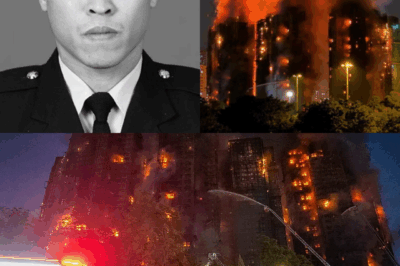
The Cost of Negligence: Firefighter Ho Wai-Ho’s Tragic Sacrifice in Hong Kong’s Inferno
The catastrophic fire that engulfed seven towers of the Wang Fook Court residential complex in Hong Kong was a disaster…

The KimPau Phenomenon: How “The A-List” Sparked Queen Kim Chiu’s Fierce Career Revolution
The Filipino entertainment industry is currently witnessing a stunning career metamorphosis, all thanks to the sheer, raw power of the…
End of content
No more pages to load