When Anthony “Tony” Gilcist left behind his life in London, he wasn’t just chasing sun and sea. He was chasing peace. A bus driver, a baker, and a government employee in his younger years, Tony worked hard but never seemed to earn enough. Diving was his escape, a passion that eventually led him across the world to the Philippines. And when he discovered Malapascua in Cebu, with its crystal waters and vibrant diving culture, he knew he had found more than a destination—he had found a home.
In the early 2000s, Tony first visited the Philippines with his brothers. The island left such a deep impression on him that he returned years later, determined to build a life there. With the help of a Filipino business partner and his own modest savings, he founded Fish Bodies, a dive shop that quickly became both a business and a community hub. Beyond diving lessons and tours, the shop also offered equipment and island excursions. For Tony, this wasn’t just a livelihood. It was the realization of a dream.
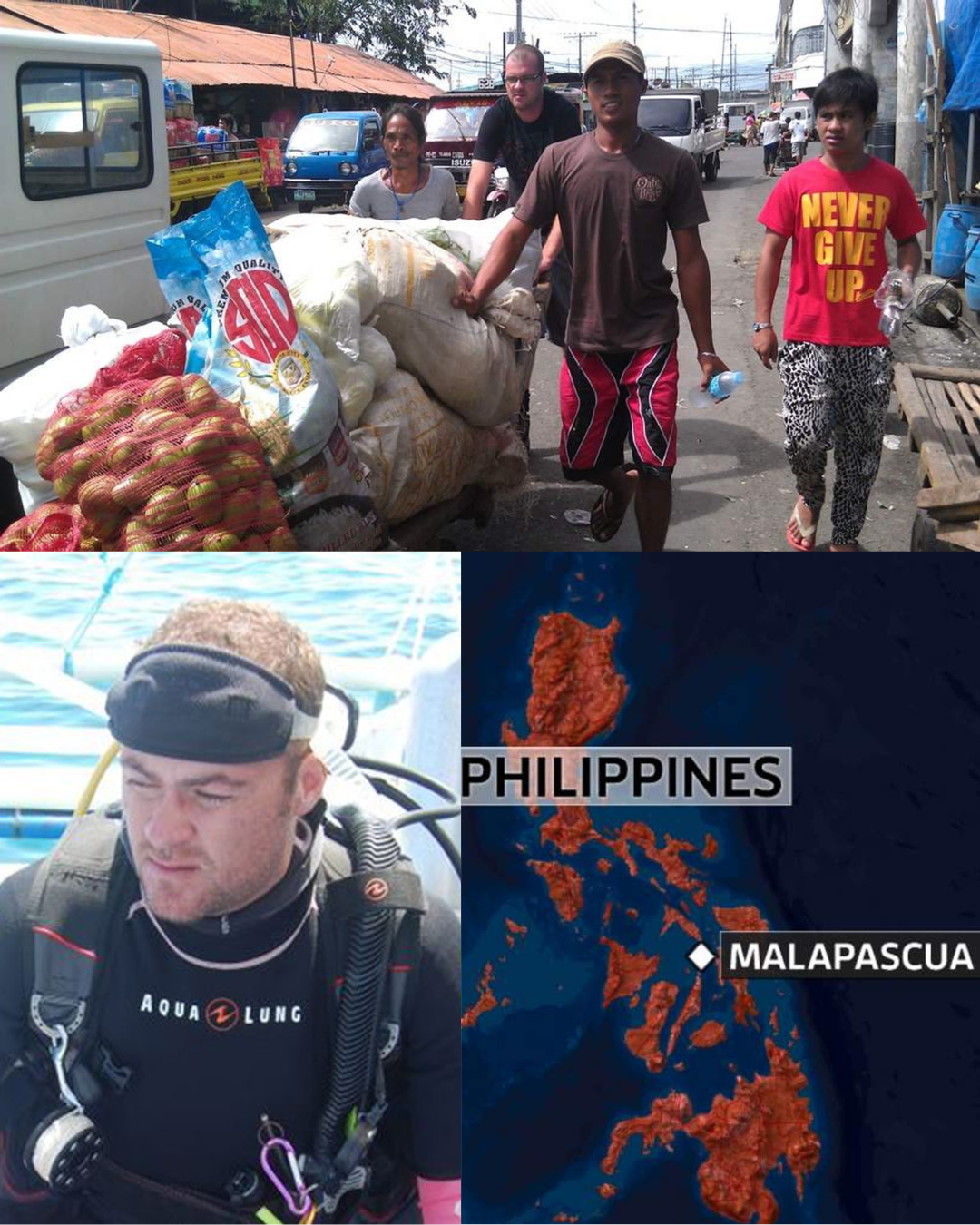
But paradise was not without struggle. Tony had to adjust to life in a foreign country—new food, new customs, and the challenge of starting from scratch. Still, he persevered, and over time, Malapascua embraced him as one of its own. Locals remembered him as kind, generous, and humble, a man who never raised his voice and treated everyone with respect.
His reputation as a community hero only grew during Typhoon Yolanda. While the storm devastated Cebu, Tony was on the frontlines of relief efforts. He ferried evacuees by boat, spent his own money on food and medical supplies, and when his funds ran out, he turned to social media to raise more. Locals vividly recall images of him pushing carts filled with rice and vegetables to feed hungry families. His selflessness made him a beloved figure, a foreigner who gave when others turned away.
Yet just months later, tragedy struck. On April 21, 2014, Tony was shot dead outside his dive shop. Six bullets tore into his body—four in the chest and two to the head. It was a brutal killing, one investigators later described as “overkill,” suggesting not just murder but deep personal animosity.
News of his death spread quickly, reaching his family in the United Kingdom. His brothers, James and Stephen, flew to Cebu to confirm his body, devastated that the man who had found so much happiness abroad had met such a violent end. They were also dismayed by the slow progress of the investigation, accusing authorities of neglect and indifference. To them, Tony had given everything to Cebu, yet in his death, no one seemed willing to speak up or demand justice.
Speculation swirled around motives. Some believed rival business owners resented Tony’s success. Others whispered about romantic entanglements with a young Cebuana, Early Zoilo, who was not only his partner in life but also his business co-owner. Theories abounded, but the investigation eventually narrowed in on one suspect: Melchor Alciso Jr., a security guard who had once been employed at Tony’s shop.
Alciso, a widower with four children, was well-liked in his hometown. Neighbors described him as kind and hardworking, making his arrest shocking to many. But evidence mounted against him. Forensic reports tied his service firearm—a .38 caliber revolver—to the bullets that killed Tony. Witnesses reported hearing heated arguments between the two men, particularly over Alciso’s repeated lateness and suspected drinking on the job.
According to accounts, Tony had finally decided to terminate Alciso’s employment. On the morning of the murder, an argument escalated. Witnesses claimed Tony, frustrated with the guard’s behavior, asked him to leave for good. Hours later, the gentle British diver lay dead outside the very business he had built.
The case left the community divided. Some believed Alciso was unfairly scapegoated by authorities eager to close the case. Others saw the evidence as clear and damning. Tony’s brothers, meanwhile, pushed for answers, though they remained unsatisfied with the lack of transparency and speed.
Ultimately, Tony’s remains were cremated, and his ashes were scattered in the waters of Malapascua—the place he had come to love as his second home. His dive shop, Fish Bodies, remains in operation, though it is unclear who owns it now.
Tony’s story is both inspiring and heartbreaking. He was a man who traded the grind of London for the peace of Cebu, who gave freely to others, and who embraced a culture and people not his own. But his life ended in violence, raising painful questions about justice, trust, and the darker undercurrents of paradise.
As Malapascua’s waves continue to crash against its shores, Tony’s memory lingers—of a gentle giant who came seeking peace, only to meet his end in betrayal and bloodshed.
News

The Toxic Price of Rejection: OFW’s Remains Found in a Septic Tank After Coworker’s Unwanted Advances
South Korea, a hub for Asian development, represents a major aspiration for many Filipino Overseas Workers (OFWs), who seek employment…

The Final Boundary: How a Starving Tricycle Driver Exacted Vengeance at a Homecoming Party
On November 28, 2009, in Angat, Bulacan, a lavish homecoming party for two returning travelers ended in a catastrophic tragedy….

The 12-Year Ghost: Why the Woman Behind Vegas’s ‘Perfect Crime’ Chose Prison Over Freedom
On October 1, 1993, at the Circus Circus Casino in Las Vegas, a crime unfolded in minutes that would be…

The Fatal Soulmate: How a British Expat’s Search for Love Online Became a $1 Million Homicide Trap
In 2020, in a comfortable apartment overlooking the city of Canberra, Australia, 58-year-old British expatriate Henrick Collins lived a successful…
The Cost of Negligence: Firefighter Ho Wai-Ho’s Tragic Sacrifice in Hong Kong’s Inferno
The catastrophic fire that engulfed seven towers of the Wang Fook Court residential complex in Hong Kong was a disaster…

The KimPau Phenomenon: How “The A-List” Sparked Queen Kim Chiu’s Fierce Career Revolution
The Filipino entertainment industry is currently witnessing a stunning career metamorphosis, all thanks to the sheer, raw power of the…
End of content
No more pages to load