On January 24, 2011, chaos erupted inside a humble ukay-ukay (thrift store) in Palawan. A veterinarian knelt, weeping, cradling the bloodied head of her husband.
Moments before, an unknown assailant had approached him from behind and fired a single, fatal shot. The style suggested a professional hit, an execution.
The victim was Dr. Gerardo “Doc Gerry” Ortega, a man whose life and sudden passing would expose a dark underbelly of corruption involving powerful, wealthy figures desperate to keep their secrets buried.
Doc Gerry was born in Palawan on August 28, 1963, the son of a former mayor. He earned his doctorate in veterinary medicine in 1988 and married fellow veterinarian Patria “Patty” Inocencio the same year. They raised five children.
A devout Catholic and leader in the Couples for Christ community, Ortega began his career in 1988 at the Crocodile Farming Institute (now the Palawan Wildlife Rescue and Rehabilitation Center).
His dedication saw him become director by 1989. He championed the controversial but economically vital crocodile farming project, turning the institute into a top tourist attraction by 2000.
His work extended beyond crocodiles; he assisted Gawad Kalinga with housing projects for Muslim communities. His contributions earned him the “Palaweno of the Year” award in 1996 and “Most Outstanding Veterinarian” in 1998.
Recognizing his potential, many saw politics as Doc Gerry’s destiny. He resigned from the institute and successfully ran for the Palawan provincial board, serving from 2001 to 2004.
It was during his three years in office that Ortega first gained access to documents allegedly proving widespread corruption within the provincial government.
Unlike traditional politicians, Doc Gerry was outspoken, using his position to question government spending and demand transparency regarding taxpayer money. He became the primary critic of then-Governor Mario Joel T. Reyes.
In the 2004 election, Ortega ran for governor against Reyes. His campaign platform centered on transparency, poverty reduction, indigenous rights, and securing the province’s fair share of revenues from the massive Malampaya natural gas project.
He campaigned unconventionally, using a plastic-wrapped jeepney to symbolize his anti-corruption stance. Despite his passionate efforts, he lost the election by 38,000 votes.
Disillusioned, Ortega considered working abroad but found renewed purpose as project director for Bantay Kalikasan Palawan, an environmental foundation.
He pioneered five community-based ecotourism projects, ensuring all profits benefited local communities. “We don’t need to destroy nature to benefit from it,” he stated in 2011. His Iwahig Firefly Watch Tour won a prestigious award in 2010.
To further his advocacy, Doc Gerry turned to the media, launching a radio program called “Ramatak.” It became his platform to champion environmental protection and, more dangerously, to expose corrupt politicians and businessmen.
He fearlessly named mining companies seeking to exploit Palawan, criticized questionable road projects, and called out allegedly compromised officials on the local environmental council.
He relentlessly questioned how Governor Reyes and his family afforded their lavish lifestyle, including million-peso bets at cockfights and extravagant parties, on a governor’s salary. He spoke directly about the alleged misuse of the Malampaya fund, estimated at over a billion pesos.
His fiery broadcasts earned him numerous threats.
On the morning of January 24, 2011, after finishing “Ramatak,” Doc Gerry stopped at an ukay-ukay store around 10:20 AM. While browsing shoes, he was approached from behind and shot execution-style.
Within an hour, thanks to bystanders and nearby firefighters, the suspected gunman, Marlon Recamata, was apprehended. Recamata initially claimed it was a robbery gone wrong, stating Ortega resisted.
This story was immediately dismissed by various organizations and the public. Doc Gerry was known for his simple lifestyle and attire; he wasn’t a likely robbery target. The consensus was swift: this was a politically motivated hit.
The investigation revealed Recamata wasn’t acting alone. CCTV footage captured his arrival at Puerto Princesa airport five days earlier with accomplices Dennis Aranas (lookout) and Armando Noel (coordinator).
Footage from the morning of the incident showed Recamata waiting near the ukay-ukay store for three hours before putting on a white cloth mask, entering the store, and committing the act just minutes later. He was seen fleeing into traffic, pursued by the fire truck that happened to be passing by.
Recamata eventually confessed, implicating his associates. The investigation quickly expanded into a complex web of conspirators.
Armando “Salbakota” Noel, the recruiter and a former bodyguard for an associate of the alleged mastermind, received PHP 150,000. He hired Recamata for the same amount. Recamata recruited Aranas as lookout.
Rodolfo “Bumar” Edrad Jr., a former soldier and alleged hitman group member, acted as the primary coordinator. He claimed the mastermind offered him PHP 500,000 to plan the hit and hire the team.
Edrad sent money to Kinton Pasha, a capitol employee, who gave it to Arturo “Nonoy” Regalado, reportedly close to the mastermind. Regalado instructed Percival Lecias, a photographer whose clients allegedly included the mastermind’s wife, to purchase the weapon.
Lecias bought the .45 caliber pistol from Atty. Romeo Seratubias, a former provincial legal officer working directly under the mastermind. The gun’s serial number confirmed Seratubias as the registered owner.
Another alleged conspirator, Arwin Arandia, claimed he backed out last minute after receiving a down payment from Edrad at the mastermind’s house in Ayala Alabang Village, Muntinlupa.
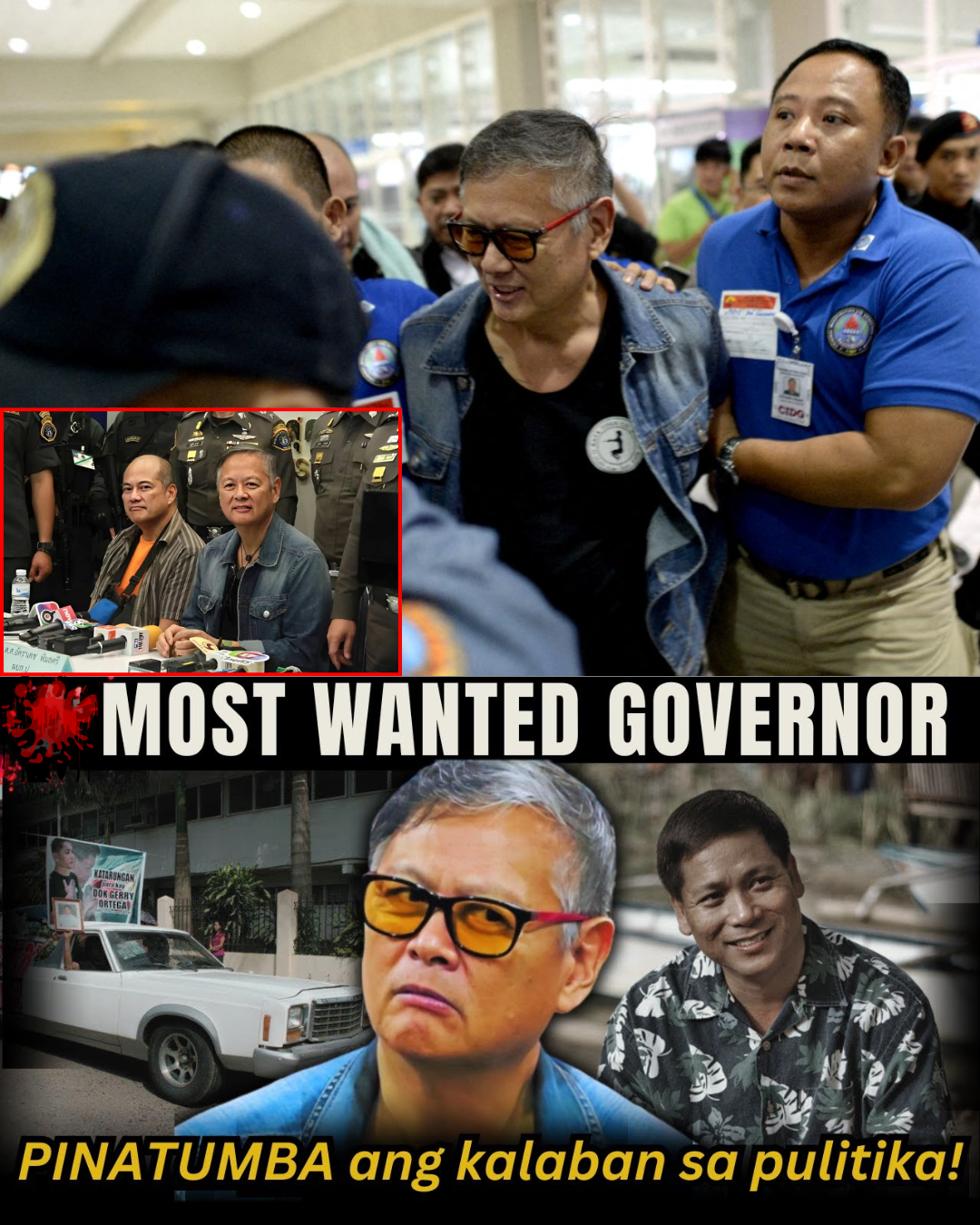
All roads led to one primary suspect: former Palawan Governor Joel T. Reyes, along with his brother, Mario Reyes, the former mayor of Coron. They allegedly wanted Doc Gerry silenced for exposing their alleged corruption, particularly concerning the Malampaya fund.
The legal battle that followed was tortuous. In June 2011, a DOJ panel initially dismissed murder charges against the Reyes brothers, Seratubias, Regalado, Lecias, and another associate, citing insufficient evidence beyond the accomplices’ confessions.
Doc Gerry’s family fought back. His wife Patty filed a motion for reconsideration. Then-Justice Secretary Leila de Lima formed a second DOJ panel to review the case. In March 2012, this new panel reversed the decision, finding probable cause to charge everyone except the associate, former Marinduque Governor Jose Antonio Carrion.
Arrest warrants were issued. Seratubias and Regalado were apprehended or surrendered. Lecias was caught hiding in Pasig City. But the Reyes brothers vanished.
Reports surfaced that they had fled the country on March 18, 2012, using fake passports, allegedly aided by their lawyer, Hermie Aban, who was reportedly on the same flight to Vietnam. Interpol issued Red Notices.
The legal saga continued with bewildering twists. The Court of Appeals (CA) nullified the second DOJ panel’s finding of probable cause, only for that CA decision to be later challenged. Amidst this confusion, Dennis Aranas, a state witness, was found hanging in his jail cell in Quezon City in 2013. While official autopsy results were inconclusive between self-ending or foul play, a second independent autopsy strongly suggested he was assaulted before being choked. The jail director maintained it was a self-ending due to relationship problems.
In May 2013, gunman Recamata was found guilty and sentenced, ordered to pay damages to the Ortega family. Seratubias was granted bail.
Frustrated by the slow pace and legal flip-flopping, the Ortega family launched online petitions and continued public appeals, suspecting the Reyes brothers’ wealth and influence were obstructing justice.
Then, in September 2015, after nearly four years on the run, Joel and Mario Reyes were arrested in Phuket, Thailand, for overstaying their visas. They were deported back to the Philippines to face the murder charges.
Yet, the legal battles persisted. In January 2018, the Court of Appeals again dismissed the murder case against Joel Reyes, ruling the Regional Trial Court had no right to proceed without probable cause as previously determined by the CA. He was released from jail.
However, Joel Reyes faced other legal troubles. In 2017, the Sandiganbayan found him guilty of graft for illegally issuing mining permits while governor, sentencing him to up to six years and barring him from public office. Despite this conviction, he brazenly ran for governor again in 2022. Although he placed second, COMELEC eventually canceled his candidacy in 2023 due to the graft conviction.
Finally, in July 2023, after 12 years of legal turmoil, the Philippine Supreme Court issued a landmark ruling. Reversing the Court of Appeals, the highest court declared there was sufficient evidence (probable cause) to charge Joel Reyes with murder. They ordered the Regional Trial Court to issue a new arrest warrant and proceed with the trial.
As of this recording, Joel Reyes remains at large. His brother Mario was reportedly granted bail. The cases against the other accomplices who did not turn state witness are proceeding, though the earlier acquittals based on the CA’s previous rulings may complicate matters. Dennis Aranas’s passing means his testimony is lost.
The Ortega family, while buoyed by the Supreme Court’s decision, continues their long wait for true justice for the veterinarian, environmentalist, and broadcaster who dared to speak truth to power.
News

The Toxic Price of Rejection: OFW’s Remains Found in a Septic Tank After Coworker’s Unwanted Advances
South Korea, a hub for Asian development, represents a major aspiration for many Filipino Overseas Workers (OFWs), who seek employment…

The Final Boundary: How a Starving Tricycle Driver Exacted Vengeance at a Homecoming Party
On November 28, 2009, in Angat, Bulacan, a lavish homecoming party for two returning travelers ended in a catastrophic tragedy….

The 12-Year Ghost: Why the Woman Behind Vegas’s ‘Perfect Crime’ Chose Prison Over Freedom
On October 1, 1993, at the Circus Circus Casino in Las Vegas, a crime unfolded in minutes that would be…

The Fatal Soulmate: How a British Expat’s Search for Love Online Became a $1 Million Homicide Trap
In 2020, in a comfortable apartment overlooking the city of Canberra, Australia, 58-year-old British expatriate Henrick Collins lived a successful…
The Cost of Negligence: Firefighter Ho Wai-Ho’s Tragic Sacrifice in Hong Kong’s Inferno
The catastrophic fire that engulfed seven towers of the Wang Fook Court residential complex in Hong Kong was a disaster…

The KimPau Phenomenon: How “The A-List” Sparked Queen Kim Chiu’s Fierce Career Revolution
The Filipino entertainment industry is currently witnessing a stunning career metamorphosis, all thanks to the sheer, raw power of the…
End of content
No more pages to load