In the high-stakes, life-and-death world of a Neonatal Intensive Care Unit (NICU), nurses are the frontline guardians of the hospital’s most vulnerable patients. For 30 years, Maria Isabella Gatchalian, a dedicated Filipina registered nurse, was one of those guardians at a Kaiser Permanente hospital in California. She rose through the ranks to become the respected Charge Nurse of the NICU, known for her skill, her leadership, and her unwavering commitment to patient safety.
But in 2019, after three decades of exemplary service, she was unceremoniously fired. The official reason was a single, minor policy violation. The real reason, she would later argue in a landmark lawsuit, was that she was a whistleblower, a persistent voice for safety that her corporate superiors wanted to silence.
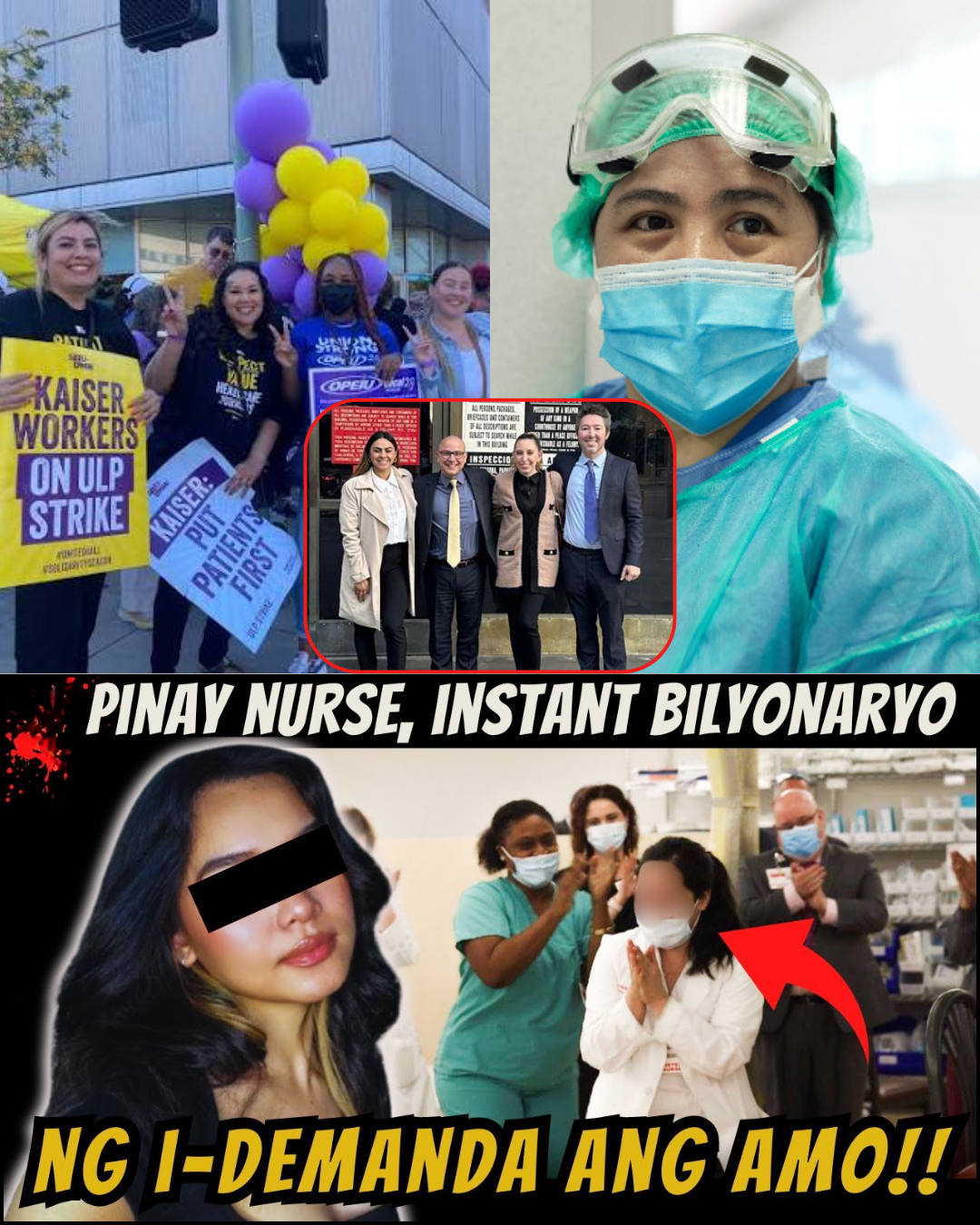
The story of Maria’s battle with the healthcare giant is a powerful and intricate tale of institutional retaliation. It began not with a single incident, but with a pattern of behavior that Maria, as the NICU’s leader, could not in good conscience ignore.
Her job was not just to care for the premature and critically ill infants, but to ensure the entire unit ran safely and efficiently. Over several years, she began to notice and report a series of alarming safety breaches and protocol violations.
In 2016, she reported a staff nurse, Emerita, for falsifying her timecard and, more critically, for entering the sterile NICU without changing her scrubs, a serious breach that could introduce life-threatening infections to infants with fragile immune systems.
In January 2017, she reported a far more alarming incident: the father of a patient had brought a knife into the NICU. When she brought this to her supervisor, Stella Riddle, she was shocked to learn that Riddle was already aware of the situation and had done nothing.
This inaction prompted Maria to escalate her concerns to the NICU Director. The move, while necessary for patient safety, marked the beginning of a relentless campaign of harassment and bullying against her, orchestrated by her now-embittered supervisor, Riddle. The retaliation was both petty and persistent. Riddle began to micromanage her every move, even following her to the bathroom.
In one incident, Riddle waited for her in a hallway to reprimand her for the way her face mask was positioned, even though Maria had a medical exemption at the time for the flu vaccine. When Maria reported this harassment to Human Resources and the hospital’s union, she was met with a dismissive response: Riddle was her superior, and she simply had to follow her orders.
Despite the hostile work environment, Maria continued to advocate for her patients. She reported a severe and dangerous understaffing of nurses in the unit.
She reported an incident where a baby was nearly injured by a falling metal bar from a piece of hospital equipment. She reported nurses for HIPAA violations, for failing to feed an infant, and for guessing at a patient’s vital information instead of properly measuring it.
Each time she spoke up, the retaliation from her supervisor and the resentment from her colleagues grew. The very nurses she was trying to protect began to see her not as a leader, but as a snitch. They formed a group with the explicit goal of recruiting others to undermine her authority.
The breaking point came in June 2019. After suffering a back injury at work, Maria was placed on medical leave by her doctor. While on leave, she received a certified letter. Kaiser Permanente had terminated her employment after 30 years.
The official reason cited was a single photograph, taken by a disgruntled coworker, that showed Maria sitting in a recliner with her feet resting on the side of an infant incubator.
To the hospital, this was a fireable offense, a violation of infection control policies. To Maria and her lawyers, it was a flimsy and transparent pretext. They argued that while the action was a mistake, it was a minor policy violation that, according to the hospital’s own rules, should have resulted in a simple disciplinary action, not termination.
They contended that the real reason she was fired was because she was a persistent and “annoying” whistleblower whose reports on understaffing and unsafe equipment would have cost the hospital money to fix. It was cheaper, they argued, to simply get rid of her.
In 2021, Maria Gatchalian filed a wrongful termination and whistleblower retaliation lawsuit against the multi-billion dollar healthcare corporation. In December 2023, after a lengthy trial, a Los Angeles jury delivered a stunning verdict.
They sided completely with the Filipina nurse, agreeing that she had been the victim of a coordinated campaign of retaliation and that the photo had been used as a pretext to fire her for speaking up about patient safety. The jury awarded her a staggering $41.4 million in damages.
The verdict was a landmark victory, a powerful message sent from a jury that patient safety must always be prioritized over profits, and that the brave nurses who speak up to protect their patients deserve to be protected, not punished. Though the amount was later reduced by a judge to $30.4 million, the message remained clear.
Maria Gatchalian, the veteran nurse who had been unceremoniously discarded, had taken on a goliath and, in the name of the vulnerable infants she had sworn to protect, she had won.
News

The Toxic Price of Rejection: OFW’s Remains Found in a Septic Tank After Coworker’s Unwanted Advances
South Korea, a hub for Asian development, represents a major aspiration for many Filipino Overseas Workers (OFWs), who seek employment…

The Final Boundary: How a Starving Tricycle Driver Exacted Vengeance at a Homecoming Party
On November 28, 2009, in Angat, Bulacan, a lavish homecoming party for two returning travelers ended in a catastrophic tragedy….

The 12-Year Ghost: Why the Woman Behind Vegas’s ‘Perfect Crime’ Chose Prison Over Freedom
On October 1, 1993, at the Circus Circus Casino in Las Vegas, a crime unfolded in minutes that would be…

The Fatal Soulmate: How a British Expat’s Search for Love Online Became a $1 Million Homicide Trap
In 2020, in a comfortable apartment overlooking the city of Canberra, Australia, 58-year-old British expatriate Henrick Collins lived a successful…
The Cost of Negligence: Firefighter Ho Wai-Ho’s Tragic Sacrifice in Hong Kong’s Inferno
The catastrophic fire that engulfed seven towers of the Wang Fook Court residential complex in Hong Kong was a disaster…

The KimPau Phenomenon: How “The A-List” Sparked Queen Kim Chiu’s Fierce Career Revolution
The Filipino entertainment industry is currently witnessing a stunning career metamorphosis, all thanks to the sheer, raw power of the…
End of content
No more pages to load