For years, Romana Didulo lived like countless other immigrants in Canada—quietly, anonymously, and trying to rebuild her life. Born in the Philippines in 1974, she moved to Canada in 1990, adjusting quickly thanks to her Filipino community. At first, her story was that of perseverance: the daughter of professionals, orphaned young, who fought to survive, even admitting she once lived homeless before regaining her footing.
But all of that would change in 2020.
As Canada went into lockdown during the pandemic, Romana turned to the internet. At first, she consumed movies and entertainment like everyone else. But soon she began creating content—angry videos criticizing the Canadian Prime Minister and calling government policies corrupt. Her fiery words resonated with people who were disillusioned and fearful. Quickly, her following grew into the tens of thousands.
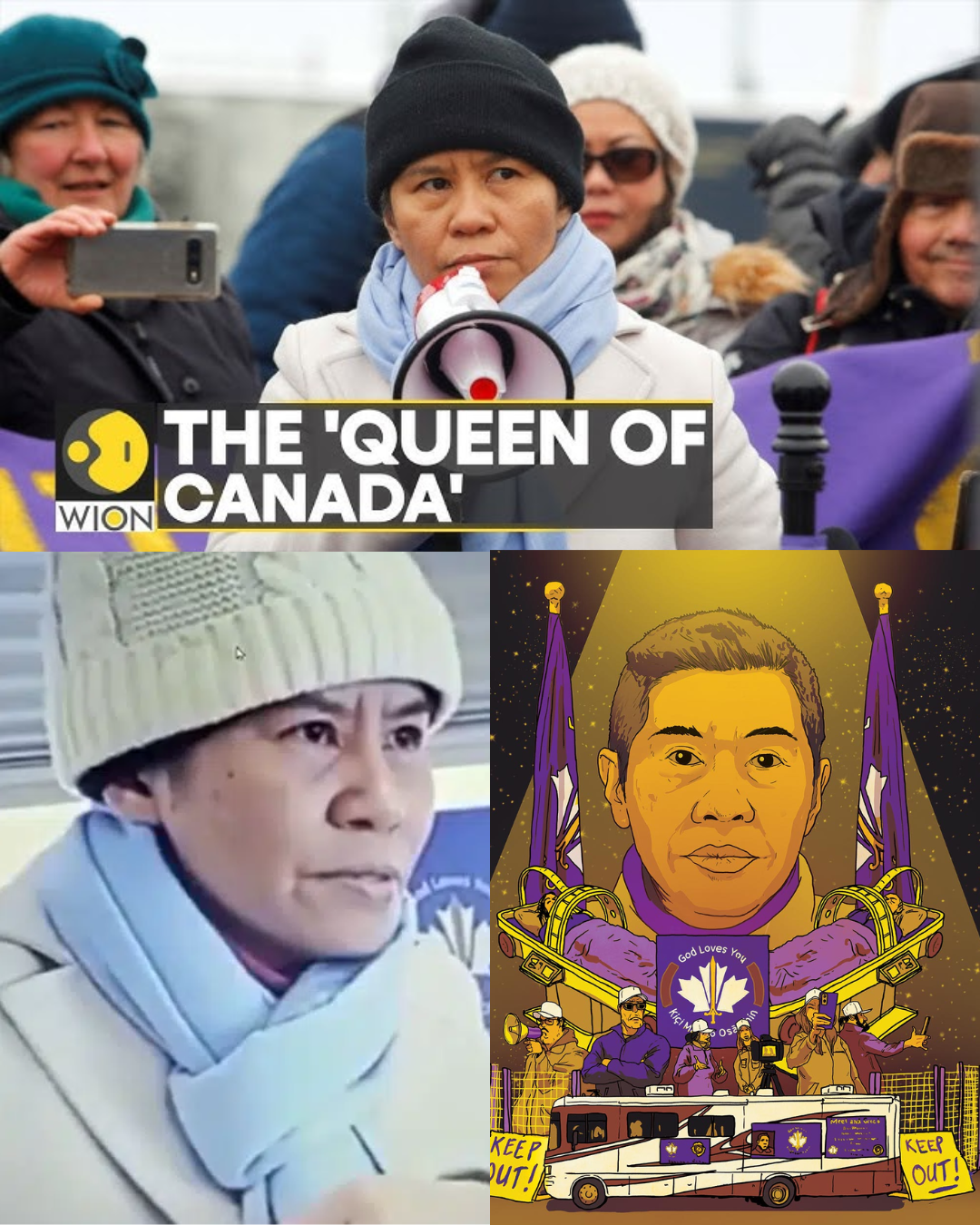
By late 2020, Romana declared more than just opposition to government policies. She urged Canadians to resist paying bills, calling taxes and utilities a scam. She warned against vaccines, convincing followers that medicine was deadly. By November, she had founded a political group—“Canada First, Draining the Swamp in Ottawa”—and proclaimed herself not only its leader, but the rightful Head of State and Commander-in-Chief of the Republic of Canada.
Soon, she went further.
Romana began to describe herself as the true “Queen of Canada.” She claimed divine authority, insisting she had been chosen by higher powers. To some of her supporters, her words carried the weight of prophecy. She promised them freedom from government control, free utilities, even access to “med beds”—alien technology she claimed could heal any illness, regenerate broken bones, even cure cancer. For desperate or disillusioned people, it was hope wrapped in conspiracy.
Her following grew more fanatical. People began traveling across provinces to meet her. Footage showed followers standing in snowstorms, waiting for her convoy, begging for autographs. Families watched in shock as loved ones abandoned responsibilities, refused to pay taxes, and even cut ties with relatives who tried to intervene. For critics, Romana wasn’t a political leader—she was running a cult.
The controversy came to a boiling point in 2023 in the tiny town of Richmound, Alberta.
Richmound was a quiet place, with barely over a hundred residents—many retirees and young couples seeking a simpler life. That peace was shattered when Romana and her group moved into an abandoned school. Locals quickly grew suspicious. Strangers came and went at odd hours. Residents reported being filmed and photographed without consent. Tension grew. Protesters confronted Romana, carrying signs and demanding she leave. Police watched closely, but found no immediate laws being broken.
The town, once known for its tranquility, became a symbol of division. Some saw Romana as a dangerous manipulator; others feared her growing influence. Families begged officials to intervene, but authorities were limited.
Then came the raid.
In late 2023, police executed a search warrant at Romana’s base, storming the abandoned school with K9 units. They seized imitation firearms, ammunition, and electronic devices. Romana and several associates were arrested. Though quickly released on conditions, she was charged with obstruction of justice after allegedly threatening a witness. She now faces possible prison time of up to five years.
Even so, her story isn’t over.
Romana’s case highlights a dangerous modern phenomenon: how disinformation and conspiracy theories can create movements that spiral out of control. Her bizarre claims—that she is not of this Earth, that she was crowned Queen after defeating Chinese troops in underground tunnels, that she was chosen by divine beings—may sound absurd to outsiders. But for her supporters, those words are gospel.
Today, many families remain divided. Some former followers have returned to reality, shaken by how deeply they were drawn in. Others continue to cling to Romana’s vision, insisting she is the rightful ruler of Canada.
The tragedy of Romana Didulo is not just about one woman’s rise and fall. It is about how fear, anger, and desperation can open the door to dangerous beliefs. In a time of uncertainty, she offered simple answers to complex problems—and for many, that was enough.
As Canada grapples with the fallout, one thing is certain: the strange saga of the self-proclaimed Queen is far from forgotten.
News

The Toxic Price of Rejection: OFW’s Remains Found in a Septic Tank After Coworker’s Unwanted Advances
South Korea, a hub for Asian development, represents a major aspiration for many Filipino Overseas Workers (OFWs), who seek employment…

The Final Boundary: How a Starving Tricycle Driver Exacted Vengeance at a Homecoming Party
On November 28, 2009, in Angat, Bulacan, a lavish homecoming party for two returning travelers ended in a catastrophic tragedy….

The 12-Year Ghost: Why the Woman Behind Vegas’s ‘Perfect Crime’ Chose Prison Over Freedom
On October 1, 1993, at the Circus Circus Casino in Las Vegas, a crime unfolded in minutes that would be…

The Fatal Soulmate: How a British Expat’s Search for Love Online Became a $1 Million Homicide Trap
In 2020, in a comfortable apartment overlooking the city of Canberra, Australia, 58-year-old British expatriate Henrick Collins lived a successful…
The Cost of Negligence: Firefighter Ho Wai-Ho’s Tragic Sacrifice in Hong Kong’s Inferno
The catastrophic fire that engulfed seven towers of the Wang Fook Court residential complex in Hong Kong was a disaster…

The KimPau Phenomenon: How “The A-List” Sparked Queen Kim Chiu’s Fierce Career Revolution
The Filipino entertainment industry is currently witnessing a stunning career metamorphosis, all thanks to the sheer, raw power of the…
End of content
No more pages to load