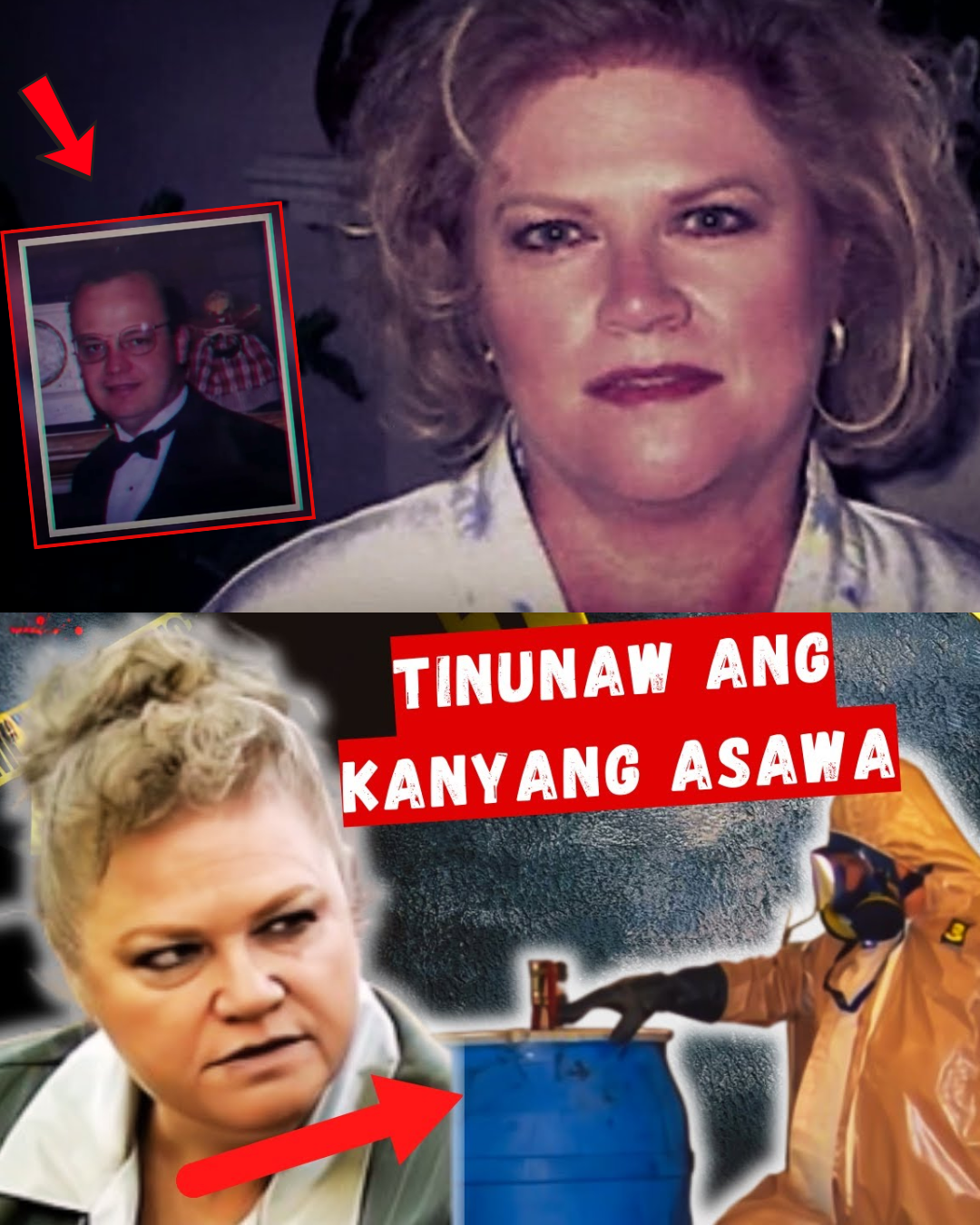
Larisa Schuster was the embodiment of a self-made success story. A brilliant biochemist, she had built her company, Central California Research Lab, from the ground up, turning it into a multi-million dollar enterprise.
While she worked tirelessly, her husband, Timothy “Tim” Schuster, a nurse she met in 1982, left his job to become a stay-at-home father to their two children, Christine and a younger son.
This arrangement worked for years, but as the children grew, the marriage fractured. The breaking point, Larisa would later tell police, was when she sent their rebellious daughter to Missouri, a decision Tim vehemently opposed. The constant fighting led to separate bedrooms and, eventually, a divorce filed by Larisa.
Their separation was not amicable; it was toxic. The divorce proceedings dragged on for over a year, becoming a bitter battle over their considerable assets.
The 3,500-square-foot home, a $120,000 retirement fund, and, most contentiously, Larisa’s multi-million dollar chemical lab were all considered “community property” under California law. Tim was fighting for his fair share and for custody of their younger son.
Larisa was enraged. In her mind, the business was hers, built by her sweat and intellect. She was not going to let a “passive-aggressive” house husband take half.
On July 10, 2003, Tim Schuster’s co-workers grew concerned. He hadn’t shown up for his shift. When police conducted a welfare check at his home, they found no sign of him. But they did find ominous clues: a briefcase near the door, an empty gun holster next to it, and a handgun hidden under the sofa cushions. Authorities immediately suspected foul play.
Their investigation led them to his estranged wife. Larisa, then 43, was brought in for an interview. She was talkative, almost manic, speaking for over an hour about her “abusive” husband, her Christian values, and the intimate, private details of their failed marriage. She described Tim as passive-aggressive and impossible, all while painting herself as a long-suffering victim.
But when detectives asked about Tim’s disappearance, the chatty chemist became guarded. Her answers were suddenly short, and her story had holes. Then, they noticed the marks: fresh, angry scratches and bruises on her shins and legs. Larisa dismissed them as a gym injury.
The detectives pressed her. What about the 2:00 AM phone call she had made to Tim’s number on the very night he vanished? Larisa claimed it was an accident. She said she fell asleep watching a movie and must have hit his number on her phone. When detectives asked to see her cellphone, she claimed she had left it at home.
This was her critical mistake. One detective, sensing a lie, walked out to the parking lot. He peered into Larisa’s car and saw the cellphone sitting in plain sight. He retrieved it. Back in the interview room, they scrolled through the call history. The 2:00 AM call to Tim had been manually deleted.
Larisa was nervous, but her lies weren’t enough to hold her. They let her go, but the investigation was now closing in.
The first break came from Larisa’s manicurist. The woman told police that Larisa, during a nail appointment, had vented about the divorce. She was furious that Tim had taken her favorite decorative bowls when he moved out.
She was so irate, the manicurist said, that Larisa confessed she had hired a 21-year-old employee, James Faggioli, to break into Tim’s house just to steal the bowls back.
This gave police their second suspect. James Faggioli was a young man who idolized Larisa, viewing her as a brilliant mentor. He worked at her lab and even served as her dog walker and babysitter. When police checked Larisa’s phone records, they saw she had called James immediately after Tim left her that furious, threatening voicemail, and again just before Tim vanished.
The final piece of the puzzle came from another employee. This worker approached detectives with a chilling story. The day after Larisa’s police interview, she had instructed him to rent a large truck.
She used it for a few hours. The next day, the employee noticed that a large, blue 55-gallon barrel was missing from the lab’s storage room. He also told police that Larisa had recently rented a private storage unit to hide assets from the divorce.
Police rushed to the storage facility. As they approached Larisa’s unit, they were hit by an overpowering, noxious stench. They cut the lock and opened the door. Inside, among Christmas decorations and the stolen bowls, sat the missing blue barrel.
The fumes billowing from it were acrid and overwhelming. When they looked inside, they were met with a grotesque, steaming, liquid slurry. It was, as one sergeant later described it, “the most disgusting thing” he had seen in 20 years of police work. It was the dissolving remains of a human body.
Knowing Larisa was a flight risk, police tracked her to Missouri. Six days after Tim was reported missing, she was arrested at the airport as her plane landed and was extradited back to California.
With the body found, James Faggioli’s loyalty to his boss evaporated. He confessed to the entire plot.
He told detectives that on the night of July 9, he and Larisa met to plan. They drove to Tim’s house, but Tim, likely fearing Larisa, refused to open the door. Larisa, however, knew her husband’s weakness: his children. At 2:00 AM, she called him, using the lie that their son was sick and needed his father.
Tim, worried, hid his gun under the sofa cushion and opened the door. James Faggioli was hiding in the darkness. He ambushed Tim, striking him with a stun gun. Tim fought back, grabbing at Larisa and clawing her legs—the source of her “gym injury.” As the men struggled, Larisa pulled out a rag soaked in chloroform and pressed it over Tim’s face until he lost consciousness.
They dragged his unconscious body to Larisa’s home, put him in the garage, and placed him in the blue barrel. James confessed to a horrifying detail: Tim was still alive, groaning faintly, as they sealed him inside. Larisa then personally emptied three large bottles of hydrochloric acid into the barrel with him.
The next day, after her police interview, she returned to the lab, checked the barrel, and, deciding the three bottles weren’t enough, poured in several more. She then had the barrel moved to the storage unit.
James Faggioli, despite his confession, rejected a plea deal. He was tried, found guilty of first-degree murder, and sentenced to life in prison without parole.
Larisa’s trial was moved to Los Angeles due to the intense media coverage, where she was infamously dubbed the “Acid Lady.” Her defense argued that all the evidence was circumstantial. But the prosecution methodically laid out the motive: greed.
Larisa, enraged at the thought of losing half of her multi-million dollar empire to a man she despised, had decided that elimination was cheaper than a settlement.
After a five-month trial, the jury found Larisa Schuster guilty. She, too, was sentenced to life in prison without parole. At the sentencing, her daughter Christine was allowed to speak. Staring at the woman who had been her mother, she said she no longer considered her as such, and that she hoped she would be haunted by nightmares for the rest of her life.
News

The Toxic Price of Rejection: OFW’s Remains Found in a Septic Tank After Coworker’s Unwanted Advances
South Korea, a hub for Asian development, represents a major aspiration for many Filipino Overseas Workers (OFWs), who seek employment…

The Final Boundary: How a Starving Tricycle Driver Exacted Vengeance at a Homecoming Party
On November 28, 2009, in Angat, Bulacan, a lavish homecoming party for two returning travelers ended in a catastrophic tragedy….

The 12-Year Ghost: Why the Woman Behind Vegas’s ‘Perfect Crime’ Chose Prison Over Freedom
On October 1, 1993, at the Circus Circus Casino in Las Vegas, a crime unfolded in minutes that would be…

The Fatal Soulmate: How a British Expat’s Search for Love Online Became a $1 Million Homicide Trap
In 2020, in a comfortable apartment overlooking the city of Canberra, Australia, 58-year-old British expatriate Henrick Collins lived a successful…

The Cost of Negligence: Firefighter Ho Wai-Ho’s Tragic Sacrifice in Hong Kong’s Inferno
The catastrophic fire that engulfed seven towers of the Wang Fook Court residential complex in Hong Kong was a disaster…

The KimPau Phenomenon: How “The A-List” Sparked Queen Kim Chiu’s Fierce Career Revolution
The Filipino entertainment industry is currently witnessing a stunning career metamorphosis, all thanks to the sheer, raw power of the…
End of content
No more pages to load