Saudi Arabia is known as one of the frontline states and a major destination for Overseas Filipino Workers (OFWs).
According to reports, there are over 1.1 million Filipinos in that country. Reports also indicate that the remittances from these OFWs contribute nearly 40 billion pesos annually to the Philippine economy.
However, while the exodus of Filipinos has a positive effect on the country’s economy, it is undeniable that the cultural differences between Saudi Arabia and the Philippines often lead to abuse.
Perhaps you have heard many stories about the sad fate of our kababayans in the Middle East.
In 2011, nearly 400 OFWs were anxiously awaiting Ramadan, a time when the Saudi Royal family traditionally grants pardons to offenders.
For two months, prisoners sent letters of appeal, begging for forgiveness from His Kindness, King Abdullah, the Saudi King and Custodian of the Two Holy Mosques.
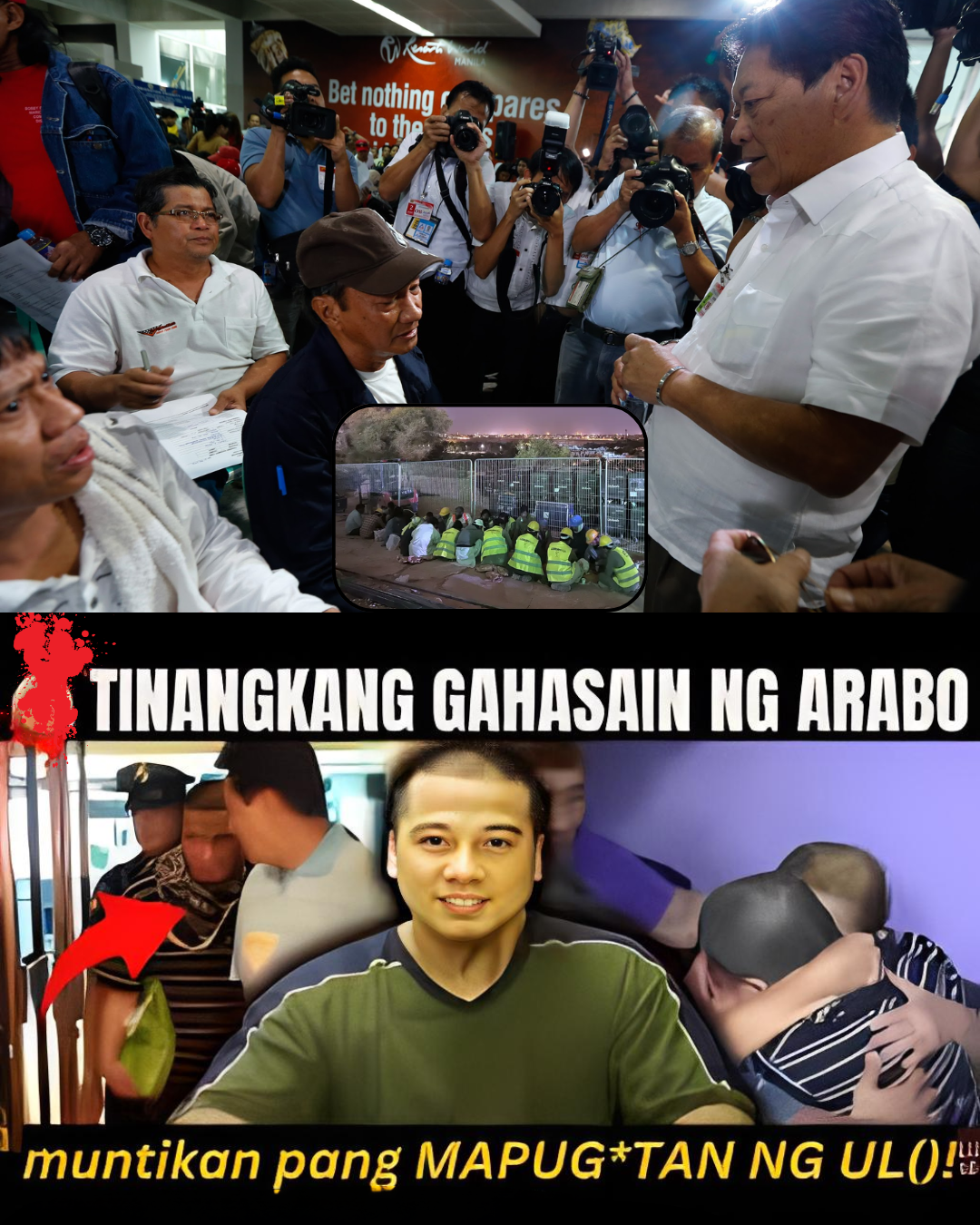
Among those 400 Filipinos was Rogelio “Dondon” Celestino Lanuza. But as Ramadan ended, the OFW was left in tears; the King had not pardoned him due to the severity of his crime.
A Dream for a Better Life
Dondon was born and raised in Bicol, Philippines, in 1978.
Hoping to provide a better life for his two children, Dondon processed his documents and, holding his papers, bravely approached an agency.
He was one of the many who believed that working in Saudi Arabia could change his family’s fate.
In 1998, Dondon was informed that he had passed, and at the age of 22, he boarded a plane to Saudi Arabia.
He worked there as a draftsman for ARAMCO. For several years, Dondon endured the scorching heat and the pain of homesickness, all for his family.
But after two years, his dream would come to a tragic end.
A Mother’s Plea
In a public plea, his mother, Letty Celestino Lanuza, appealed for financial assistance for her son’s blood money and for prayers for his release.
This plea was repeated many times in the following years. She tirelessly gave interviews to various news outlets to get public, and more importantly, the Philippine government’s attention.
For years, her appeals seemed to go unheard. To save her son’s life, Letty paired her fervent prayers with relentless visits to different government agencies and NGO offices, but her cries led nowhere.
In one interview, she was close to giving up hope. “I love my son so much. We haven’t seen each other in so long,” she wept.
The Path to Blood Money
Then, on February 11, 2011, good news arrived from the Saudi Reconciliation Committee.
The letter stated that although Dondon was not pardoned, the King of Saudi Arabia had permitted him to be forgiven by the victim’s family through the payment of blood money, amounting to 35 million pesos.
This was an impossible sum for the Lanuza family. Reports indicated that although the family had moved to the United States after Dondon’s imprisonment, they were just ordinary workers.
Even if they pooled all their money, it would not be enough. Furthermore, even if the blood money was paid, the final decision to release Dondon rested with the son of his victim.
When this report came out, news outlets in the Philippines immediately broadcasted the plight of the now 36-year-old Dondon.
It was only then that the public learned the full story: he was imprisoned in Dammam Reformatory Jail for killing his co-worker, a Saudi National who was also a member of a Saudi Royal clan.
An Act of Self-Defense
During the trial, Dondon claimed that while they were drinking, the Arab man attempted to rape him.
Dondon said he was shocked, as the man was a family man. To stop the assault, they struggled, which resulted in Dondon killing him.
Dondon sustained stab wounds to his neck, hand, and knee, which were treated by his neighbors.
Unfortunately, the five people who helped him were also charged with complicity in the murder.
They were imprisoned for one and a half years and received 360 lashes.
Dondon stated that he surrendered to the Department of Foreign Affairs at midnight on August 10, 2000, believing that if he fought the case and told the court he was a victim of an attempted rape, he had a good chance of being freed.
While Dondon’s case was ongoing, he would write to his family, revealing the horrific life he was enduring in prison.
In his letters, he shared that due to the severity of his crime, he was always in solitary confinement at the Dammam Reformatory Jail.
He could only eat by reaching through the high bars as food was passed to him piece by piece.
Due to the hardship and hopelessness of his situation, he attempted to take his own life twice.
Life in Prison
Dondon also shared that whenever he was allowed to leave solitary confinement, he felt like a dog, wagging its tail in joy, just to see the light and breathe fresh air again.
After two years, one month, and 19 days, he was finally transferred from solitary to a regular cell.
He was briefly happy to see other Filipinos, but for several days, he remained in the hallway and not in a cell. A newspaper was his bed, and at mealtime, a bag of food was thrown in front of him.
He mentioned that if he was unlucky, the food he received was often already spoiled.
He also shared that during his two court hearings, he received no assistance from the Philippine embassy. Lacking any legal background, he was forced to defend himself in court.
Dondon also mentioned that when the Arab’s relatives visited him in prison, they were allowed to hurt, spit on, curse at, kick, and punch him.
He shared that only his faith kept him from giving up, his belief that one day he would be free. In his letters, he confirmed that after 10 months in prison, he converted from Christianity to Islam.
A Collective Effort
After the trial concluded in June 2002, Dondon was sentenced to death by beheading.
However, because the King allowed for his release through blood money, the Lanuza family immediately sought help from the government.
Through the efforts of Mrs. Loida Nicolas Lewis and other Filipinos in the United States, they raised 1.6 million pesos, but it was far from enough.
Desperate to raise the full amount, they used social media like Facebook and Twitter.
In September 2012, the government provided 2 million pesos. With time as their enemy, the family relentlessly posted on their Facebook page and gave interviews.
Dondon’s grandmother became emotional as she remembered one of her grandchildren. “That’s why I’m always crying. They are good children. Why?”
The family’s tireless pleas for help finally bore fruit. In February 2013, news joyfully reported that the King of Saudi Arabia himself had provided the remaining balance for the blood money.
After that, Dondon immediately met with the family of the man he killed, and the victim’s son forgave him.
The president of Migrante International happily shared the good news with the media and thanked everyone who supported Dondon’s release.
Freedom and a Difficult Readjustment
Seven months after the news of his release, Dondon arrived at NAIA on September 19, 2013.
After giving a statement to reporters, the OFW went straight to Barangay 398, Sampaloc, Manila, where he was welcomed not only by his family but also by a marching band.
In August 2014, almost a year after his release, Dondon gave an interview, sharing that he was struggling to adjust to life outside prison.
In his own words, he said he was “too young to retire, but too old to start over.”
He shared that after his release, he expected help from the government to start anew, but he only received 10,000 pesos, which he felt was not enough to start a small business.
His statement was refuted by Teresita Caba, the head of OWWA-NCR. She stated that besides the 10,000 pesos, they offered Dondon skills training and a loan ranging from 300,000 to 2 million pesos, but Dondon never returned to their agency.
She mentioned that in addition to the cash assistance, former Mayor Estrada also gave him a free medical checkup at a public hospital in Manila.
A senator also gave him 5,000 pesos worth of groceries, and the DSWD offered 10,000 pesos, which Dondon reportedly refused, calling it “insulting.”
He tried to find a good job, applying as a sales agent, but he struggled, failing to sell a single condo, and resigned after a few months.
A relative later hired him as a draftsman in Tagaytay, but he said the 6,000-peso monthly salary was not enough for his needs, as he commuted daily from Marikina to Tagaytay.
He couldn’t stop himself from saying in the interview that he earned more while in prison working as a carpenter and launderer.
In his desperation to rise from poverty, Dondon said he sometimes wished he were Joselito Zapanta, another OFW he met in prison.
Overwhelmed by his struggles, he couldn’t help but wonder why, after suffering for 13 years in prison, he was still struggling.
He also couldn’t forget his promise to other incarcerated OFWs that he would help them, but Dondon felt he needed to help himself first.
He ended the interview by saying that he still did not feel free.
News

The Toxic Price of Rejection: OFW’s Remains Found in a Septic Tank After Coworker’s Unwanted Advances
South Korea, a hub for Asian development, represents a major aspiration for many Filipino Overseas Workers (OFWs), who seek employment…

The Final Boundary: How a Starving Tricycle Driver Exacted Vengeance at a Homecoming Party
On November 28, 2009, in Angat, Bulacan, a lavish homecoming party for two returning travelers ended in a catastrophic tragedy….

The 12-Year Ghost: Why the Woman Behind Vegas’s ‘Perfect Crime’ Chose Prison Over Freedom
On October 1, 1993, at the Circus Circus Casino in Las Vegas, a crime unfolded in minutes that would be…

The Fatal Soulmate: How a British Expat’s Search for Love Online Became a $1 Million Homicide Trap
In 2020, in a comfortable apartment overlooking the city of Canberra, Australia, 58-year-old British expatriate Henrick Collins lived a successful…
The Cost of Negligence: Firefighter Ho Wai-Ho’s Tragic Sacrifice in Hong Kong’s Inferno
The catastrophic fire that engulfed seven towers of the Wang Fook Court residential complex in Hong Kong was a disaster…

The KimPau Phenomenon: How “The A-List” Sparked Queen Kim Chiu’s Fierce Career Revolution
The Filipino entertainment industry is currently witnessing a stunning career metamorphosis, all thanks to the sheer, raw power of the…
End of content
No more pages to load