
MANILA, Philippines — The Philippines is grappling with a multi-front crisis as Super Typhoon Nando carves a path of destruction across Luzon, while the nation’s political landscape is simultaneously shaken by a massive corruption probe in the Senate and formal murder charges filed against a former president by the International Criminal Court (ICC).
The Wrath of Super Typhoon Nando
As of Tuesday morning, state weather bureau PAGASA reported that Super Typhoon Nando is beginning to weaken and is expected to exit the Philippine Area of Responsibility. However, it leaves behind a trail of widespread devastation. The typhoon made landfall in Cagayan, battering the province with destructive winds and heavy rains. Roul Rellie Rapsing, head of the Cagayan PDRRMO, confirmed that while they have achieved zero casualties due to preemptive evacuations, the province is facing challenges with communication lines and power outages.
The storm’s impact was felt across Northern Luzon. In Batanes, which was placed under Signal Number 5, fierce winds and towering waves slammed coastal areas. In Benguet, the heavy rains triggered a deadly landslide on Marcos Highway in the town of Tuba, killing one person and injuring five after a mountain slope collapsed onto two vans and a tanker truck.
Even as the typhoon moves away, its enhanced Southwest Monsoon continues to inundate Metro Manila and surrounding provinces. Widespread class suspensions have been declared across the capital and in provinces from Luzon to Batangas. In Quezon City, major roads like Araneta Avenue are submerged in waist-deep floodwaters, forcing the local government to issue preemptive evacuation orders.
A Standoff in the Senate’s Corruption Probe
While the country battles the storm, a political firestorm is brewing in the Senate. The Blue Ribbon Committee’s investigation into anomalous flood control projects has hit a snag. The committee’s key witness, former DPWH engineer Bryce Hernandez, is now refusing to surrender a computer believed to contain vital evidence of kickback schemes involving high-level lawmakers.
Committee Chairman Senator Ping Lacson has threatened to revoke Hernandez’s legislative immunity if he fails to cooperate. The standoff comes after Hernandez had already linked several senators to alleged budget insertions worth hundreds of millions of pesos. The scandal has also prompted the newly elected House Speaker, Bogie D., to suggest ending the House’s own probe, citing a lack of public trust and recommending the independent Commission for Infrastructure (ICI) handle the investigation instead.
Duterte Charged with Murder at the ICC
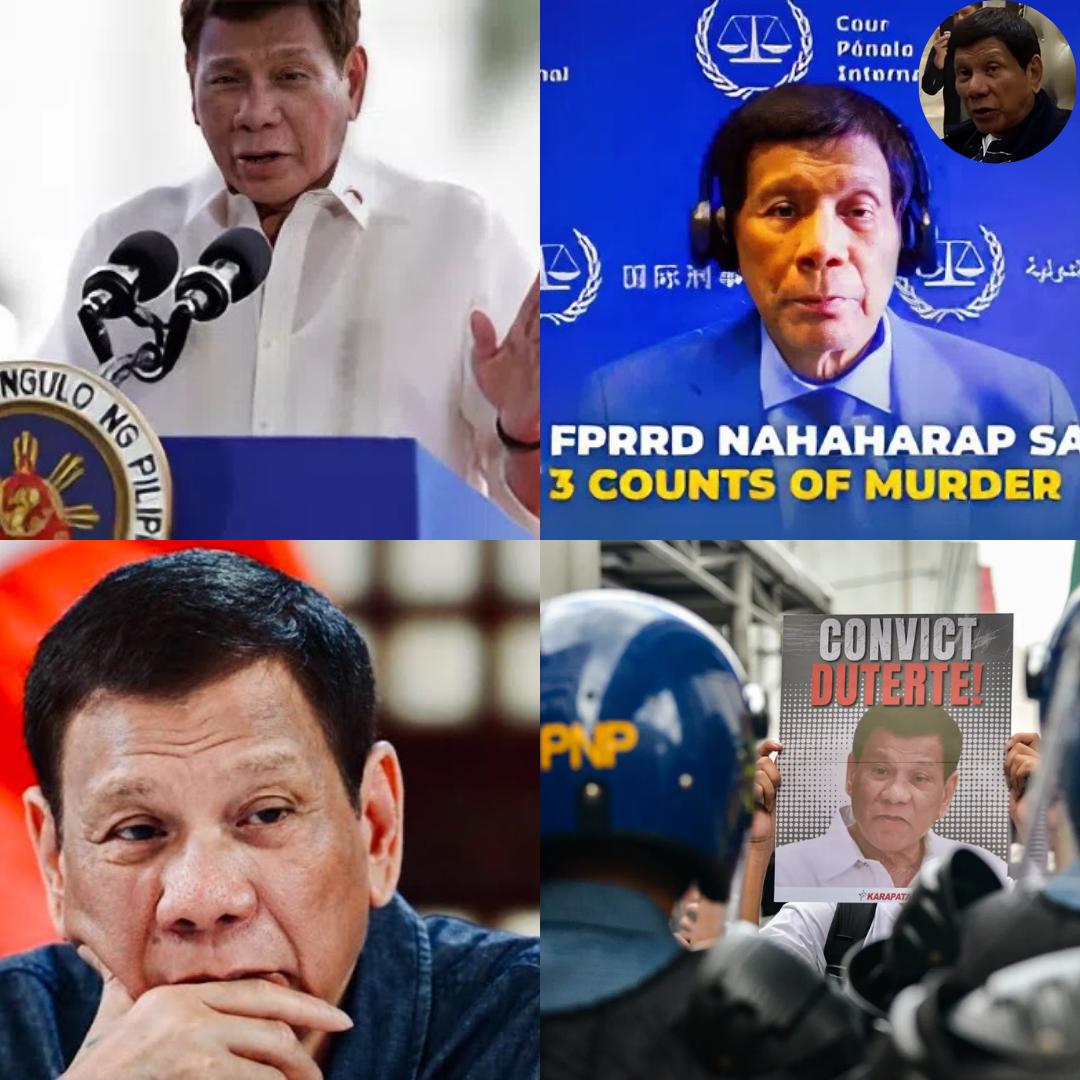
Adding to the day’s heavy news, prosecutors of the International Criminal Court have formally charged former President Rodrigo Duterte with three counts of murder as alleged crimes against humanity. According to ICC-accredited lawyer Gilbert Andres, the 15-page filing details Duterte’s alleged responsibility for 76 killings across 49 incidents during his anti-drug campaigns, both as Davao City mayor and as president.
The document containing the charges will now undergo a confirmation process, which requires only “substantial grounds to believe” for the case to proceed to trial. Duterte is currently detained at The Hague, but a hearing scheduled for September 23 was postponed after his lawyers cited his declining health, claiming he is unfit to stand trial. The prosecutor emphasized that the 76 murders cited are merely “emblematic” of a far greater number of alleged killings.
Report Exposes Skewed Budget Priorities
Meanwhile, a damning position paper from the Ateneo School of Government (ASoG) has revealed shocking shifts in national budget priorities. Former DBM Secretary Butch Abad, who co-authored the paper, reported that from 2016 to 2025, the budget for the Office of the President increased by a staggering 461%, while the House and Senate saw their budgets grow by over 275%.
During the same period, critical social services faced devastating cuts due to budget realignments. The ASoG report reveals that the ₱74.4 billion PhilHealth subsidy for the poor was completely zeroed out in the 2025 national budget, and the flagship 4Ps poverty reduction program was slashed by ₱50 billion. These funds were allegedly diverted to graft-prone projects like flood control, which saw its budget nearly double to almost a trillion pesos over ten years. As Filipinos face the immediate aftermath of a destructive typhoon, they are simultaneously confronted with deep-seated crises of governance and accountability that will continue to shape the nation’s future long after the storm has passed.
News

The Toxic Price of Rejection: OFW’s Remains Found in a Septic Tank After Coworker’s Unwanted Advances
South Korea, a hub for Asian development, represents a major aspiration for many Filipino Overseas Workers (OFWs), who seek employment…

The Final Boundary: How a Starving Tricycle Driver Exacted Vengeance at a Homecoming Party
On November 28, 2009, in Angat, Bulacan, a lavish homecoming party for two returning travelers ended in a catastrophic tragedy….

The 12-Year Ghost: Why the Woman Behind Vegas’s ‘Perfect Crime’ Chose Prison Over Freedom
On October 1, 1993, at the Circus Circus Casino in Las Vegas, a crime unfolded in minutes that would be…

The Fatal Soulmate: How a British Expat’s Search for Love Online Became a $1 Million Homicide Trap
In 2020, in a comfortable apartment overlooking the city of Canberra, Australia, 58-year-old British expatriate Henrick Collins lived a successful…
The Cost of Negligence: Firefighter Ho Wai-Ho’s Tragic Sacrifice in Hong Kong’s Inferno
The catastrophic fire that engulfed seven towers of the Wang Fook Court residential complex in Hong Kong was a disaster…

The KimPau Phenomenon: How “The A-List” Sparked Queen Kim Chiu’s Fierce Career Revolution
The Filipino entertainment industry is currently witnessing a stunning career metamorphosis, all thanks to the sheer, raw power of the…
End of content
No more pages to load