
On a cold night in March 2022, 21-year-old Thomas “Tommy” Roberts, a kind and beloved musician, was stabbed to death on a street in Bournemouth, UK, over a trivial argument about an e-scooter. The initial tragedy was compounded by the identity of his killer: a seemingly traumatized 14-year-old Afghan child refugee. But as investigators dug deeper, that sympathetic image shattered, revealing a far more sinister truth. The killer was not a child, but a 19-year-old violent criminal with a history of murder who had masterfully manipulated the UK’s asylum system. The story of Tommy Roberts is not just a tragedy, but a chilling exposé of a system that failed, and the Filipina mother whose quest for justice helped ignite a call for national reform.

Tommy Roberts was the pride of his family. The son of Dolores, a Filipina who had immigrated to the UK in the 1980s, he was an active and outgoing young man. He was a boxer, a musician who played in local nightclubs, and had dreams of joining the prestigious Royal Marines. Friends and family described him as a peacemaker, a strong but gentle soul who always tried to de-escalate conflict.
On the night of his death, he and his best friend, James Medway, were looking for a way home after a night out. They spotted an e-scooter and, in a youthful impulse, decided to use it. This brought them face-to-face with Lawangeen Abdulrahimzai, the Afghan asylum seeker who had rented it. An aggressive confrontation ensued, and Tommy, true to his nature, stepped in to calm the situation. When the argument escalated, Tommy slapped Abdulrahimzai. In response, Abdulrahimzai pulled out a knife and stabbed the 21-year-old twice in the chest, killing him.
The investigation quickly unmasked the killer. Abdulrahimzai had dropped his phone while fleeing, leading police directly to his door. As his trial began, his defense lawyers painted a picture of a tragic figure, an orphan whose parents were killed by the Taliban, a boy who had been stabbed 28 times and shot before miraculously escaping his war-torn country. His violence, they argued, was a product of deep-seated trauma.
But the prosecution systematically dismantled this narrative, revealing a web of lies. They proved that when Abdulrahimzai arrived in the UK in 2019, he was not 14, but 19. This lie gave him access to the more lenient system for child asylum seekers. His own British foster mother, Nicola Marchant-Jones, testified against him, describing him as violent and aggressive, revealing she had to kick him out of her home for her own safety. Most damning of all, prosecutors presented court documents from Serbia proving that before he ever set foot in the UK, Abdulrahimzai had already murdered two other people.
The United Kingdom had unknowingly granted refuge to a violent double-murderer, treating him as a child in need of protection. The revelation sent shockwaves across the country and fueled the unbearable grief of Tommy’s family. His mother, Dolores, channeled her pain into a righteous fury, publicly blaming the “rotten” UK system for her son’s death. She argued that a simple background check could have prevented the tragedy.
“If the system was not broken, my son would be alive today,” she and her family declared. Their powerful statements resonated deeply, turning their personal tragedy into a national talking point about the dangerous flaws in the UK’s immigration policies.
Despite his claims of self-defense, a jury found Lawangeen Abdulrahimzai guilty of murder. He was sentenced to 29 years in prison and will be deported after serving his time. For Tommy’s family, the verdict was a hollow victory. Their son was gone forever, a peacemaker killed by a violent man who exploited a system designed to protect the vulnerable. In the end, their advocacy had a lasting impact, contributing to a fierce national debate that led to the passage of the “Illegal Migration Act” in 2023, a law designed to tighten the very loopholes that allowed a killer to walk their streets.
News

The Toxic Price of Rejection: OFW’s Remains Found in a Septic Tank After Coworker’s Unwanted Advances
South Korea, a hub for Asian development, represents a major aspiration for many Filipino Overseas Workers (OFWs), who seek employment…

The Final Boundary: How a Starving Tricycle Driver Exacted Vengeance at a Homecoming Party
On November 28, 2009, in Angat, Bulacan, a lavish homecoming party for two returning travelers ended in a catastrophic tragedy….

The 12-Year Ghost: Why the Woman Behind Vegas’s ‘Perfect Crime’ Chose Prison Over Freedom
On October 1, 1993, at the Circus Circus Casino in Las Vegas, a crime unfolded in minutes that would be…

The Fatal Soulmate: How a British Expat’s Search for Love Online Became a $1 Million Homicide Trap
In 2020, in a comfortable apartment overlooking the city of Canberra, Australia, 58-year-old British expatriate Henrick Collins lived a successful…
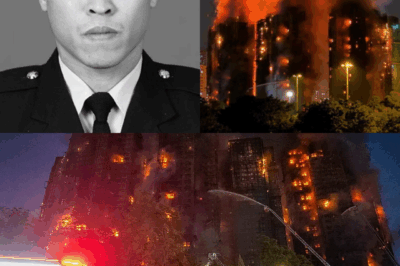
The Cost of Negligence: Firefighter Ho Wai-Ho’s Tragic Sacrifice in Hong Kong’s Inferno
The catastrophic fire that engulfed seven towers of the Wang Fook Court residential complex in Hong Kong was a disaster…

The KimPau Phenomenon: How “The A-List” Sparked Queen Kim Chiu’s Fierce Career Revolution
The Filipino entertainment industry is currently witnessing a stunning career metamorphosis, all thanks to the sheer, raw power of the…
End of content
No more pages to load