In the summer of 2011, a wave of terror gripped Stepping Hill Hospital in Stockport, England. Patients on the acute care wards were inexplicably collapsing, suffering from sudden and severe hypoglycemic attacks. Nurses and doctors were baffled as otherwise stable patients fell into comas.
An urgent investigation revealed a horrifying truth: someone was deliberately poisoning them by injecting insulin into saline bags and ampules. The hunt was on for an “Angel of Death” walking the hospital’s halls, a search that would ultimately lead to the conviction of a 49-year-old Filipino nurse, Victorino Chua, in one of the most complex and controversial cases in recent British history.
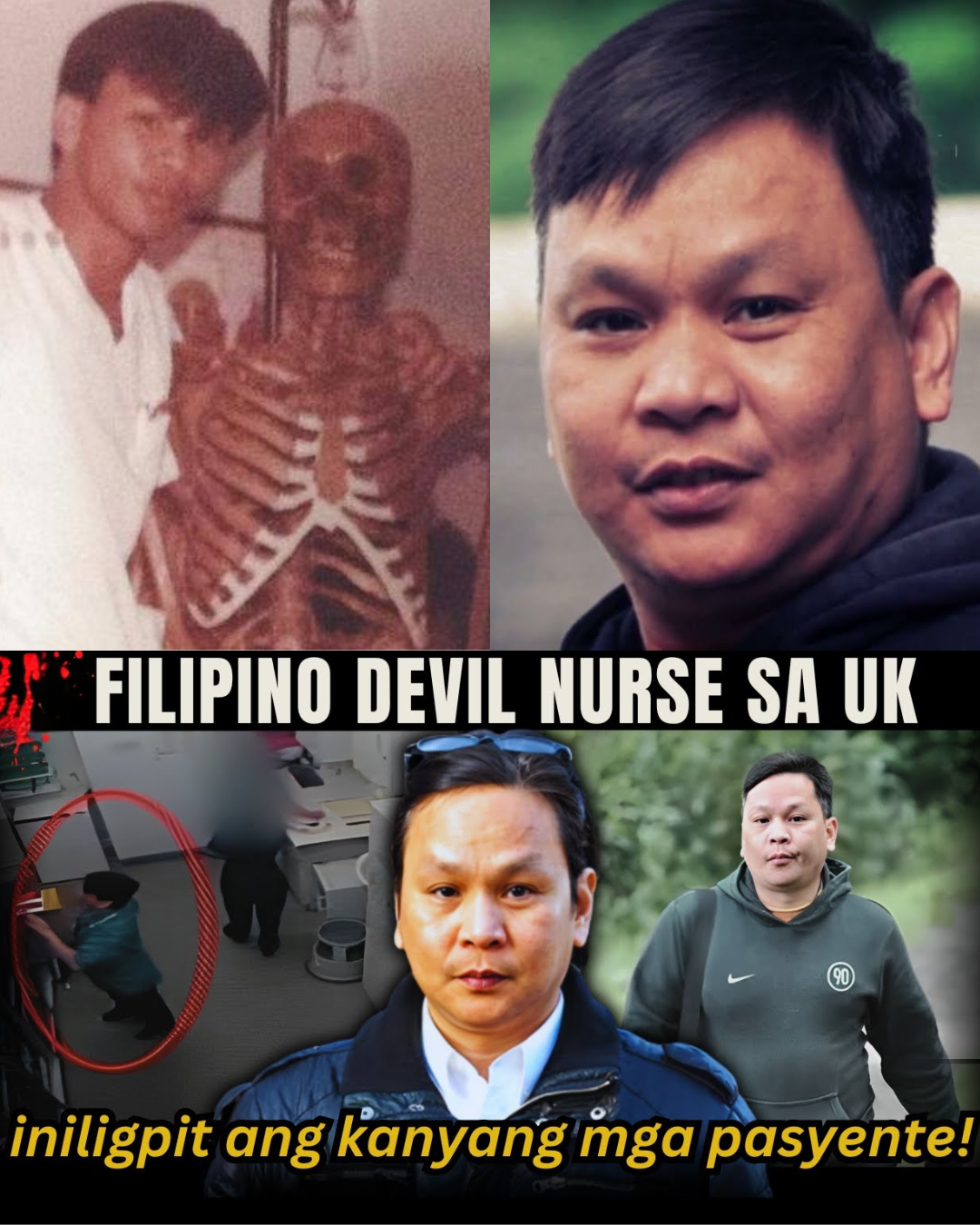
Victorino Chua’s journey from Caloocan City in the Philippines to the sterile corridors of a British hospital was a long and troubled one. Raised in a broken home by his grandmother, he described a bitter childhood in a 13-page letter that would later become the centerpiece of his trial. Pushed into nursing, he worked in Manila where he was once accused of theft, though the case was dismissed.
In 2002, seeking a better life, he moved his family to the UK. However, the foundation of his new life was built on a lie. A later investigation revealed that he had used fraudulent and photocopied documents to gain his UK nursing registration, a critical failure by the hospital that hired him.
Despite a history of patient complaints and being disliked by his colleagues, Chua worked at Stepping Hill for two years. During that time, he was treated for depression and, as part of his therapy, was encouraged to write down his feelings. The result was the infamous “Bitterness Nurse Confession.”
In it, he detailed his inner turmoil, his resentment, and his dark thoughts. “People thought I’m a nice person,” he wrote, “but I have a devil in me.” He ominously referred to himself as an “angel of death.”
A year after he wrote that letter, the poisonings began. Over a period of weeks, more than 20 patients were affected by the contaminated saline drips. Three of them died. The hospital was thrown into chaos, and a massive police investigation was launched.
After an initial, wrongful arrest of another nurse, the investigation zeroed in on Chua. He was on duty during the incidents, had access to the materials, and had made some unusual clinical decisions that drew suspicion.
The prosecution’s case against him was built on a mountain of circumstantial evidence, with the “confession” letter as its cornerstone. They portrayed Chua as a narcissistic psychopath who, frustrated with his life, intentionally caused suffering to create chaos and excitement on his otherwise mundane night shifts. He was, they argued, a man playing God with his patients’ lives.
However, the defense, along with many supporters in the Filipino nursing community, pointed to a glaring hole in the prosecution’s case: there was no direct evidence. No fingerprints were ever found on the contaminated bags. No witnesses saw him tamper with the saline. No CCTV footage captured him in the act.
They argued that the “confession” letter was a therapeutic tool taken dangerously out of context and that Chua, a foreign nurse with a history of depression, was the perfect scapegoat for a police force under immense pressure to solve a terrifying case.
In May 2015, after a lengthy and complex trial, the jury sided with the prosecution. They found Victorino Chua guilty of two murders, one count of grievous bodily harm, and 22 counts of attempted grievous bodily harm. He was sentenced to life in prison with a minimum term of 35 years.
To this day, the case remains deeply divisive. For the prosecution and the victims’ families, justice was served, and a cold, calculating killer was put behind bars. But for many of his supporters and family, who maintain his innocence, the conviction of Victorino Chua is a troubling story of a man condemned by his own words, a scapegoat convicted in a trial that lacked a single piece of definitive, forensic proof.
News

The Toxic Price of Rejection: OFW’s Remains Found in a Septic Tank After Coworker’s Unwanted Advances
South Korea, a hub for Asian development, represents a major aspiration for many Filipino Overseas Workers (OFWs), who seek employment…

The Final Boundary: How a Starving Tricycle Driver Exacted Vengeance at a Homecoming Party
On November 28, 2009, in Angat, Bulacan, a lavish homecoming party for two returning travelers ended in a catastrophic tragedy….

The 12-Year Ghost: Why the Woman Behind Vegas’s ‘Perfect Crime’ Chose Prison Over Freedom
On October 1, 1993, at the Circus Circus Casino in Las Vegas, a crime unfolded in minutes that would be…

The Fatal Soulmate: How a British Expat’s Search for Love Online Became a $1 Million Homicide Trap
In 2020, in a comfortable apartment overlooking the city of Canberra, Australia, 58-year-old British expatriate Henrick Collins lived a successful…
The Cost of Negligence: Firefighter Ho Wai-Ho’s Tragic Sacrifice in Hong Kong’s Inferno
The catastrophic fire that engulfed seven towers of the Wang Fook Court residential complex in Hong Kong was a disaster…

The KimPau Phenomenon: How “The A-List” Sparked Queen Kim Chiu’s Fierce Career Revolution
The Filipino entertainment industry is currently witnessing a stunning career metamorphosis, all thanks to the sheer, raw power of the…
End of content
No more pages to load