
For some American expatriates, the Philippines represents a paradise – a place to retire with a lower cost of living, surrounded by tropical beauty and warm hospitality. Scott McMahon, a musician turned construction worker from Washington state, hoped for such a life.
Instead, an act of kindness towards a neighbor allegedly plunged him into a nearly five-year nightmare within the notoriously harsh Philippine justice system, accused of a heinous crime he insisted he never committed.
Born in 1971, Scott grew up near Seattle and pursued a music degree, even playing in a local heavy metal band called Indica Hat in the mid-1990s.
Seeking a change, he moved to the Philippines before the decade’s end, working in construction. There, he built a life. He had a son, Scott Thomas, from an early relationship.
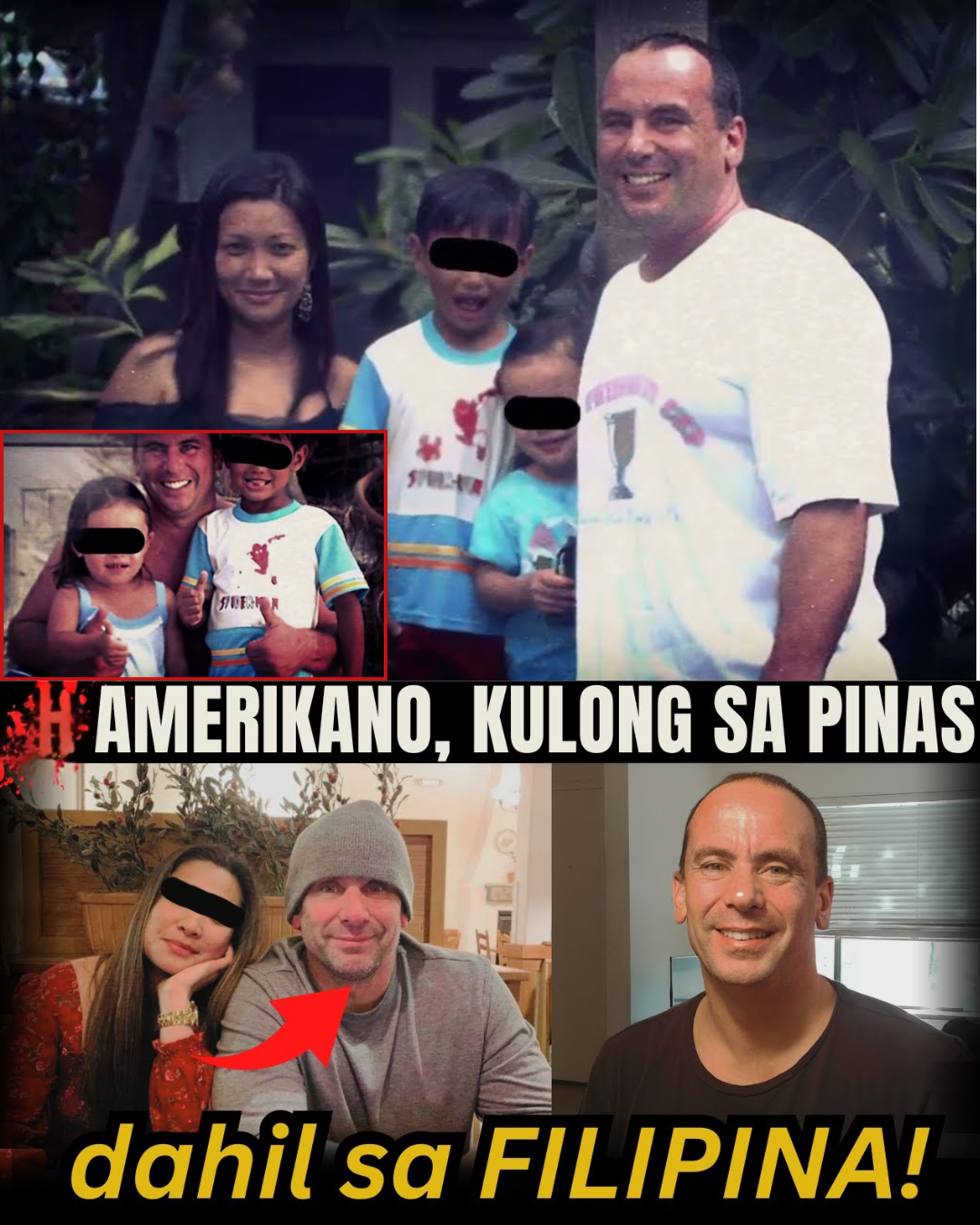
Later, he found lasting partnership with Marnelli Abad, and together they welcomed a daughter, Nicole. By 2008, the blended family was living a quiet life in a gated community in Cupang, Muntinlupa.
Their peaceful existence was shattered in September of that year. Their neighbor, a Belgian national named John Marcel Vande Vermuelen, was going through a contentious separation from his Filipina wife, Dolores. Scott, seeing a fellow foreigner in distress, offered Vermuelen temporary refuge in his home. This act of compassion would allegedly become the catalyst for his ruin.
Dolores, described as a columnist with significant local connections, reportedly did not take kindly to Scott assisting her estranged husband.
According to Vermuelen’s later account, Dolores, furious, arrived at Scott’s home with police, immigration officials, and even a TV news crew in tow, apparently believing Vermuelen was hiding there.
When they didn’t find him, they left, but the message was clear. Weeks later, Dolores allegedly succeeded in having Vermuelen deported back to Belgium.
Though the immediate drama with Vermuelen subsided, the repercussions lingered. The stress and fear induced by the raids took a heavy toll on Scott’s young son, Scott Thomas.
The boy began suffering severe nightmares. A psychologist diagnosed him with Post-Traumatic Stress Disorder (PTSD), triggered by the aggressive intrusions into their home.
Hoping a change of scenery would help, Scott moved his family to Putatan, Muntinlupa. It didn’t alleviate his son’s trauma. Angered by the lasting damage inflicted on his child and seeking accountability, Scott filed an emotional abuse lawsuit against Dolores.
The legal battle escalated. In August 2010, six months after Dolores’s initial raid attempt failed to find Vermuelen, she filed a shocking counter-suit.
She accused both Scott McMahon and her ex-husband Vermuelen of sexually assaulting her in her own home back in February 2010. She claimed she hadn’t reported it sooner because the two men had threatened her life and family.
Despite the six-month delay and the seemingly retaliatory nature of the accusation, a prosecutor found probable cause, and a judge issued arrest warrants for both foreign men.
In August 2011, while Scott was eating at a restaurant, a group of police officers, again accompanied by a TV news crew, apprehended him based on Dolores’s accusation.
He vehemently denied the charges, insisting it was retaliation for his lawsuit against her. His lawyers immediately filed for bail.
What followed was a descent into the labyrinthine and often glacial Philippine justice system. Scott’s bail petition languished. He remained incarcerated in the notoriously overcrowded and squalid conditions of the Bureau of Jail Management and Penology (BJMP) facility in Tunasan, Muntinlupa.
His bail hearing didn’t occur until September 22, 2014 – a staggering 42 months (three and a half years) after his arrest. When the hearing finally happened, the judge denied bail, keeping Scott imprisoned.
His mother, Shelly McMahon, described the visiting area as a cramped space where she could briefly hug her son amidst unimaginable squalor.
The conditions took a severe toll on Scott’s health. He suffered from intestinal problems, gum infections, and chronic insomnia due to the lack of space and constant noise.
Shelly shared photos of the jail’s exterior, highlighting the grim reality her son faced daily. Fearing retribution from guards influenced by Dolores’s alleged connections, Scott deliberately avoided media interviews while incarcerated.
Back in Washington state, Shelly refused to remain silent. After years of hoping for a quiet resolution, she went public, contacting local news stations and pleading for help from American politicians.
She shared the appalling conditions Scott endured and revealed a damning allegation: Dolores, through an intermediary named Rene Arnaout, had allegedly offered to drop the charges if Scott withdrew his emotional abuse lawsuit and paid her five million Philippine pesos (roughly $100,000 USD). Scott refused.
Shelly’s pleas to Washington state congressmen were met with polite refusals. Citing US law, their offices stated they couldn’t interfere in a criminal case in another sovereign nation, especially one not politically motivated.
Undeterred, Shelly sought help elsewhere. She contacted the California Innocence Project (CIP) and the David House Agency, organizations dedicated to freeing wrongfully convicted individuals.
These groups launched their own investigation. They interviewed potential witnesses and reviewed the evidence. It quickly became apparent, they stated, that Dolores’s accusation was baseless.
Most critically, they solidified Scott’s alibi: On February 11, 2010, the day Dolores claimed she was assaulted in Muntinlupa, Scott McMahon was demonstrably over 400 kilometers away in Goa, Camarines Sur, visiting Marnelli’s parents with her and their two children.
The trip took approximately 10 hours by car. They had multiple witnesses and photographs proving his presence there from February 5th to February 15th, 2010.
The CIP investigation also highlighted systemic issues within the Philippine justice system: lengthy pre-trial detentions, lack of due process, and overburdened courts leading to rushed hearings. Scott’s case became an example of these very flaws.
Shelly created a Facebook page to update supporters and raise funds for Scott’s mounting legal fees.
The family’s relentless efforts, amplified by news reports and the involvement of innocence projects, finally garnered international attention, including that of the United Nations, which reportedly urged the Philippine government to expedite the case.
Scott McMahon’s trial finally began on October 22, 2014, and stretched over the following year. The prosecution, represented by Assistant City Prosecutor Bran Go Taplac, portrayed Scott as a predator.
Dolores testified, claiming Scott held her arms while Vermuelen assaulted her, and then assaulted her himself, threatening her family if she spoke out.
Scott’s defense dismantled her story. They presented the ironclad alibi witnesses and photographs placing Scott in Camarines Sur during the alleged crime.
They introduced evidence of the alleged extortion attempt, supported by visitor logs from the BJMP showing Rene Arnaout had indeed visited Scott in jail.
Crucially, the defense attacked Dolores’s credibility. They presented her previous marriage certificate to a Filipino man, where she had allegedly falsified her birth year, and pointed to inconsistencies in her testimony under oath in other court cases.
They argued this demonstrated a pattern of deceit. Furthermore, the results of a physical examination performed on Dolores six months after the alleged assault showed no evidence of injury, rendering it medically impossible to confirm her claim after such a delay.
After nearly five grueling years behind bars, the judge delivered the verdict: Not Guilty. Scott McMahon was acquitted.
The judge cited three primary reasons: the prosecution’s complete lack of credible evidence proving an assault occurred, Dolores’s questionable six-month delay in reporting the crime (which the judge called “shallow” for a columnist supposedly unafraid to expose wrongs), and significant discrepancies in her testimonies.
The judge concluded Dolores’s motive was likely revenge for Scott’s lawsuit against her. The prosecution had failed to prove guilt beyond a reasonable doubt.
But Scott’s ordeal wasn’t over. Upon his release from jail, he was immediately detained by the Philippine Bureau of Immigration. Because he had been incarcerated for nearly five years, his visa had expired.
He now owed approximately $5,000 USD in overstaying fines. Despite Shelly’s pleas explaining the circumstances, the Bureau insisted the law was the law. Facing the prospect of another lengthy legal battle, Shelly once again turned to online fundraising. Supporters quickly donated more than needed.
On August 27, 2016, the fines were paid. On September 11, 2016, Scott McMahon finally boarded a plane back to the United States, greeted tearfully by his relieved family.
He began the process of bringing Marnelli and their daughter Nicole to join him in Washington state. His son, Scott Thomas, remained in the Philippines with his biological mother.
The status of Scott’s original lawsuit against Dolores, and her current whereabouts, remain unknown. What is certain is that after five years lost to a false accusation and a broken system, Scott McMahon was finally home.
News

The Toxic Price of Rejection: OFW’s Remains Found in a Septic Tank After Coworker’s Unwanted Advances
South Korea, a hub for Asian development, represents a major aspiration for many Filipino Overseas Workers (OFWs), who seek employment…

The Final Boundary: How a Starving Tricycle Driver Exacted Vengeance at a Homecoming Party
On November 28, 2009, in Angat, Bulacan, a lavish homecoming party for two returning travelers ended in a catastrophic tragedy….

The 12-Year Ghost: Why the Woman Behind Vegas’s ‘Perfect Crime’ Chose Prison Over Freedom
On October 1, 1993, at the Circus Circus Casino in Las Vegas, a crime unfolded in minutes that would be…

The Fatal Soulmate: How a British Expat’s Search for Love Online Became a $1 Million Homicide Trap
In 2020, in a comfortable apartment overlooking the city of Canberra, Australia, 58-year-old British expatriate Henrick Collins lived a successful…

The Cost of Negligence: Firefighter Ho Wai-Ho’s Tragic Sacrifice in Hong Kong’s Inferno
The catastrophic fire that engulfed seven towers of the Wang Fook Court residential complex in Hong Kong was a disaster…

The KimPau Phenomenon: How “The A-List” Sparked Queen Kim Chiu’s Fierce Career Revolution
The Filipino entertainment industry is currently witnessing a stunning career metamorphosis, all thanks to the sheer, raw power of the…
End of content
No more pages to load