On the night of December 23, 2020, a family in Antioch, California, made a desperate 911 call. Their 30-year-old son, a Navy veteran named Angelo Quinto, was in the midst of a severe mental health crisis. They called for help. What they got was a tragedy that would ignite a painful fight for justice and expose deep cracks in the system meant to protect them.
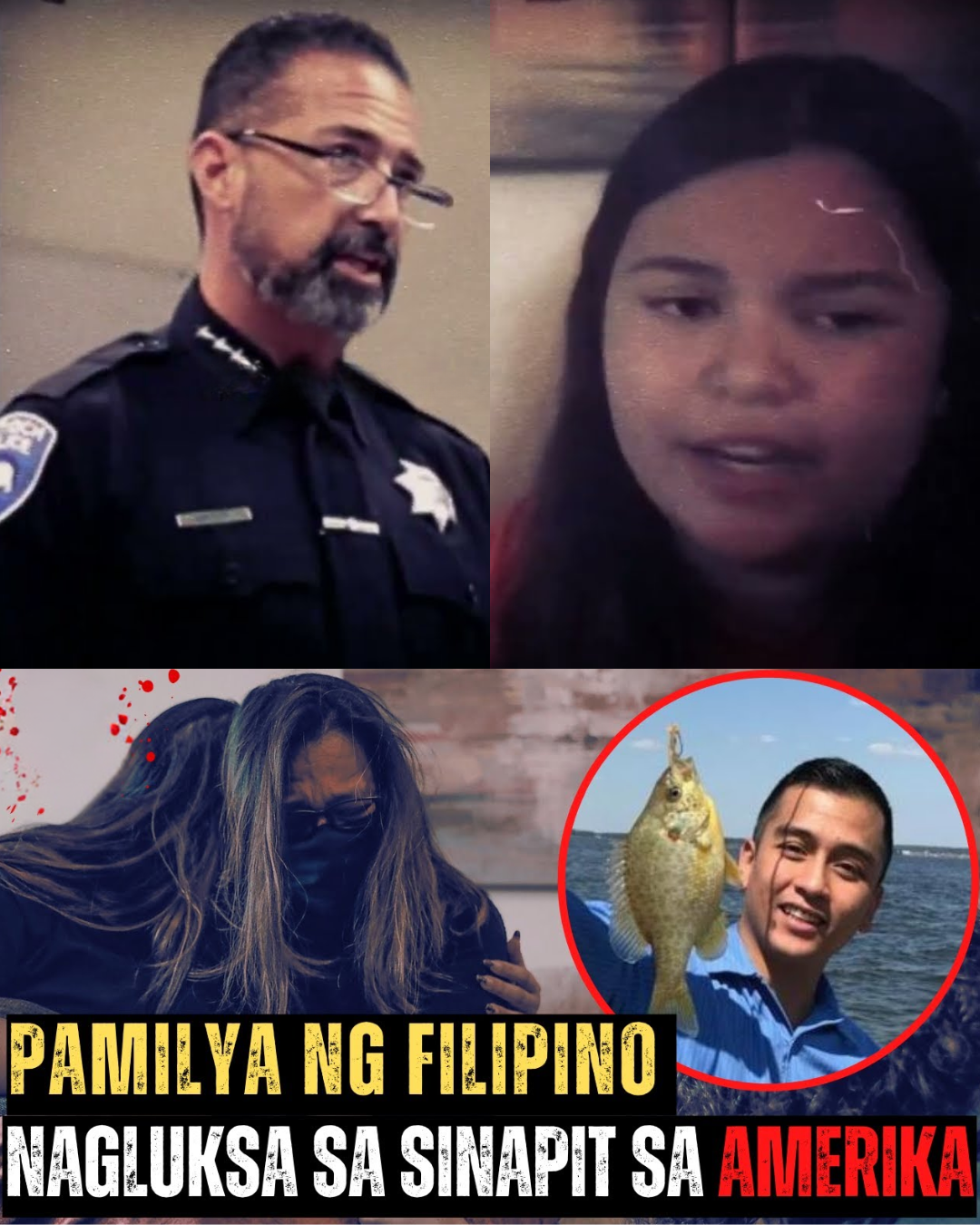
Angelo Quinto was a young man of ambition, born in the Philippines and raised in California. He dreamed of serving in the U.S. Navy, a goal he achieved after high school. However, his military career was cut short by an unexpected diagnosis of a shellfish allergy, leading to an early discharge that marked the beginning of his struggles with mental health.
In 2019, a brutal assault left him with physical and emotional scars, deepening his anxiety into a severe depression. Despite these setbacks, Angelo remained positive, moving back into his family’s home with plans to build a new career in online gaming and video game design.
That sense of hope was shattered on that December night. Angelo experienced a terrifying paranoid episode, hallucinating and clinging to his mother, Cassandra, and his younger sister, Isabella, in fear. When he finally released them, Isabella called 911, hoping for medical assistance.
When Antioch police officers arrived, they found a calm scene. Angelo was in his mother’s bedroom, being gently held by her. The family explained the situation, but the officers took Angelo, placed him face down on the floor, and restrained him. His family watched in horror as one officer pressed a knee into the back of Angelo’s neck.
For the next four and a half minutes, Angelo’s family pleaded with the officers. They heard him cry out, “Please don’t [end my life] me,” twice. Cassandra noticed her son had become limp and silent and repeatedly asked the officers if he was okay, if he was sleeping. They ignored her. Fearing the worst, she began recording the scene with her cell phone.
It wasn’t until paramedics arrived that the officers turned Angelo over. His face was covered in blood, and his eyes had rolled back into his head. He was unresponsive. Angelo was rushed to a nearby hospital, where he was put on life support. Three days later, on December 26, 2020, he passed away.
For months, the Antioch Police Department remained silent. Then, in May 2021, the police chief held a press conference, presenting a narrative that stood in stark contrast to what the Quinto family had witnessed. The chief claimed the 911 call described Angelo as choking his mother and holding a hammer, justifying the officers’ forceful response.
He insisted the officer’s knee was placed on Angelo’s shoulder, not his neck, for only a few seconds—a technique he described as legal and taught in the police academy. The official cause of de@th was ruled an accident due to “excited delirium,” a controversial diagnosis, combined with acute drug toxicity.
The Quinto family, armed with their video evidence, rejected this official story as a cover-up. They filed a wrongful death lawsuit, and their attorney, John Burris, commissioned an independent autopsy conducted by a renowned forensic pathologist. The results were explosive.
Contrary to the coroner’s report, the independent autopsy found no drugs in Angelo’s system. Instead, it revealed petechial hemorrhaging in his eyes—a classic sign of asphyxiation, or suffocation. The family was convinced the official coroner had falsified the report to protect the officers and the department.
Their fight for accountability gained widespread support, leading to protests and pressure on elected officials. Despite their efforts, in September 2022, the Contra Costa County District Attorney announced that no criminal charges would be filed against the officers involved, siding with the official coroner’s findings.
Undeterred, the Quinto family has taken their case to federal court. Their tragic loss has already created a powerful legacy. In September 2021, the governor of California signed Assembly Bill 490, also known as the Angelo Quinto Act, into law. The bill explicitly bans police from using restraints that create a risk of positional asphyxia.
The city of Antioch has also launched its first-ever mental health crisis response team, named in Angelo’s honor, to ensure that future calls for help are met with care, not force. The family’s battle for justice continues, a painful reminder of a night when a call for help ended in a devastating and preventable loss.
News

The Toxic Price of Rejection: OFW’s Remains Found in a Septic Tank After Coworker’s Unwanted Advances
South Korea, a hub for Asian development, represents a major aspiration for many Filipino Overseas Workers (OFWs), who seek employment…

The Final Boundary: How a Starving Tricycle Driver Exacted Vengeance at a Homecoming Party
On November 28, 2009, in Angat, Bulacan, a lavish homecoming party for two returning travelers ended in a catastrophic tragedy….

The 12-Year Ghost: Why the Woman Behind Vegas’s ‘Perfect Crime’ Chose Prison Over Freedom
On October 1, 1993, at the Circus Circus Casino in Las Vegas, a crime unfolded in minutes that would be…

The Fatal Soulmate: How a British Expat’s Search for Love Online Became a $1 Million Homicide Trap
In 2020, in a comfortable apartment overlooking the city of Canberra, Australia, 58-year-old British expatriate Henrick Collins lived a successful…
The Cost of Negligence: Firefighter Ho Wai-Ho’s Tragic Sacrifice in Hong Kong’s Inferno
The catastrophic fire that engulfed seven towers of the Wang Fook Court residential complex in Hong Kong was a disaster…

The KimPau Phenomenon: How “The A-List” Sparked Queen Kim Chiu’s Fierce Career Revolution
The Filipino entertainment industry is currently witnessing a stunning career metamorphosis, all thanks to the sheer, raw power of the…
End of content
No more pages to load