In the tight-knit community of Tabaco, Albay, the sudden silence of an 18-year-old on social media is enough to cause a stir. But when Daniela Bernido—a bright, friendly, and ever-present personality online—failed to answer calls or texts for more than 24 hours in late June 2024, the concern of her friends and family quickly escalated into a frantic, public plea for help. Their desperate search would end in the most heartbreaking way imaginable: with the discovery of her body in a shallow grave. In a chilling twist, the person who would lead police to her final resting place was the last person she was seen with—her 20-year-old boyfriend, a criminology student who dreamed of one day enforcing the law he so brutally broke.

Daniela Bernido was a young woman full of life and promise. A recent graduate of Tabaco National High School, she was known for her cheerful disposition and her wide circle of friends. While contemplating her future, she was the model daughter, helping her mother with chores, doting on her young nieces and nephews, and even starting a small business selling brownies to earn her own money. She was in a relationship with Aaron Cordez, a fellow student from her high school who was pursuing a degree in criminology. Their romance was known and accepted by their families, so when Aaron arrived at the Bernido home on the evening of June 20 to pick Daniela up for a supposed visit to his uncle’s house in the nearby Barangay Pawa, no one suspected anything was amiss.
That night was the last time her family saw her alive. When Daniela failed to return home the next morning, her family’s concern turned to panic. Calls and texts to both her and Aaron’s phones went unanswered. They rushed to the police station in Barangay Pawa and, accompanied by officers, went to the property of Aaron’s uncle, Alan Riosa. A search of the grounds yielded only a single, ominous clue: a pair of Daniela’s underwear was found lying outside the house. As her family knew, she had no reason to have left any clothing there, and the discovery deepened their terror.
The case broke wide open later that same night. Under immense pressure from the police search and his own family, Aaron Cordez, accompanied by his parents, walked into the police station and confessed. He admitted that he knew where Daniela was, and that he was responsible for her death. He then led a solemn procession of police and Soco investigators back to his uncle’s property. There, in a secluded banana grove just 30 meters from the house, he pointed to a patch of disturbed earth. As a digger scraped away the soil, a foul odor filled the air, and the family’s last hopes were extinguished. They had found Daniela.
As the community reeled in shock, the heartbreaking motive behind the horrific crime began to surface. According to Aaron’s confession, he and Daniela got into a heated argument that turned physical, and in a fit of rage, he “unintentionally” strangled her. But Daniela’s family revealed a secret that they believe was the true catalyst for the murder: Daniela had recently told her mother that she was three months pregnant. They are convinced that when she shared the news with Aaron, the young criminology student panicked at the prospect of fatherhood and killed her to escape the responsibility.
The case took another controversial turn in the legal arena. While police initially filed a murder charge, believing Aaron had lured Daniela to the secluded location with premeditation, the Tabaco City Prosecutor’s Office downgraded the charge to homicide. This legal distinction sparked public outrage. A murder charge in the Philippines requires proof of planning and intent before the crime—evidence often found in text messages or online searches. Without it, a killing that occurs in the “heat of the moment,” no matter how brutal, is often classified as the lesser crime of homicide.
This legal nuance, while technically correct, has been a source of immense pain for the Bernido family and a public horrified by the crime’s details—that her body was allegedly buried naked, her arms raised as if in a final plea. While the official autopsy report was not made public, it did not stop speculation, with some even questioning the pregnancy. But as the narrator of the original report noted, whether a fetus was present or not, the law is clear: a life was taken.
The story of Daniela Bernido is a devastating double tragedy: the violent loss of a young, expectant mother, and the painful reality of a justice system that, in the eyes of many, has already failed them by diminishing the very nature of the crime. As her family navigates their grief, their cry for “Justice for Daniela” echoes a community’s demand for accountability for a future, and a life, that was so senselessly erased.
News

The Toxic Price of Rejection: OFW’s Remains Found in a Septic Tank After Coworker’s Unwanted Advances
South Korea, a hub for Asian development, represents a major aspiration for many Filipino Overseas Workers (OFWs), who seek employment…

The Final Boundary: How a Starving Tricycle Driver Exacted Vengeance at a Homecoming Party
On November 28, 2009, in Angat, Bulacan, a lavish homecoming party for two returning travelers ended in a catastrophic tragedy….
The 12-Year Ghost: Why the Woman Behind Vegas’s ‘Perfect Crime’ Chose Prison Over Freedom
On October 1, 1993, at the Circus Circus Casino in Las Vegas, a crime unfolded in minutes that would be…

The Fatal Soulmate: How a British Expat’s Search for Love Online Became a $1 Million Homicide Trap
In 2020, in a comfortable apartment overlooking the city of Canberra, Australia, 58-year-old British expatriate Henrick Collins lived a successful…
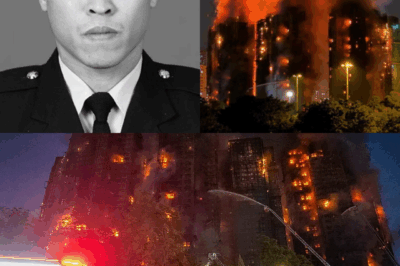
The Cost of Negligence: Firefighter Ho Wai-Ho’s Tragic Sacrifice in Hong Kong’s Inferno
The catastrophic fire that engulfed seven towers of the Wang Fook Court residential complex in Hong Kong was a disaster…

The KimPau Phenomenon: How “The A-List” Sparked Queen Kim Chiu’s Fierce Career Revolution
The Filipino entertainment industry is currently witnessing a stunning career metamorphosis, all thanks to the sheer, raw power of the…
End of content
No more pages to load