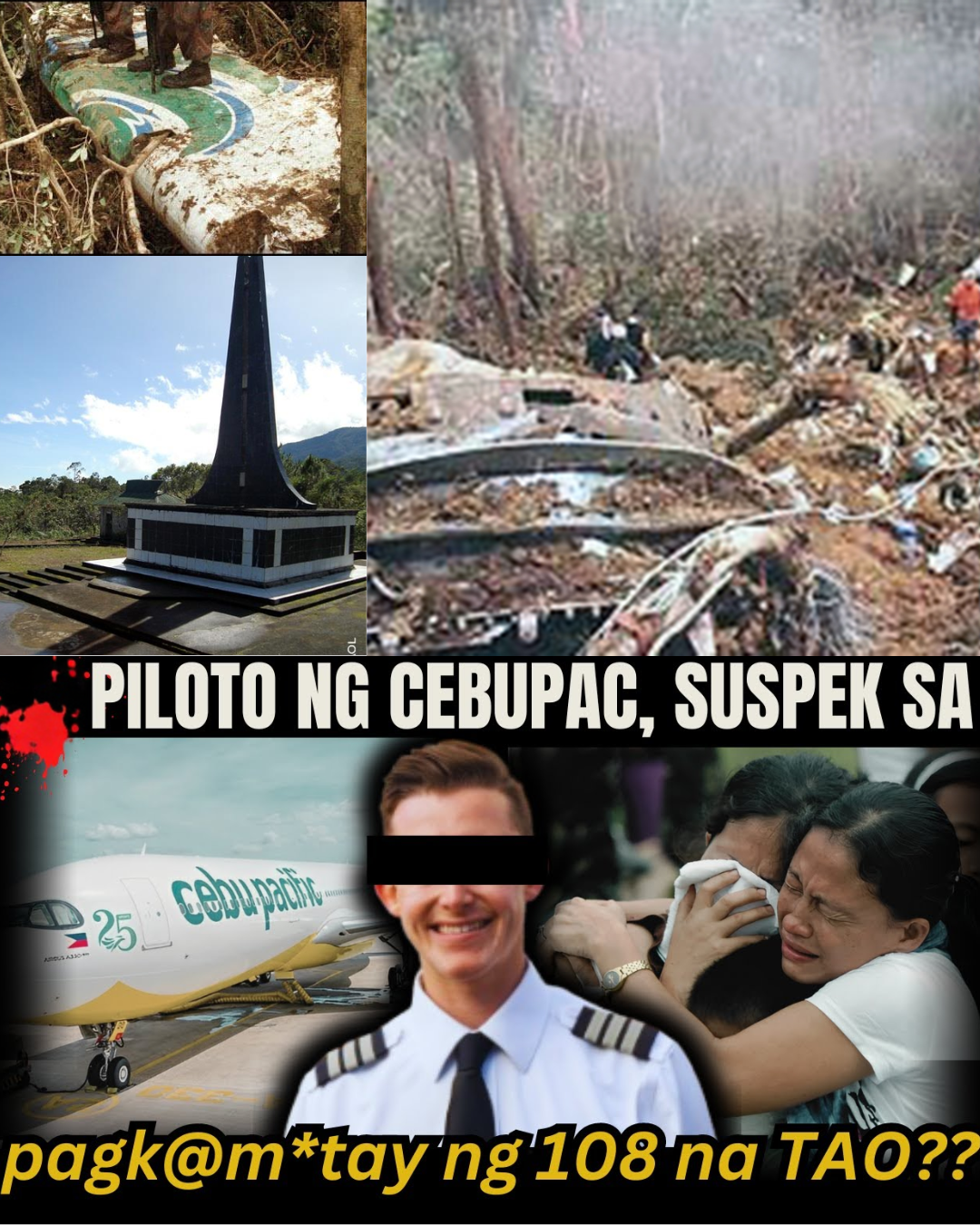
On the morning of February 2, 1998, the Oro Airport lounge was busy, but one order sat unclaimed. A crew member from Cebu Pacific had called in a request for packed lunches for the pilots and stewardesses of Flight 387. They were running late and needed to grab the food and go. But as the clock ticked past 12:00 PM, the food grew cold. The crew never arrived.
Miles away, at the Lumbia Airport control tower in Cagayan de Oro, a similar, more terrifying silence was growing. At 10:40 AM, Captain Paulo Fausto of Flight 387 had radioed in. His voice was calm. The plane was just 37 nautical miles out and would be landing in 15 minutes. The tower acknowledged. And then, nothing.
The flight, which had departed from Manila with 104 souls on board, simply vanished from the sky.
The aircraft, a McDonald Douglas DC-9, was relatively new to the Cebu Pacific fleet but was a veteran of the skies, having first flown for Air Canada in 1967. On this day, it carried 99 passengers and five crew members.
The passenger list was a cross-section of life: 94 Filipinos, many excited for family reunions, alongside five foreigners—from Australia, Austria, Japan, Switzerland, and Canada—and an American doctor on his way to a medical mission. Below them, Cagayan de Oro basked in a warm, clear day, perfect for a landing.
But in the air, a different story was unfolding. The tower controllers gave it a few minutes, assuming a minor delay. When 11:00 AM passed, they began to radio the flight. There was no response. They tried again. And again. For 12 agonizing minutes, they called out into the void.
Panic set in. They contacted other airports, querying if Flight 387 had made an emergency landing. They radioed other pilots in the air.
A Philippine Airlines pilot confirmed the ground crew’s growing fear: while it was clear on the ground, the airspace at 9,000 feet and below was a solid, impenetrable wall of clouds. The pilots of Flight 387 were flying blind, completely dependent on their instruments.
Hours later, the Cebu Pacific flight was officially declared missing. The news sent a shockwave across the nation. Lance Gokongwei, the young CEO of the new and ambitious airline, immediately fronted the media, vowing to spare no expense in the search.
Then-President Fidel V. Ramos ordered Congressman Jesus Dureza to assist, mobilizing helicopters and the full force of the Philippine Air Force.
For 24 hours, they found nothing. The search expanded, a grim grid over a vast, unforgiving jungle. The teams targeted four mountains: Mount Sumagaya, Mount Lumot, Mount Mangabon, and Mount Balatukan. The latter was an early focus, as two other planes had crashed there in previous decades. But as helicopters scoured the peaks, a devastating tip came in from residents near Mount Sumagaya. They had heard a massive explosion.
Two helicopters were dispatched, carrying Air Transportation Office (ATO) officials and an Air Force Colonel. As they circled the dense jungle of Sumagaya, they spotted it: a “bald patch” on the mountainside. The trees were sheared, and among the greenery, they saw small, white fragments.
The news crew on board was certain this was it. But as they tried to move in closer, ferocious winds nearly sucked the helicopter into the mountainside, forcing a terrifying retreat.
The news leaked, but the ATO refused to confirm, causing agonizing confusion for the families who had gathered, desperate for any information. Wild, unvetted reports from radio stations even claimed survivors had been found, a cruel rumor that was quickly debunked.
For the families, the slow pace of the official search was torture. Some, frustrated with the government and the airline, organized their own search parties, preparing to hike the treacherous mountain themselves. Others waited at the base, their faces a mask of grief, staring up at the peak shrouded in clouds.
On the morning of February 4, three days after the plane vanished, the news they all dreaded was confirmed. Flight 387 had crashed into Mount Sumagaya. There were no survivors. The impact had been catastrophic, and the recovery operation was grim. The 104 lives—the families returning home, the doctor on his mission—were all lost in an instant.
As the nation mourned, the inevitable question arose: Why?
The official investigation, conducted by the Civil Aviation Authority of the Philippines (CAAP, then known as the ATO), was swift. The blame was laid squarely on the two men who could not defend themselves: Captain Fausto and his co-pilot, Erwin Golia.
The official report, shared with the Manila Standard on March 27, 1998, was damning. The ATO chief stated the pilots had violated numerous aviation rules and described them as “not proficient,” recommending further training. The case was closed. It was “pilot error.”
For years, this was the accepted story. The two pilots had made a fatal mistake, and 104 people paid the price. But one man, the one who had managed the crisis on the ground, refused to accept it.
Jesus Dureza, the presidential assistant who had coordinated the search, would later reveal a story of shocking negligence and an alleged government cover-up. According to Dureza, the pilots were not incompetent; they were scapegoats.
The real culprit, he claimed, was a single, fatal typo on the official maps issued by the CAAP itself—the very maps every pilot in the country used for navigation.
Dureza discovered that the official aviation chart listed the elevation of Mount Sumagaya as 5,000 feet. Its actual, true elevation is 6,000 feet.
This 1,000-foot discrepancy was a death sentence.
Dureza’s team, reviewing the black box, pieced together the horrifying final moments. The flight had made an unscheduled, unlogged stop in Tacloban to pick up a new tire. This diversion meant they were approaching Cagayan de Oro from a completely different, non-standard route, a route that took them directly over the Sumagaya mountain range.
Flying in zero visibility, completely enveloped in clouds, Captain Fausto was relying only on his instruments and his government-issued map.
According to Dureza, the black box recorded the co-pilot’s voice, hesitant but concerned: “May bundok yata sa area na ito, sir.” (“I think there’s a mountain in this area, sir.”)
The pilot, likely checking his map, would have been reassured. The map told him the highest peak was 5,000 feet. He descended, maintaining an altitude of 5,500 feet, believing he was flying with a safe, 500-foot buffer. In reality, he was flying below the true summit.
The black box, Dureza said, captured the sudden, sickening realization. The trees must have appeared out of the fog like ghosts. The final recorded words from the cockpit were a desperate, frantic shout: “Pull up! Pull up!”
It was too late. The plane, flying at high speed, slammed directly into the mountainside.
The most damning piece of Dureza’s allegation came three years later. He claimed that the CAAP, realizing its catastrophic error, quietly updated its maps.
The new charts, issued to all airlines, listed Mount Sumagaya at its correct elevation: 6,000 feet. There was no press release, no admission of fault. The agency, Dureza claimed, had silently corrected its mistake, burying the truth along with the 104 victims and the reputations of the two men they blamed for the crash.
Today, a memorial stands at the crash site. It lists the names of all 104 victims. Their families were left to believe their loved ones died due to pilot incompetence. But the evidence points to a far more chilling conclusion: they were the victims of a single, fatal typo, and a bureaucracy that, it is alleged, chose to sacrifice two dead pilots to hide a 1,000-foot lie.
News

The Toxic Price of Rejection: OFW’s Remains Found in a Septic Tank After Coworker’s Unwanted Advances
South Korea, a hub for Asian development, represents a major aspiration for many Filipino Overseas Workers (OFWs), who seek employment…

The Final Boundary: How a Starving Tricycle Driver Exacted Vengeance at a Homecoming Party
On November 28, 2009, in Angat, Bulacan, a lavish homecoming party for two returning travelers ended in a catastrophic tragedy….

The 12-Year Ghost: Why the Woman Behind Vegas’s ‘Perfect Crime’ Chose Prison Over Freedom
On October 1, 1993, at the Circus Circus Casino in Las Vegas, a crime unfolded in minutes that would be…

The Fatal Soulmate: How a British Expat’s Search for Love Online Became a $1 Million Homicide Trap
In 2020, in a comfortable apartment overlooking the city of Canberra, Australia, 58-year-old British expatriate Henrick Collins lived a successful…
The Cost of Negligence: Firefighter Ho Wai-Ho’s Tragic Sacrifice in Hong Kong’s Inferno
The catastrophic fire that engulfed seven towers of the Wang Fook Court residential complex in Hong Kong was a disaster…

The KimPau Phenomenon: How “The A-List” Sparked Queen Kim Chiu’s Fierce Career Revolution
The Filipino entertainment industry is currently witnessing a stunning career metamorphosis, all thanks to the sheer, raw power of the…
End of content
No more pages to load