In the quiet town of Amstetten, Austria, Josef Fritzl cultivated an image of a respectable electrical engineer and family man. But beneath the facade of suburban normalcy, he harbored a secret of unimaginable horror.
For 24 years, he held his own daughter, Elisabeth, captive in a hidden, soundproof dungeon built beneath their family home, subjecting her to relentless abuse that resulted in the birth of seven children.
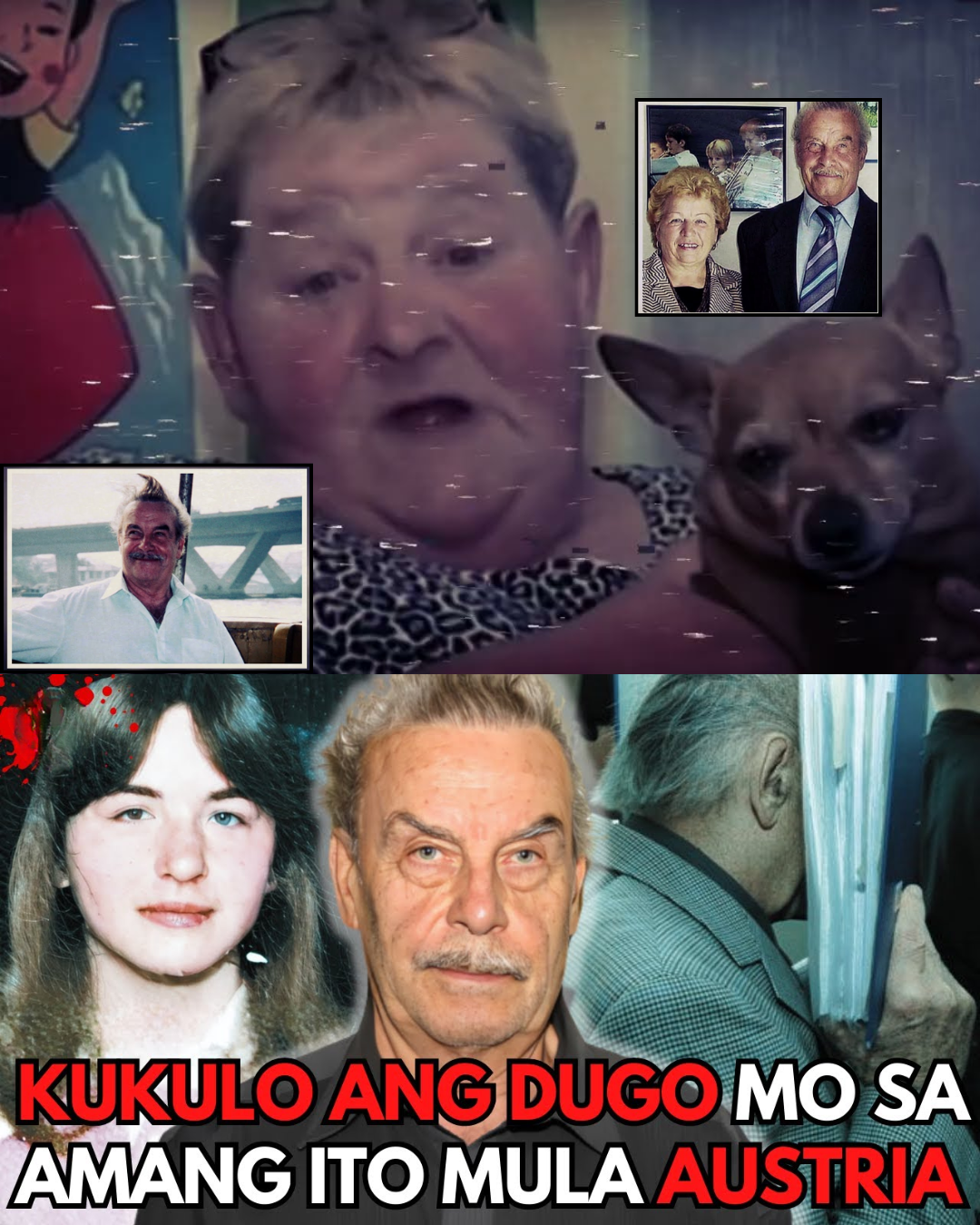
Josef Fritzl, born in 1935, had a troubled upbringing himself, abandoned by his alcoholic father and raised by a reportedly abusive mother. In 1956, he married Rosemarie, and they eventually had seven children. Fritzl had early brushes with the law, including a conviction for assaulting a nurse in 1967.
Despite this, he maintained his standing in the community. His abuse, however, extended to his own family, particularly targeting his daughter Elisabeth.
From the age of 11, Elisabeth endured horrific abuse at the hands of her father. After graduating from school, she attempted to escape her torment, running away with a friend in 1983 at age 16. However, authorities found her three weeks later and returned her to her parents’ custody. Her hope for freedom was short-lived.
On August 28, 1984, shortly after Elisabeth turned 18, Josef lured her into the basement under the pretext of needing help installing a door for a “nuclear fallout shelter” he claimed to be building—a plausible activity during the Cold War era.
Once inside, he incapacitated her with a chemical-soaked towel and locked her away in the hidden, multi-room dungeon he had secretly constructed over six years.
The entrance was concealed behind shelving, secured by reinforced doors and electronic keypad locks. To the outside world, Josef and Rosemarie reported Elisabeth missing, claiming she had run off to join a religious cult. Josef even forced Elisabeth to write letters supporting this story, which police accepted, closing the missing person case.
For the next 24 years, Elisabeth lived in unimaginable darkness, both literal and metaphorical. Josef visited her regularly, bringing food and supplies, but his visits were primarily for the purpose of repeated, brutal assaults.
Between 1988 and 2002, Elisabeth gave birth to seven children, all fathered by Josef.
She delivered them alone in the cellar, aided only by basic supplies and an instructional book Josef provided. One child tragically passed away shortly after birth due to respiratory problems; Josef incinerated the infant’s body in the home’s furnace.
In a twisted manipulation, Josef orchestrated a way to bring three of the children—Lisa, Monika, and Alexander—upstairs to live with him and Rosemarie. He forced Elisabeth to write notes claiming she couldn’t care for the babies and had left them on the doorstep. Rosemarie and Josef then “discovered” these abandoned grandchildren and raised them as their own, fooling social services despite occasional suspicions.
The remaining three surviving children—Kerstin, Stefan, and Felix—grew up entirely within the confines of the dungeon alongside their mother, Elisabeth. They never saw sunlight, never breathed fresh air, never experienced the outside world. Their existence was marked by fear, deprivation, and Josef’s cruel control. He installed intercoms to monitor them, threatened them with electrocution or poison gas if they tried to escape, and punished disobedience by cutting off power or withholding food.
Life continued upstairs, seemingly normal. Josef rented out rooms in the house, sometimes directly above the dungeon. Tenants reported strange noises, but Josef dismissed them as plumbing issues. One tenant’s dog constantly sniffed and whined at a specific spot on the floor, but nothing was ever discovered. Josef maintained his double life, telling his family he was away on business trips when he was actually spending time in the cellar.
The horrific secret finally began to unravel on April 19, 2008. Kerstin, then 19, fell critically ill and lost consciousness. Elisabeth pleaded desperately with Josef to seek medical help. For the first time, Josef relented, likely fearing Kerstin’s demise would expose him. He helped carry the unconscious girl out of the dungeon and drove her to the hospital, leaving Elisabeth and her two sons locked back inside.
At the hospital, doctors were immediately alarmed by Kerstin’s severe condition—extreme pallor, kidney failure, vitamin deficiencies—and her lack of any medical records. Josef’s vague explanations and attempts to control information raised suspicions. He claimed Kerstin was his granddaughter, left by his estranged daughter Elisabeth. Alerted by the concerned medical staff, police reopened Elisabeth’s missing person file.
Authorities pressured Josef to produce Elisabeth, believing she might hold the key to Kerstin’s condition or even be responsible for her state. On April 26, 2008, Josef finally released Elisabeth, Stefan, and Felix from the dungeon after 24 years. He brought them upstairs, instructing Elisabeth to lie to the authorities.
However, upon arriving at the hospital, police immediately separated Elisabeth from Josef. Assured she would never have to see her father again, Elisabeth poured out the entire horrifying story of her decades-long captivity and abuse in an 11-hour testimony.
The details were sickening: the constant assaults, the births, the death of her infant son, the psychological torture endured by her and her children.
Police confronted Josef, who quickly confessed to imprisoning his daughter but chillingly referred to their relationship as “consensual” and his basement family as “happy.” He rationalized his actions, claiming Elisabeth was rebellious and he needed to “protect” her by controlling every aspect of her life. DNA tests confirmed he was the father of all six surviving children.
The case shocked Austria and the world. Josef Fritzl was charged with murder (for the death of the infant through neglect), enslavement, assault, coercion, and false imprisonment. During his trial in March 2009, Elisabeth’s pre-recorded video testimony provided the harrowing core evidence. Disguised, Elisabeth also attended part of the trial. Seeing her, Josef Fritzl abruptly changed his plea to guilty on all charges.
He was sentenced to life imprisonment in a secure psychiatric facility. After the trial, Elisabeth, then 42, and her six children were moved to a secret location under new identities, receiving intensive therapy to cope with their immense trauma. The cellar beneath the Fritzl house was filled with concrete in 2013 to prevent it from becoming a dark tourist site.
In recent years, reports indicate Elisabeth has found some measure of peace, forming a strong relationship with her children and even finding love with one of her bodyguards. Josef Fritzl, now elderly and reportedly suffering from dementia, remains incarcerated.
His request to move to a regular prison was denied. The Fritzl case remains one of the most disturbing examples of prolonged domestic imprisonment and abuse ever recorded, a chilling testament to the darkness that can hide behind a seemingly ordinary facade.
News

The Toxic Price of Rejection: OFW’s Remains Found in a Septic Tank After Coworker’s Unwanted Advances
South Korea, a hub for Asian development, represents a major aspiration for many Filipino Overseas Workers (OFWs), who seek employment…

The Final Boundary: How a Starving Tricycle Driver Exacted Vengeance at a Homecoming Party
On November 28, 2009, in Angat, Bulacan, a lavish homecoming party for two returning travelers ended in a catastrophic tragedy….

The 12-Year Ghost: Why the Woman Behind Vegas’s ‘Perfect Crime’ Chose Prison Over Freedom
On October 1, 1993, at the Circus Circus Casino in Las Vegas, a crime unfolded in minutes that would be…

The Fatal Soulmate: How a British Expat’s Search for Love Online Became a $1 Million Homicide Trap
In 2020, in a comfortable apartment overlooking the city of Canberra, Australia, 58-year-old British expatriate Henrick Collins lived a successful…
The Cost of Negligence: Firefighter Ho Wai-Ho’s Tragic Sacrifice in Hong Kong’s Inferno
The catastrophic fire that engulfed seven towers of the Wang Fook Court residential complex in Hong Kong was a disaster…

The KimPau Phenomenon: How “The A-List” Sparked Queen Kim Chiu’s Fierce Career Revolution
The Filipino entertainment industry is currently witnessing a stunning career metamorphosis, all thanks to the sheer, raw power of the…
End of content
No more pages to load