On December 11, 1994, high above the Pacific Ocean, Philippine Airlines Flight 434 was a scene of calm routine. The Boeing 747, carrying 273 passengers on its final leg from Cebu to Tokyo, was cruising at altitude. Most of the passengers, many of them Japanese tourists returning from vacation, were relaxing or sleeping.
But in an instant, that peace was shattered. A deafening explosion ripped through the cabin, originating from under seat 26K. The blast tore a gaping hole in the floor, filled the cabin with thick smoke, and sent the massive jet into a violent, uncontrolled bank.
It was the beginning of a terrifying ordeal that would test the limits of human ingenuity and courage, and would ultimately unravel one of the most audacious terrorist plots in history.
The passenger in seat 26K, a 24-year-old Japanese engineer named Haruki Ikegami, was killed instantly. The force of the explosion destroyed the lower half of his body and tore through the cabin floor, severing crucial flight control cables.
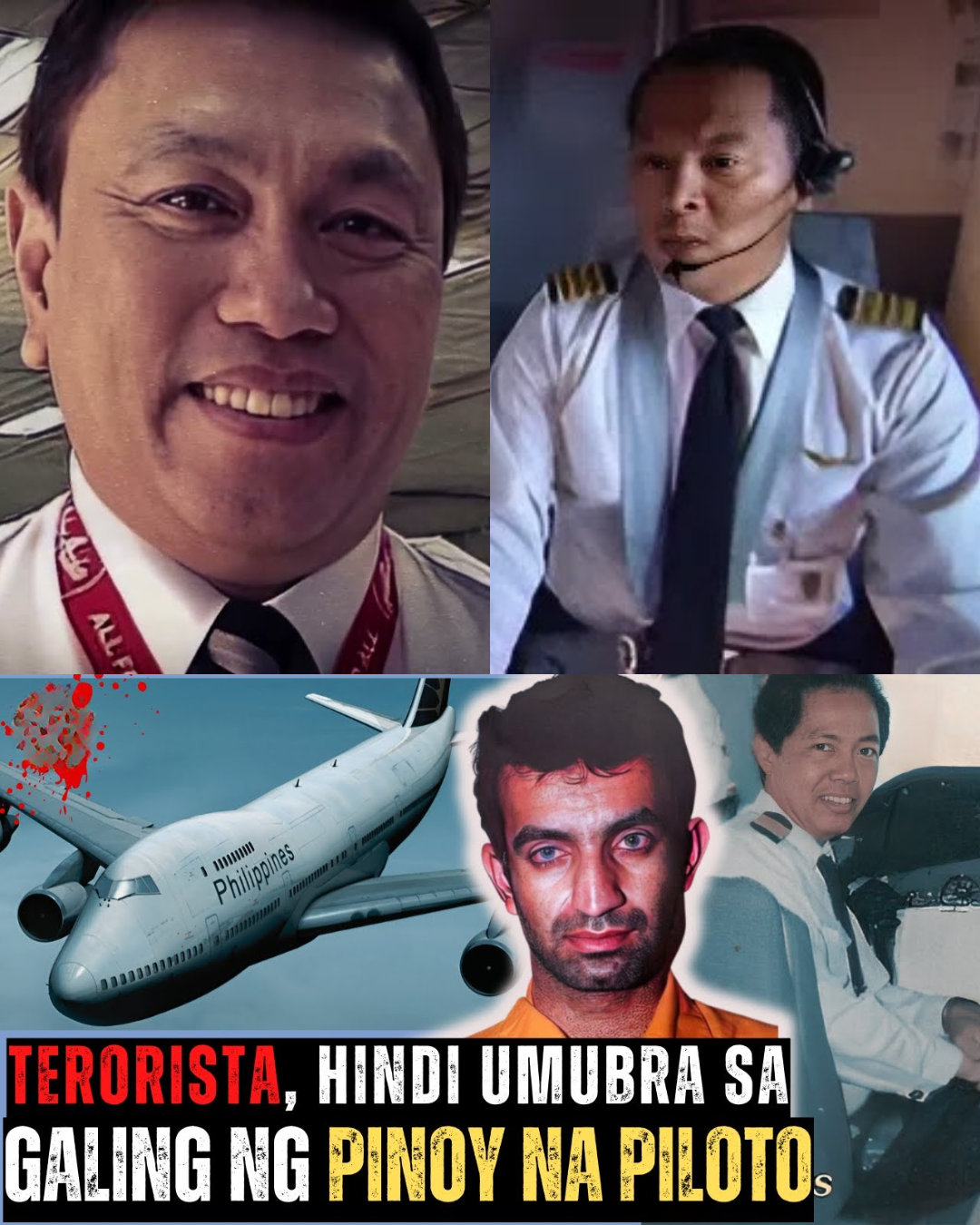
In the cockpit, Captain Eduardo Reyes, a veteran pilot with experience in the Philippine Air Force, was suddenly faced with a pilot’s worst nightmare. Alarms blared as the autopilot disengaged, and the plane was stuck in a hard right turn.
He grabbed the yoke, but the controls were unresponsive. The ailerons, the surfaces on the wings that control the plane’s roll, were useless. Flight 434 was, for all intents and purposes, a crippled giant, and Captain Reyes had no way to steer it.
While the cabin crew, led by flight purser Fernando Bayot, heroically managed the panic and attended to the wounded, Captain Reyes, First Officer Jaime Herrera, and Systems Engineer Dexter Comendador were in a desperate battle to regain control.
Their destination was Naha Airport in Okinawa for an emergency landing, but they couldn’t even turn the plane towards it. They consulted the Quick Reference Handbook (QRH)—the pilot’s bible for emergencies—but there was no procedure for this kind of catastrophic failure. The book had no answer.
With the plane unresponsive and time running out, Captain Reyes made a decision that is now legendary in the annals of aviation. He decided to try something radical, a technique taught in theory but rarely, if ever, attempted on a commercial airliner of this size.
He would steer the 747 using only the engines. In an incredible display of skill and calm under pressure, he began to apply differential thrust—increasing the power to the left engines while decreasing it on the right. Slowly, agonizingly, he used the asymmetric force of the engines to counteract the right bank and steer the massive aircraft, essentially turning the engines into a makeshift rudder.
For over an hour, he fought the plane, making slow, wide turns towards Okinawa. He finally managed to align the crippled jet with the runway, but his problems were far from over. Without proper flight controls, he had to manage the plane’s descent and speed with only the engines and a partially functioning elevator.
The landing was rough, but it was successful. Captain Reyes had saved the lives of 272 people, pulling off a maneuver that many experts would have deemed impossible.
As emergency services rushed the injured to hospitals, investigators descended on the plane. They quickly determined it was a bomb, not a mechanical failure. The evidence was chilling. The timer was a modified Casio digital watch, and the power source was a 9-volt battery commonly sold in the Philippines.
The bomb had been deliberately placed under seat 26K, a location that on most Boeing 747s is directly above the central fuel tank. The terrorist’s intention was clear: to have the explosion rupture the tank and disintegrate the entire aircraft in a massive fireball.
So why did the plane survive? The investigation revealed a tragic and heroic irony. The body of Haruki Ikegami, the man in seat 26K, had absorbed the majority of the blast. He had unknowingly acted as a human shield, his body preventing the explosion from penetrating the fuel tank. His tragic death had saved everyone else on board.
The investigation in the Philippines soon led to an even more terrifying discovery. A fire in a Manila apartment, caused by a chemical mixture, led police to a laptop. The laptop belonged to the terrorist who had planted the bomb: Ramzi Yousef, the mastermind of the 1993 World Trade Center bombing.
He had boarded Flight 434’s first leg from Manila to Cebu under a fake name, assembled the liquid nitroglycerin bomb in the lavatory, placed it under the seat, and deplaned in Cebu, leaving a deadly trap for the passengers on the next leg.
The contents of his laptop were horrifying. The bombing of PAL Flight 434 was not the main event. It was a test run. Yousef’s true plan, codenamed “Project Bojinka,” was to simultaneously plant bombs on 11 different U.S. airliners flying from Asia to the United States.
His plan was to have them all explode over the Pacific Ocean, killing thousands of people in what would have been the most devastating act of air terrorism in history. The heroic landing of Flight 434, and the accidental discovery of his bomb-making factory, had allowed authorities to foil a plot of unimaginable scale.
The incident had a lasting legacy. Captain Reyes and his crew were hailed as international heroes. Ramzi Yousef was eventually captured in Pakistan and is now serving a life sentence in the United States. But perhaps the most visible legacy of Flight 434 is seen every time we go to an airport.
The discovery that Yousef used liquid explosives, easily smuggled in small bottles, exposed a massive loophole in airport security. This led directly to the implementation of the rule limiting liquids, aerosols, and gels in carry-on luggage to 100ml (3.4 ounces)—a rule that became globally enforced after a similar liquid bomb plot was thwarted in 2006.
The story of Philippine Airlines Flight 434 is more than just a tale of survival. It is a story of incredible heroism in the cockpit, a tragic sacrifice in the cabin, and a chilling glimpse into a terrorist plot that was stopped only by a combination of luck, courage, and brilliant airmanship. It is the story of the flight that changed the way we all fly forever.
News

The Toxic Price of Rejection: OFW’s Remains Found in a Septic Tank After Coworker’s Unwanted Advances
South Korea, a hub for Asian development, represents a major aspiration for many Filipino Overseas Workers (OFWs), who seek employment…

The Final Boundary: How a Starving Tricycle Driver Exacted Vengeance at a Homecoming Party
On November 28, 2009, in Angat, Bulacan, a lavish homecoming party for two returning travelers ended in a catastrophic tragedy….

The 12-Year Ghost: Why the Woman Behind Vegas’s ‘Perfect Crime’ Chose Prison Over Freedom
On October 1, 1993, at the Circus Circus Casino in Las Vegas, a crime unfolded in minutes that would be…

The Fatal Soulmate: How a British Expat’s Search for Love Online Became a $1 Million Homicide Trap
In 2020, in a comfortable apartment overlooking the city of Canberra, Australia, 58-year-old British expatriate Henrick Collins lived a successful…
The Cost of Negligence: Firefighter Ho Wai-Ho’s Tragic Sacrifice in Hong Kong’s Inferno
The catastrophic fire that engulfed seven towers of the Wang Fook Court residential complex in Hong Kong was a disaster…

The KimPau Phenomenon: How “The A-List” Sparked Queen Kim Chiu’s Fierce Career Revolution
The Filipino entertainment industry is currently witnessing a stunning career metamorphosis, all thanks to the sheer, raw power of the…
End of content
No more pages to load