The morning of May 13, 2015, began like any other at the Kentex Manufacturing Corporation, a two-story footwear factory in Valenzuela City, Philippines. Hundreds of workers, many of them contractual employees earning far below the minimum wage, were busy at their stations, cutting, assembling, and packing rubber slippers.
But just before lunchtime, a single, stray spark from a welder’s tool ignited a drum of highly flammable chemicals that were improperly stored near the factory’s main entrance. The spark unleashed an inferno that would, in a matter of hours, claim 74 lives and become a grim symbol of corporate greed and systemic failure.
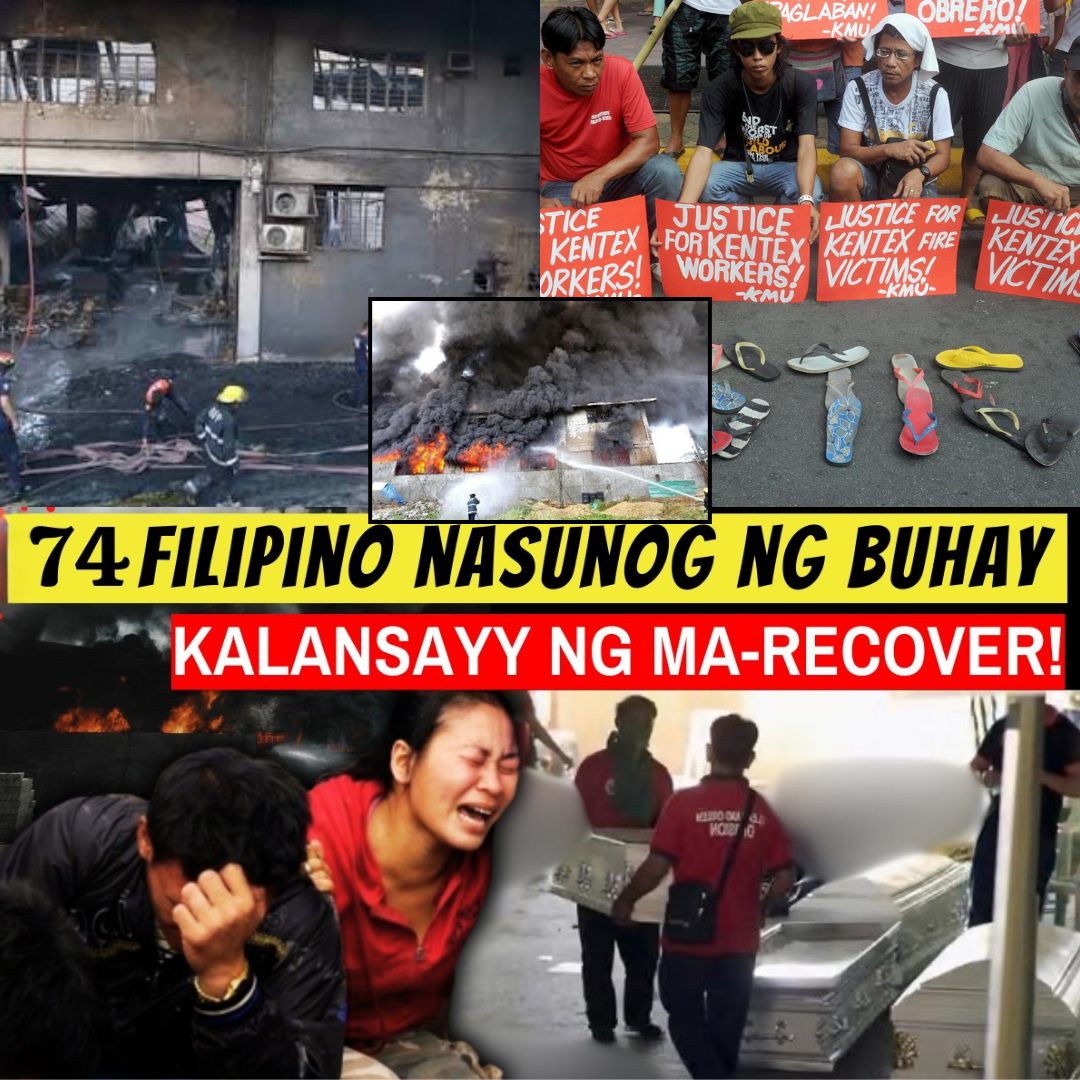
The fire spread with terrifying speed. Workers on the ground floor, like Leonilo Alibangbang, described a sudden explosion of flames and thick, black smoke that filled the air with the toxic stench of burning rubber and chemicals.
A chaotic scramble for safety ensued. While some on the ground floor managed to escape, the situation for the dozens of workers trapped on the second floor was far more dire.
Survivor Aljon Pasion recounted the horror of that moment. He and his colleagues only realized the building was on fire when thick smoke began pouring into their production area. When they ran for the stairs, they found their main escape route already engulfed in a wall of fire.
They rushed to a second staircase at the back of the building, only to find it, too, was impassable. Panic erupted. With no fire alarm, no sprinklers, and no accessible fire exits, the second floor had become a death trap.
In a desperate bid for survival, Aljon and a few others found a small hole in a wall. They crawled through, jumped onto the roof of an adjacent canteen, and then to the top of a truck, ultimately escaping with their lives, though many were injured in the fall.
The vast majority, however, were not so fortunate. The building’s windows, which could have been a means of escape, were covered with thick steel bars and wire mesh, ironically installed to prevent theft. The workers were locked inside, with no way out.
For seven agonizing hours, firefighters battled the blaze while frantic family members gathered outside, praying for a miracle that would never come. When the fire was finally extinguished, the true scale of the tragedy was revealed.
The second floor was a scene of utter devastation. Authorities found the remains of 74 workers, most of them women, huddled together, their bodies burned beyond recognition. The Kentex fire became the third-deadliest fire in Philippine history.
The investigation that followed uncovered a horrifying and systemic pattern of negligence. The welder whose spark started the fire claimed he was never warned about the flammable chemicals stored just feet from his work area.
Survivors and labor groups painted a grim picture of life inside the factory: workers were paid illegally low wages (as little as P202 for a 12-hour day), denied legally mandated benefits like social security and maternity leave, and forced to work in unsafe, overcrowded conditions without basic safety equipment like proper ventilation or even functioning emergency lights.
The company had never conducted a single fire drill.
The most shocking revelation, however, was that the factory had been operating with a business permit and a fire safety certificate, both issued by local government officials. How could a building with no sprinklers, no marked fire exits, and barred windows pass a safety inspection? This question became the heart of the legal battle that followed.
Fifteen families of the victims, refusing a financial settlement offered by the company, filed charges of reckless imprudence resulting in homicide against the Kentex owners and several Valenzuela city officials, including the mayor.
They argued that the tragedy was not an accident, but the direct result of a conspiracy of greed and negligence between the company and the officials who enabled their unsafe practices.
But after years of a slow-moving legal battle, the quest for justice ended in heartbreak. In 2016, the Sandiganbayan, the country’s anti-graft court, dismissed the charges against the government officials, ruling that the prosecution had failed to prove they had acted with gross negligence. This decision was later affirmed by the Supreme Court in 2021. The factory owners were also acquitted of the most serious charges.
In the end, despite the loss of 74 lives in a fire that was eminently preventable, no one was held criminally liable. The Kentex fire remains a painful and unresolved tragedy, a somber monument to a justice system that, for the poorest and most vulnerable workers, failed to deliver.
News

The Toxic Price of Rejection: OFW’s Remains Found in a Septic Tank After Coworker’s Unwanted Advances
South Korea, a hub for Asian development, represents a major aspiration for many Filipino Overseas Workers (OFWs), who seek employment…

The Final Boundary: How a Starving Tricycle Driver Exacted Vengeance at a Homecoming Party
On November 28, 2009, in Angat, Bulacan, a lavish homecoming party for two returning travelers ended in a catastrophic tragedy….

The 12-Year Ghost: Why the Woman Behind Vegas’s ‘Perfect Crime’ Chose Prison Over Freedom
On October 1, 1993, at the Circus Circus Casino in Las Vegas, a crime unfolded in minutes that would be…

The Fatal Soulmate: How a British Expat’s Search for Love Online Became a $1 Million Homicide Trap
In 2020, in a comfortable apartment overlooking the city of Canberra, Australia, 58-year-old British expatriate Henrick Collins lived a successful…
The Cost of Negligence: Firefighter Ho Wai-Ho’s Tragic Sacrifice in Hong Kong’s Inferno
The catastrophic fire that engulfed seven towers of the Wang Fook Court residential complex in Hong Kong was a disaster…

The KimPau Phenomenon: How “The A-List” Sparked Queen Kim Chiu’s Fierce Career Revolution
The Filipino entertainment industry is currently witnessing a stunning career metamorphosis, all thanks to the sheer, raw power of the…
End of content
No more pages to load