In 2010, Elmer Balbero, a former farmer from the province of Quirino, Philippines, made the difficult decision that millions of his countrymen make every year. To pay off mounting debts and give his wife, Claire, and their children a better life, he would become an Overseas Filipino Worker (OFW). He said an emotional goodbye, promising to be back in nine months. Instead, he vanished into a 4.5-year nightmare, a descent into a living hell at the hands of Somali pirates that would push him to the absolute limits of human endurance. This is his incredible story of survival.

Elmer’s journey began aboard the FV Naham 3, a fishing vessel. The work was grueling, the conditions harsh, but it was a means to an end. In March 2012, while fishing in the Indian Ocean south of the Seychelles—a notorious hotbed for piracy—their luck ran out. The vessel was attacked and hijacked by Somali pirates. The crew of 26 men from across Asia, including five Filipinos, was taken hostage. The ship’s captain, who bravely resisted, was killed in the initial assault, a brutal opening act to the horror that would follow.
The pirates’ demand was simple: a $1.5 million ransom. But there was a devastating complication. Unlike the crews of large cargo ships or oil tankers, the humble fishermen of the FV Naham 3 were not insured. Their home governments, including the Philippines, China, and Indonesia, refused to pay. With no money forthcoming, the crew was no longer a valuable asset to the pirates; they were a burden. And so, their unimaginable ordeal began.
For the next four and a half years, Elmer and his crewmates were subjected to a level of cruelty that is hard to comprehend. They were victims of daily torture, both physical and psychological. Elmer recounted how the pirates would stage mock executions, pressing guns to their heads and firing just past their ears, the terrifying sound a constant reminder of how close they were to death.
In one particularly sadistic act, two fishermen were locked in a freezer for an extended period. When they emerged, shivering and frostbitten, the pirates laughed as they beat them. The two men later died from their injuries. Their bodies, along with the body of the captain, were unceremoniously stored in the ship’s freezer.
Starvation was a constant companion. The men were often given only water for days on end. Elmer described their physical state as being like “walking deads,” their bodies nothing more than skin and bone. The psychological toll was immense.
They were periodically allowed to call their families, not as a kindness, but as a tool of torture. They were forced to beg their loved ones to pressure their governments to pay a ransom that would never come. Back in the Philippines, Elmer’s family was living its own nightmare, their hope slowly turning to a desperate anger at a government they felt had abandoned them.
After more than a year of being held captive at sea, the FV Naham 3, neglected and without maintenance, finally sank. The remaining hostages were forced ashore, and their nightmare entered a new, even more primal, phase. They were taken deep into the Somali jungle, far from any semblance of civilization. Their diet became whatever they could find. They were lucky to get a meager portion of rice or beans.
More often, they survived on the creatures of the forest. They were forced to hunt for rats, birds, and insects to stay alive. Elmer recalled how they would bury their crewmates who died of illness in the sand, “like dogs.” He and the other survivors had lost all hope, convinced they had been forgotten by the world and would die in that jungle.
But they were not entirely forgotten. A retired British Army Colonel named John Steed, working with the organization Hostage Support Partners, had been tirelessly negotiating for their release. In a complex and dangerous process that involved the United Nations and local religious leaders, Steed finally secured a deal. The rescue operation itself was fraught with peril.
The pirates designated the release point as Galkayo, a city notorious for its violent clan warfare. Using a UN plane, Steed and his team flew into the conflict zone in October 2016.
There, in a small building, they found the survivors. Emaciated, ill, and emotionally shattered, the men were finally free. They were flown to Nairobi, Kenya, where they were met by ambassadors and journalists. Medical exams revealed the true extent of their suffering: they were severely malnourished, suffering from diabetes, stomach ailments, and one had even survived a stroke.
Elmer Balbero finally returned to the Philippines, one of only four of the original five Filipino crew members to survive. His reunion with his family was bittersweet. After so long, he didn’t even recognize his youngest child, who had grown up without a father.
The man who returned was a survivor, but he was also deeply scarred. He began suffering from severe Post-Traumatic Stress Disorder (PTSD), waking up screaming in the night, haunted by the image of a pirate poking him in the back with a rifle.
Elmer’s story is an incredible testament to the resilience of the human spirit. He went to sea in search of a better life for his family and instead was dragged into the depths of human cruelty. His survival is a miracle, but his long journey of healing is a stark reminder of the deep and lasting scars that trauma can leave. It is a story of a man who was forgotten by the world but refused to be broken.
News

The Toxic Price of Rejection: OFW’s Remains Found in a Septic Tank After Coworker’s Unwanted Advances
South Korea, a hub for Asian development, represents a major aspiration for many Filipino Overseas Workers (OFWs), who seek employment…

The Final Boundary: How a Starving Tricycle Driver Exacted Vengeance at a Homecoming Party
On November 28, 2009, in Angat, Bulacan, a lavish homecoming party for two returning travelers ended in a catastrophic tragedy….

The 12-Year Ghost: Why the Woman Behind Vegas’s ‘Perfect Crime’ Chose Prison Over Freedom
On October 1, 1993, at the Circus Circus Casino in Las Vegas, a crime unfolded in minutes that would be…

The Fatal Soulmate: How a British Expat’s Search for Love Online Became a $1 Million Homicide Trap
In 2020, in a comfortable apartment overlooking the city of Canberra, Australia, 58-year-old British expatriate Henrick Collins lived a successful…

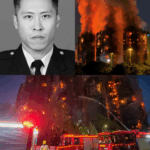
The Cost of Negligence: Firefighter Ho Wai-Ho’s Tragic Sacrifice in Hong Kong’s Inferno
The catastrophic fire that engulfed seven towers of the Wang Fook Court residential complex in Hong Kong was a disaster…

The KimPau Phenomenon: How “The A-List” Sparked Queen Kim Chiu’s Fierce Career Revolution
The Filipino entertainment industry is currently witnessing a stunning career metamorphosis, all thanks to the sheer, raw power of the…
End of content
No more pages to load