On the morning of February 13, 2012, sanitation worker Jeremy Himena began his usual route collecting trash in Taytay, Rizal.
He included Paseo Monte Carlo, a secluded area known locally as a dumping ground, though not officially part of his route.
Around 6:30 AM, amidst the tall grass, he spotted two sacks of garbage and, beside them, a bundle wrapped in a blanket.
When he touched the bundle, a human foot emerged. Startled, he ran back to his truck, and they sped to the nearby municipal hall.
Ricardo Maniego, the head of security, immediately called the police and secured the area with rope to preserve potential evidence.
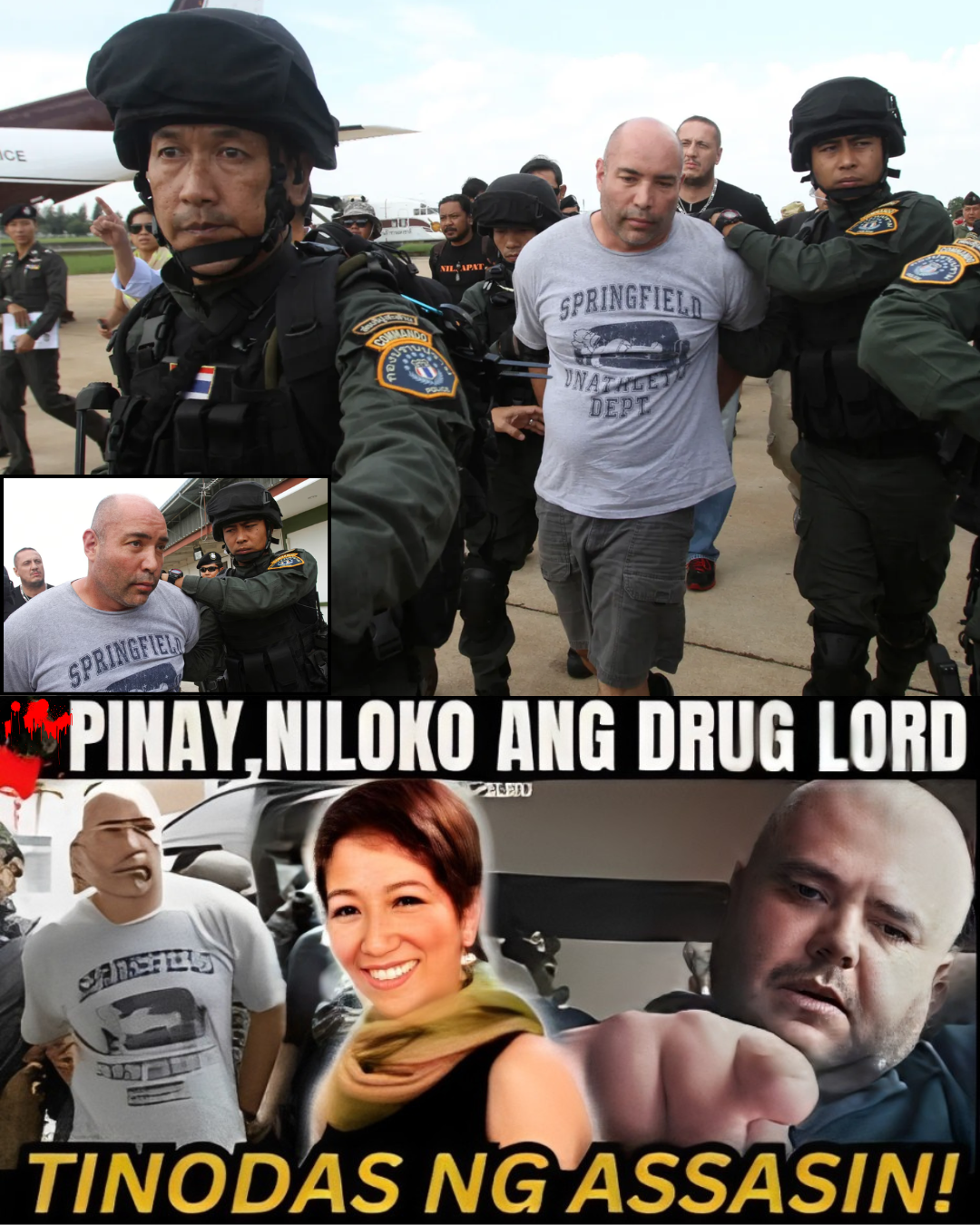
By 7:50 AM, Scene of the Crime Operatives (SOCO) arrived. They unwrapped the blanket to find the body of a woman, dressed in a black jacket and jeans.
Residents confirmed she wasn’t local. Detective George Arada noted that finding bodies in this area was tragically common, often dismembered, making identification difficult.
This time, however, was different. In the victim’s pocket, they found an ID. She was Catherine Lee, 43 years old.
What initially seemed like another grim but local crime would soon unravel into an international investigation involving professional assassins and a global criminal mastermind.
Catherine Lee, born in 1969, was a picture of success. Even at 43, photos showed a youthful face with a welcoming smile.
She started as a simple real estate agent but, through skill and excellent people management, built her own thriving business.
Her success allowed her and her husband, Mr. Lee, to afford a home in the affluent BF Homes subdivision.
Her expertise led her to become the president of the local chapter of the Real Estate Brokers Association of the Philippines (REBAP).
She expanded her reach online, attracting clients looking for properties in Manila and Southern Luzon. Friends noted she was always cautious, thoroughly vetting potential clients before meeting them.
In February 2012, Catherine arranged to meet new clients. When she didn’t return home, her husband grew frantic.
He contacted her colleagues and friends, but no one knew where she was. Then, the devastating news arrived: a woman’s body had been found in Taytay.
Mr. Lee went to identify the remains and confirmed the worst. It was Catherine.
Days later, dissatisfied with the initial Philippine National Police (PNP) investigation, Mr. Lee contacted the National Bureau of Investigation (NBI).
His distrust might have stemmed from concerns about evidence tampering, a worry echoed even by former Interior Secretary Rafael Alunan, who once stated such practices were “pretty much a regular occurrence” within parts of the police force.
Mr. Lee believed the NBI, despite its own imperfections, offered greater credibility.
NBI Agent Rizal de Rivera, known by the alias “Zaldi” or nicknamed “Slayer” by colleagues for his sharpshooting skills, was assigned the case.
His team first interviewed Catherine’s husband, friends, and co-workers. No one knew of anyone who held a grudge against her or would want her harmed.
The NBI took custody of her laptop and cellphone for forensic analysis. The autopsy report revealed Catherine had been shot four times in the head.
Two bullets entered just below her eyes, instantly ending her life. This detail struck Agent Rivera.
The weapon used was a .22 caliber handgun, unusual for typical crimes in his experience, which more often involved higher caliber weapons.
Rivera believed this wasn’t a crime of passion but a “signature ending,” the work of a professional. The shots below the eyes seemed arrogant, a deliberate mark.
He recalled only one other case with a similar method, but that investigation had stalled due to the victim’s family’s refusal to cooperate.
While awaiting forensic results, the case hit a wall. Months passed. Then, the analysis of Catherine’s laptop and phone provided the crucial breakthrough.
NBI forensics found emails from February 2012 between Catherine and a Canadian man calling himself “Bill Maxwell.”
Maxwell claimed he and a colleague, “Tony,” were living in Manila and wanted to invest heavily in real estate, needing a broker with wide connections.
Catherine, seeing a major opportunity, seemingly bypassed her usual background check process. Emails showed Maxwell and Tony had vague ideas about the properties they wanted.
Catherine arranged a multi-day tour to show them various listings – residential, commercial, vacation properties.
After two days of viewings with no decisions made, they agreed to meet again on the morning of February 12th at a Starbucks in BF Homes, near Catherine’s residence.
Catherine brought along three other brokers to present additional options. The two “Canadians” arrived in a silver Toyota Innova van.
Witnesses described “Bill” as tall (around 6’1″), bearded, with a large belly. “Tony” was clean-shaven and wore a baseball cap.
The group visited a property in Ponderosa, a former flower farm with subdivision potential, then had lunch at Mushroom Burger.
Around 4:30 PM, they viewed another lot in Cavite. Afterwards, the other brokers departed. Catherine got into the van with “Bill” and “Tony” to discuss the properties further.
That was the last time she was seen alive by her colleagues. Investigators believe she was fatally wounded within the next 10 hours, her body wrapped in a blanket, and dumped in Taytay.
Using the witness descriptions, the NBI released composite sketches of the two foreigners. They checked with the Bureau of Immigration using the names Bill Maxwell and Tony, but as expected, the names were aliases.
The BF Homes security guard provided the vehicle’s registration sticker number, but the Toyota dealer had no record of it. The NBI concluded the van was likely rented, and the sticker was fake.
Without the van, there were no fingerprints, hair fibers, or other physical evidence linking the suspects to the crime scene or the victim beyond the witness accounts. The investigation stalled again.
The case remained cold for over three years. Then, in April 2015, Agent Rivera received a call from the US Embassy. An agent from the Drug Enforcement Administration (DEA) was on the line.
The DEA agent revealed shocking information: Months after Catherine’s demise, US authorities had arrested a former Army Ranger working in private security. This man had confessed to involvement in the elimination of the Filipina real estate broker.
The connection lay with Paul Le Roux, a brilliant but notorious programmer and software developer, widely suspected by some to be Satoshi Nakamoto, the creator of Bitcoin.
Le Roux, described as a genius, had amassed a fortune but descended into the complex world of international crime. He became a major player, allegedly dealing in illicit substances and expanding into arms trafficking and money laundering across Asia and Africa.
He collaborated with the Iranian government on weapons programming and built a reputation for ruthlessness, allegedly bribing officials in China and the Philippines to facilitate his operations. Le Roux was considered someone you did not cross.
His criminal empire crumbled in September 2012 when he was arrested by US authorities in Liberia and extradited to the US to face numerous charges.
Facing decades in prison, Le Roux cut a deal. He agreed to confess to his vast criminal activities and implicate his associates in exchange for a reduced sentence.
During his debriefing, alongside admissions of trafficking, fraud, and organized crime, Paul Le Roux confessed: he was the mastermind behind the elimination of Catherine Lee.
Upon hearing Catherine’s name, US prosecutors immediately contacted the US Embassy in Manila, who connected them with Agent Rivera.
Rivera learned the killers weren’t Canadian; they were American. Le Roux admitted he had hired a private security team of former US soldiers: Adam Samia, Carl David Stillwell, and their leader, Joseph “Rambo” Hunter.
Hunter had served in the US Army from 1983 to 2004, reaching the rank of Sergeant First Class. He was a highly trained sniper instructor and senior drill sergeant. After retiring, he allegedly used his skills to form a mercenary group, taking contracts for elimination.
Following Le Roux’s confession, US authorities launched a global manhunt. Hunter was arrested in Thailand in 2013. Samia and Stillwell were apprehended in the Philippines in July 2015.
During their trial in the US, the ex-soldiers confessed Le Roux hired them to eliminate Catherine Lee because she had allegedly stolen a large sum of money from him.
Le Roux had wanted to buy a vacation property in Batangas and engaged Catherine as his broker. He gave her approximately PHP 50 million (around $1 million USD at the time) to handle the transaction and paperwork.
However, after receiving the money, Catherine allegedly vanished, cutting off all contact. Enraged, Le Roux contacted Joseph Hunter’s security company to “dispense” with the broker.
Prosecutors presented federal jurors with communications between Samia and Le Roux discussing the hit, along with money transfer records.
Immigration records confirmed Samia (“Bill Maxwell”) and Stillwell (“Tony”) entered the Philippines in early 2012. Between January and February, they surveilled Catherine, posing as clients.
On February 12, after the property viewings, they carried out the hit inside the van. Stillwell took a photo of Catherine’s face post-mortem and sent it to Samia, who forwarded it to Le Roux as proof of completion.
They received their payment of $70,000, split between them. They left the Philippines shortly after but returned later that year and remained until their arrest in 2015.
In 2018, Hunter, Samia, and Stillwell were found guilty in US federal court and sentenced to life in prison, with a minimum of 20 years to be served.
Paul Le Roux, due to his cooperation agreement, received a sentence of 25 years.
There is no public record of Catherine Lee’s family’s reaction to the trial outcome, nor is it definitively answered whether Catherine knew her client was a major international ᴅʀuԍ lord when she allegedly took his money. The case closed, revealing a dark intersection of real estate, international crime, and deadly retribution.
News

The Toxic Price of Rejection: OFW’s Remains Found in a Septic Tank After Coworker’s Unwanted Advances
South Korea, a hub for Asian development, represents a major aspiration for many Filipino Overseas Workers (OFWs), who seek employment…

The Final Boundary: How a Starving Tricycle Driver Exacted Vengeance at a Homecoming Party
On November 28, 2009, in Angat, Bulacan, a lavish homecoming party for two returning travelers ended in a catastrophic tragedy….

The 12-Year Ghost: Why the Woman Behind Vegas’s ‘Perfect Crime’ Chose Prison Over Freedom
On October 1, 1993, at the Circus Circus Casino in Las Vegas, a crime unfolded in minutes that would be…
The Fatal Soulmate: How a British Expat’s Search for Love Online Became a $1 Million Homicide Trap
In 2020, in a comfortable apartment overlooking the city of Canberra, Australia, 58-year-old British expatriate Henrick Collins lived a successful…
The Cost of Negligence: Firefighter Ho Wai-Ho’s Tragic Sacrifice in Hong Kong’s Inferno
The catastrophic fire that engulfed seven towers of the Wang Fook Court residential complex in Hong Kong was a disaster…

The KimPau Phenomenon: How “The A-List” Sparked Queen Kim Chiu’s Fierce Career Revolution
The Filipino entertainment industry is currently witnessing a stunning career metamorphosis, all thanks to the sheer, raw power of the…
End of content
No more pages to load