Philip Patrick Policarpio, born in the Philippines, moved to the United States with his family, settling in the Filipino community of Los Angeles.
Growing up, he cultivated a certain image online, showcasing his muscles, tattoos—including “Only God Can Judge Me” across his chest—and pride in his Filipino heritage. To his family, he was known as kind, generous, and dependable, often helping relatives financially.
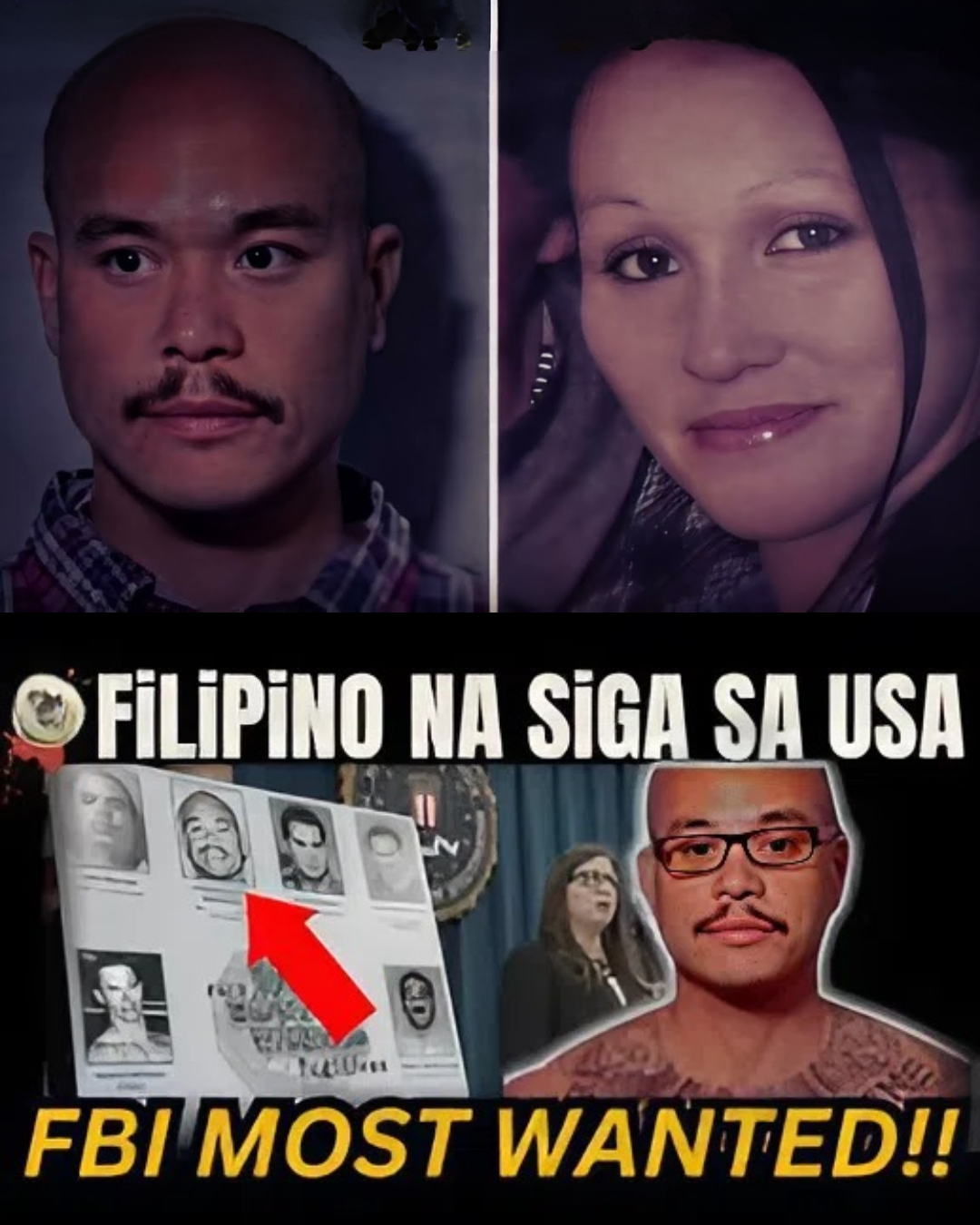
However, beneath this facade lurked a darker reality. According to police reports and court documents, Policarpio had a history of violence and alleged involvement in the illicit substance trade. His “bad boy” image wasn’t just about tattoos; it reflected a dangerous lifestyle.
In 2000, this violent streak erupted publicly. Policarpio allegedly opened fire on a vehicle, wounding a woman in the head and a man in the shoulder.
Witnesses identified him, and the Los Angeles Police Department sought to charge him with two counts of attempted taking of a life.
Before an arrest warrant could be executed, Policarpio, reportedly with his mother’s help, fled the country, returning to the Philippines.
LAPD suspected the shooting was substance-related and enlisted the FBI’s help. A federal arrest warrant was issued, and an extradition request was sent to the Philippines. Locating Policarpio proved difficult, given the vast archipelago and uncooperative relatives. However, in 2001, acting on an intelligence tip, the Philippine Special Action Force (SAF) tracked him down.
A shootout ensued, during which Policarpio was wounded in the arm, leading to his surrender. The FBI requested he be taken alive for extradition. After recovering, he was turned over to FBI agents and transported back to Los Angeles. He was tried, found guilty of the attempted taking of lives, and sentenced to 14 years in prison.
After serving his sentence, Policarpio was released and returned to his mother’s home in Los Angeles, seemingly determined to turn his life around. He reconnected with family, found work, and got his own apartment.
He also began a relationship with Lauren Elaine Olguin, a woman who reportedly also had a history of substance struggles but was, like Policarpio, trying to build a better future. Lauren was drawn to his apparent commitment to family, something reportedly lacking in her own estranged relationships.
However, Policarpio’s attempt at reform faltered. Within a year of release, he was back in trouble, arrested for assault and illegal possession of firearms. He avoided prison time through a plea deal involving fines and probation, successfully completing the terms. But his capacity for violence remained tragically close to the surface.
On April 12, 2016, Lauren Olguin, 32, attended a party at a friend’s house in the Rampart area of Los Angeles. She joined a poker game that lasted into the early morning hours. Around 5:00 a.m., a red BMW pulled up outside. The driver, Philip Policarpio, 39, entered the house.
According to witnesses, Policarpio immediately confronted Lauren, shouting angrily about a car. The argument escalated quickly, with Policarpio reportedly striking her. Before friends could intervene, Policarpio pulled out a handgun, pointed it at Lauren’s head, and fired a single shot, ending her life instantly.
As chaos erupted, Policarpio fled the scene, vanishing just as he had years before. Friends called 911. Emergency responders arrived but could do nothing for Lauren. The tragedy deepened when the autopsy revealed Lauren Olguin was three months pregnant at the time of her passing.
The LAPD immediately identified Policarpio as the prime suspect. Given his history of violence and previous flight from justice, the FBI quickly became involved again.
A federal warrant for unlawful flight to avoid prosecution was issued, and on May 14, 2016, Philip Policarpio was placed on the FBI’s Ten Most Wanted Fugitives list, ranking number two.
Authorities warned the public that he was considered armed and extremely dangerous, offering a $100,000 reward for information leading to his capture.
The intense publicity worked. Policarpio had successfully crossed the border into Tijuana, Mexico, where he reportedly met a local woman. However, just two weeks after being added to the Most Wanted list, on May 30, 2016, he attempted to re-enter the United States through the San Ysidro Port of Entry near San Diego.
During a routine inspection, a US Customs and Border Protection (CBP) agent noticed Policarpio appeared unusually nervous. The agent asked him to step out of the vehicle for secondary inspection and fingerprint verification. The biometric scan immediately flagged him as a wanted fugitive.
Policarpio was detained, and the FBI was notified. He was taken into federal custody and transferred back to Los Angeles to face charges for ending the lives of Lauren Olguin and their unborn child.
In September 2018, facing overwhelming evidence, Philip Policarpio pleaded “no contest” to two counts of first-degree taking of a life.
While not a formal admission of guilt, a no-contest plea acknowledges the prosecution has sufficient evidence for a conviction and accepts the ensuing punishment. The judge sentenced him to 45 years to life in prison. As a US citizen, Policarpio is not eligible for deportation after serving his sentence.
News

The Toxic Price of Rejection: OFW’s Remains Found in a Septic Tank After Coworker’s Unwanted Advances
South Korea, a hub for Asian development, represents a major aspiration for many Filipino Overseas Workers (OFWs), who seek employment…

The Final Boundary: How a Starving Tricycle Driver Exacted Vengeance at a Homecoming Party
On November 28, 2009, in Angat, Bulacan, a lavish homecoming party for two returning travelers ended in a catastrophic tragedy….

The 12-Year Ghost: Why the Woman Behind Vegas’s ‘Perfect Crime’ Chose Prison Over Freedom
On October 1, 1993, at the Circus Circus Casino in Las Vegas, a crime unfolded in minutes that would be…

The Fatal Soulmate: How a British Expat’s Search for Love Online Became a $1 Million Homicide Trap
In 2020, in a comfortable apartment overlooking the city of Canberra, Australia, 58-year-old British expatriate Henrick Collins lived a successful…
The Cost of Negligence: Firefighter Ho Wai-Ho’s Tragic Sacrifice in Hong Kong’s Inferno
The catastrophic fire that engulfed seven towers of the Wang Fook Court residential complex in Hong Kong was a disaster…

The KimPau Phenomenon: How “The A-List” Sparked Queen Kim Chiu’s Fierce Career Revolution
The Filipino entertainment industry is currently witnessing a stunning career metamorphosis, all thanks to the sheer, raw power of the…
End of content
No more pages to load