The case of Sister Abhaya, a tragedy that unfolded within the sacred walls of the St. Pius X Convent in Kottayam, India, remains one of the most controversial and protracted legal battles in the history of the Catholic Church in the region. It is a story of moral corruption, political influence, and a decades-long struggle for justice against a powerful establishment.
The initial finding, following the discovery of the body in a convent well in 1992, suggested suicide. However, nearly three decades later, the truth emerged, exposing a web of conspiracy involving the church, politicians, and law enforcement.
On March 27, 1992, the Kottayam West police station received a call reporting the discovery of a nun’s lifeless body in the well on the grounds of the St. Pius X Convent in Kottayam, South India.
The victim was identified as Sister Abhaya, or Bena Thomas, born on February 26, 1971. She hailed from a poor family in Arara, Kottayam, Kerala, India.
From a young age, Sister Abhaya was devout; instead of toys, she preferred reading the Bible and attending holy studies. According to her parents, Sister Abhaya was intelligent, kind, and cheerful, known to nearly everyone in her area.
They supported her desire to serve God, and at the age of 19, she left home to follow her vocation. Sister Abhaya joined the St. Pius X Convent in her town, where she adopted the name Sister Abhaya, meaning “fearless.”
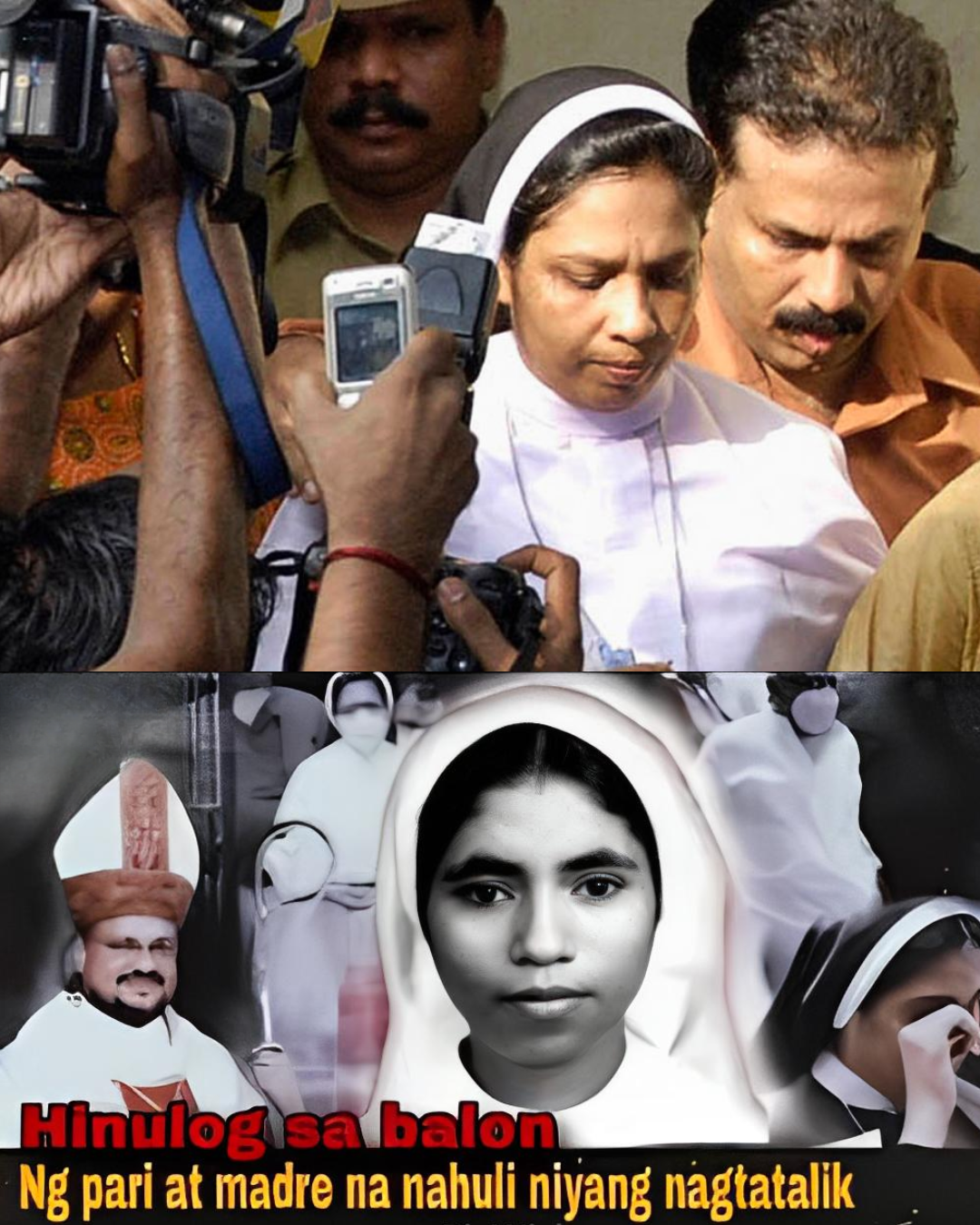
Upon arriving at the convent, she quickly earned the respect and admiration of her fellow nuns and superiors due to her excellent qualities and dedication to work and prayer. She soon became a favorite of the superiors and was revered by her fellow novices.
One of Sister Abhaya’s traits was her love for reading and her desire for education. In 1991, the congregation allowed her to attend the Bishop Chulaparambil Memorial College, an all-women’s institution run by the Knanaya Catholic Church in Kottayam.
In 1992, she was in her second year of studies. On the evening of March 26, 1992, before going to sleep, she shared her anxiety about an upcoming exam with her roommate, Sister Shirley.
To prepare, she asked Sister Shirley to wake her up early so she could review. Around 4:00 a.m. the following day, March 27, despite the darkness, Sister Shirley woke her friend.
Sister Abhaya immediately rose, put on her habit, and left the room for the study hall, where she often studied early in the morning. Sister Shirley lay back down to continue sleeping, unaware that this was the last time she would see her friend alive.
A little after 5:00 a.m., the nuns were awake for their morning prayer before dispersing for their respective duties. One of the nuns who went to the kitchen was immediately startled.
She noticed the refrigerator door was left open. The floor was wet from a fallen water bottle. Beside it was a small axe used for chopping firewood.
Most alarming were a pair of shoes—one under the refrigerator and the other near the door—and a veil. She immediately reported this to her companions, and the news quickly spread among the 123 residents of the convent.
They immediately sought to identify the owner of the shoes and veil, discovering that the 21-year-old Sister Abhaya was missing. A search was quickly launched in every corner, outside, and in the convent’s courtyard.
It was during this search that they found her lifeless body at the bottom of the stone well. Police attempted to retrieve Sister Abhaya’s body but lacked the proper equipment to retrieve it without destroying evidence.
They called the fire department, experts in such retrieval. They used ropes and nets to bring Sister Abhaya’s body up.
The autopsy, conducted by Dr. Radha Krishna of Kottayam Medical College, noted bruises on the victim’s shoulder and thighs, likely from falling into the well, small cuts on her ear, and a fractured skull. He also confirmed that Sister Abhaya was not a victim of rape and that the cause of death was drowning.
The Kottayam West Police Crime Branch initially handled the case. In their investigation, they concluded that Sister Abhaya had committed suicide by jumping into the well.
This conclusion was based on questioning the head of the congregation at the time, Sister Leiya, who claimed Sister Abhaya was anxious and depressed, supposedly leading her to take her own life. This was vehemently denied by Sister Abhaya’s family, some nuns, and her close friends, who believed there was foul play.
Aside from the family and friends, human rights activist Jomon Puthenpurackal stood firm against the investigation’s outcome. He challenged the police and the church to uncover the truth behind Sister Abhaya’s death.
Due to Jomon’s outcry, the family’s insistence, and the support of friends, they jointly demanded the case be reopened. A council was formed to focus on the case on March 31, 1992.
On April 13, 1992, the case was transferred from the Kottayam Police Crime Branch to the State Police. After six months of investigation and despite the evidence found at the crime scene, the State Police submitted their final report to the Kottayam Court on January 13, 1993.
They concurred with the Kottayam Western Police’s initial version—that Sister Abhaya committed suicide and that they found no foul play.
Despite this, Sister Abhaya’s parents and relatives, along with activist Jomon, Sister Ben Acasia, and 67 nuns from the congregation, continued to protest. They sent letters to the then-Prime Minister of India, K. Karunakaran.
They pleaded with him to reinvestigate Sister Abhaya’s death, believing it was a murder case and that the police investigation was insufficient. In 1995, the Prime Minister heeded their appeal, and the case was handed over to the Central Bureau of Investigation (CBI).
The CBI investigation began and lasted until 2005. Over ten years, the CBI submitted three reports to the Chief Judicial Magistrate, but all were rejected, and they were ordered to continue the investigation.
In the first report, the CBI agreed with the Kottayam Police that Sister Abhaya committed suicide, but the Chief Judicial Magistrate rejected this and reopened the case. In the second report, submitted by the CBI in 1996, they stated they had found evidence suggesting it was a murder case but could not identify the perpetrator. The request to close the case was again rejected by the Chief Judicial Magistrate.
In 1999, the Central Bureau of Investigation submitted its third report. This time, it concluded that foul play was involved in Sister Abhaya’s death.
They also gathered evidence proving that those responsible for the initial investigation had covered up the case and fabricated the suicide narrative. However, they failed to identify the culprits, leading to another rejection by the Chief Judicial Magistrate.
The case was then transferred from the CBI New Delhi branch to the CBI Southern City of Cochin in Kerala. In 2007, the case gained a new lead.
The CBI received a tip from an informant named Adakka Raju, a known thief in the Kottayam area. He claimed that in the early hours of March 27, 1992, he had scaled the convent wall to steal dried fruits.
He also planned to cut copper rods, which served as lightning protection for the building, to sell them on the black market. Raju testified that while hiding and waiting for the right moment, he saw two priests secretly entering the convent.
Moments later, he saw Sister Abhaya walking past the window until she entered the kitchen, where he witnessed the events unfold. Raju’s testimony aligned with theories circulating at the time.
Two respected priests from the Knanaya Catholic Order were implicated in Sister Abhaya’s death: Father Thomas Kottoor and Father Jose Poothrikkayil. Both were priests and lecturers at the university Sister Abhaya attended.
Father Thomas taught Psychology at BCM and was also the Chancellor of the Kottayam diocese and author of six books on theological topics. His involvement in Sister Abhaya’s death deeply tainted the name of the Catholic Church in Kerala.
The CBI continued its investigation until they named a third person involved in the case: Sister Sephy, who was only a few years older than Sister Abhaya when the crime occurred. In July 2007, the court granted the CBI permission to conduct a narco-analysis, or “truth serum test,” on the three suspects.
This involved administering serum to the three suspects, placing them in a semi-conscious state. The CBI initially claimed no new truths were discovered, but it was later revealed that the CBI had manipulated the original recording before submitting it to the court.
Subsequently, the recordings, in which the suspects allegedly confessed to the act, leaked on YouTube and were widely viewed. Due to this, the court ordered the original recording to be submitted to them in a sealed envelope.
In November 2008, the High Commission of India returned the case to the State branch of the CBI in Delhi, giving them only three months to complete the investigation. This new team was led by Nandakumar.
In their investigation, they managed to gain a new lead: the testimony of another witness, Sanju Thomas, who lived near the convent. His testimony corroborated Raju’s earlier testimony.
Consequently, the CBI arrested Father Thomas Kottoor, Father Jose Poothrikkayil, and Sister Sephy on charges of murdering Sister Abhaya on November 19, 2008, 16 years after the crime. Days after the arrests, on November 25, 2008, the lifeless body of Inspector V.V. Augustine was found.
Augustine was the inspector who initially handled the case. Police reported that Inspector Augustine committed suicide. It emerged that he had accused the CBI of destroying evidence and closing the case prematurely.
However, after his death, it was revealed that he was one of the first to suggest that foul play might have occurred in Sister Abhaya’s death. In the report submitted by the CBI to the Kerala High Court on November 30, 2008, the details of the events leading to Sister Abhaya’s tragic death were laid out.
According to the investigation, when she left her room early on March 27, 1992, she went to the kitchen. She quietly opened the refrigerator to get a bottle of water.
As she was closing the refrigerator door, she saw something that shocked and startled her enough to drop the water bottle, which spilled onto the floor. According to the investigation, she accidentally saw Father Thomas and Sister Sephy engaged in sexual activity.
Fearing that Sister Abhaya would expose them, Father Thomas quickly grabbed Sister Abhaya by the throat. Sister Sephy then grabbed the axe handle used for chopping firewood and repeatedly struck Sister Abhaya’s head.
Investigators believe that after the heavy blows, Sister Abhaya likely lost consciousness and collapsed onto the floor. From there, the two jointly carried her body and dropped her into the well.
Although unconscious, the victim was still alive when the perpetrators threw her into the well, which is why the autopsy determined the cause of death was drowning. After disposing of the poor nun, the suspects quietly left.
The witness, Raju, remained silent for a long time, fearing he would be blamed for the nun’s death. Eventually, his conscience could not bear it, and he decided to speak out.
There was no clear reason for Father Jose’s involvement other than being seen entering the convent with Father Thomas in the early hours of March 27, which was suspicious since the convent was not a place priests should frequent. Consequently, the two priests and the nun were charged with murder and destruction of evidence.
However, on January 1, 2009, Judge Hema of the Kerala High Court allowed the three to be released on bail. On July 17, 2009, the complicated trial began and lasted for a long time.
In March 2018, the Special CBI Court acquitted Father Jose due to a lack of sufficient evidence linking him to Sister Abhaya’s death, and the trial focused on the accused, Father Thomas and Sister Sephy. During the trial, several disturbing details emerged, such as the alleged “virginity restoration surgery” on Sister Sephy—a hymen repair operation.
The prosecution presented a sealed file to the court, which allegedly contained documents confirming that Sister Sephy had undergone an operation performed inside the convent with the permission of the superiors, in an attempt to cover up her affair with Father Thomas. Witnesses testified that this was done a few days before her arrest in 2008.
This allegation was denied by the accused and was never proven. Instead, Judge Sharmila stated that it was essential to protect the fundamental dignity of a person in legal custody and declared that virginity testing violated the accused’s human rights.
Concurrently with the murder trial, proceedings began against some of the police and investigators who initially handled the case, particularly the head of the criminal department, K.T. Michael, who was charged with destruction of evidence and cover-up. However, in July 2019, the High Court acquitted him due to lack of sufficient evidence.
Although the two accused were temporarily free on bail, the case continued and was reheard by the court on August 5, 2019. The media closely monitored these hearings, not only in India but worldwide.
During the hearings, four of the prosecution’s 49 witnesses changed their testimonies, including Sister Abhaya’s close friend, Sister Shirley, and the local resident, Sanju Thomas. The only person who stood firm on his sworn statements was the witness, Raju.
Despite pressure and repeated questioning from various defense lawyers, he remained steadfast in his testimony. Furthermore, the prosecution faced another challenge when, on December 12, 2019, the High Court rejected their request to summon the two doctors who conducted the narco-analysis on the suspects.
The court ruled that such procedures were inadmissible under Indian law, believing that lie detector tests, narco-analysis, and brain mapping violated the accused’s right against self-incrimination. Nevertheless, the main evidence relied upon by the prosecution was the physical evidence collected at the crime scene.
Although no blood was found, the scattered water bottle, the veil, the shoes, and the axe were sufficient basis to conclude that violence had occurred in the room. The prosecution presented the motive for the murder as the suspects’ fear that Sister Abhaya would expose their illicit relationship.
During the final hearings, Sister Sephy’s silence and Father Thomas’s emotionless face were noticeable. On December 22, 2020, amidst the COVID-19 pandemic, 28 years later, the High Court finally delivered its verdict.
The verdict found Father Thomas, then 69 years old, and Sister Sephy, then 55 years old, guilty of the murder of Sister Abhaya, as well as the destruction of evidence and misleading the investigation. Father Thomas was also found guilty of criminal trespass with the intent to murder.
The two were sentenced to life imprisonment and fined a significant amount. Upon hearing the verdict, Sister Sephy broke down in tears, while Father Thomas remained emotionless.
The nuns in the courtroom began to weep and approached the two to embrace them. Before the verdict was read, the two accused had pleaded with the court for leniency due to their health conditions.
It was revealed that Father Thomas had been diagnosed with prostate cancer, and Sister Sephy was suffering from deep vein thrombosis, or blood clots, typically in the legs. The defense attorney also mentioned that Sister Sephy needed to care for her elderly parents.
However, their pleas were disregarded by the court, and the sentencing proceeded. Outside the courtroom after the hearing, Father Thomas told reporters that he was innocent, that everything happened through God’s will, and that he had nothing to fear.
Sister Sephy chose to remain silent. Meanwhile, the verdict was hailed as “Divine Intervention” by Sister Abhaya’s brother, who expressed satisfaction that justice had finally been served after such a long time.
He lamented that their parents had passed away in 2016 without witnessing the events. The verdict was also approved and celebrated by dozens of nuns in India who, according to local media reports, had been expelled from their congregations for accusing bishops and priests of abuse.
However, despite the guilty verdict, Sister Abhaya’s case did not end there. In June 2022, Indian media reported that the lawyers for Father Thomas, then 70, and Sister Sephy, then 57, filed an appeal against the verdict in the Kerala High Court.
The court granted the appeal, setting aside the life sentences and allowing the two to be temporarily released on bail. They argued that the verdict was based solely on the testimony of an unreliable witness and that the hearings were fraught with irregularities.
When this decision was announced, thousands of people again protested against the local Indian government, as well as the authorities and leaders. The activist Jomon published a book titled “God’s Own Lawyer,” where he discussed the events.
He stated that the release of the ruthless criminals who murdered Sister Abhaya inflicted a deep wound on those who loved her and on everyone who fought for so long to ensure that the perpetrators of the crime that shook India were punished. The events surrounding Sister Abhaya’s case are truly tragic.
This case highlighted the deeply troubling aspects of politics and religion in India. It is unfortunate that such cases tarnish the name of the Catholic Church.
While we may have different beliefs, I am certain that for those who deeply believe in the doctrines of the Catholic Church, this case was profoundly disturbing. However, the sins of a few should not be equated with the entire institution.
News

The Toxic Price of Rejection: OFW’s Remains Found in a Septic Tank After Coworker’s Unwanted Advances
South Korea, a hub for Asian development, represents a major aspiration for many Filipino Overseas Workers (OFWs), who seek employment…

The Final Boundary: How a Starving Tricycle Driver Exacted Vengeance at a Homecoming Party
On November 28, 2009, in Angat, Bulacan, a lavish homecoming party for two returning travelers ended in a catastrophic tragedy….

The 12-Year Ghost: Why the Woman Behind Vegas’s ‘Perfect Crime’ Chose Prison Over Freedom
On October 1, 1993, at the Circus Circus Casino in Las Vegas, a crime unfolded in minutes that would be…

The Fatal Soulmate: How a British Expat’s Search for Love Online Became a $1 Million Homicide Trap
In 2020, in a comfortable apartment overlooking the city of Canberra, Australia, 58-year-old British expatriate Henrick Collins lived a successful…
The Cost of Negligence: Firefighter Ho Wai-Ho’s Tragic Sacrifice in Hong Kong’s Inferno
The catastrophic fire that engulfed seven towers of the Wang Fook Court residential complex in Hong Kong was a disaster…

The KimPau Phenomenon: How “The A-List” Sparked Queen Kim Chiu’s Fierce Career Revolution
The Filipino entertainment industry is currently witnessing a stunning career metamorphosis, all thanks to the sheer, raw power of the…
End of content
No more pages to load