Joan Canino Wray was born in 1985 in the town of Baroy, Lanao del Norte, in the southern Philippines. Her early life was marked by hardship; she never knew her father, who was taken from this world the same year she was born. With two brothers and four sisters, her mother struggled, eventually sending Joan to live with her grandmother on a coca plantation.
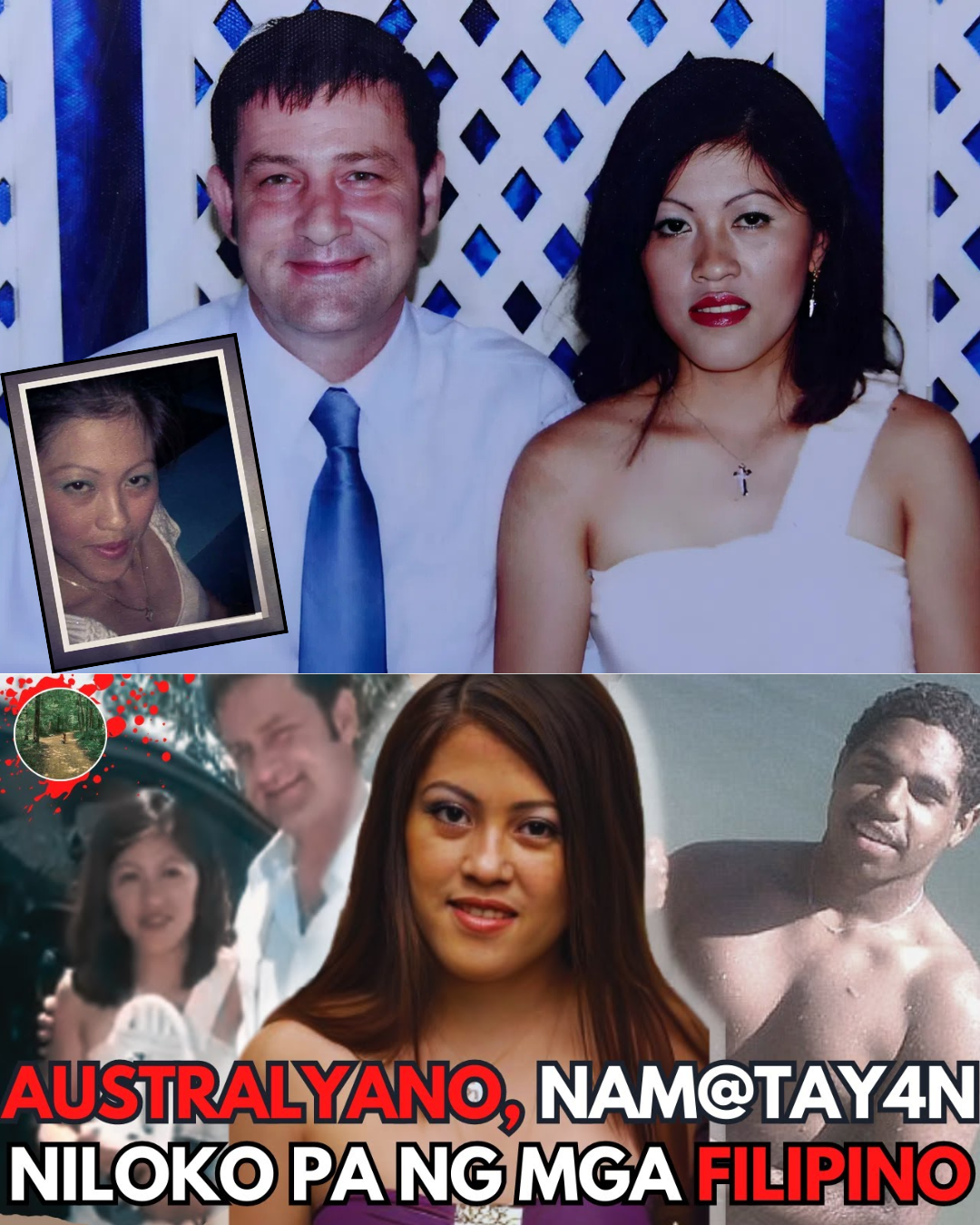
She grew up under her grandparents’ care until her grandfather passed away. Unable to manage the plantation alone, her grandmother sold the land. With their income gone, Joan was sent to Cebu, where she was temporarily cared for by a woman she called Mama Linda. Throughout these challenges, Joan was described by her family as hardworking, full of dreams, and driven by a singular desire: to lift her family out of poverty.
Like many Filipinos seeking a better life, Joan left the Philippines, arriving in Australia in 2009. For several years, she worked diligently, sending money back home to support her six siblings. Her life took a joyful turn in 2011 when she met Cory Wray, an Australian chef. Cory recalls being instantly captivated by Joan, calling it love at first sight.
He described her as the “perfect package,” particularly drawn to her infectious smile. He orchestrated their first meeting by pretending to bump into her. Their first date was memorable; Joan was unwell, so Cory invited her to his home, cooked her chicken and vegetable soup, and cared for her. They watched a movie together, and a connection was forged.
On July 11, 2011, they decided to move in together. Joan juggled her job at McDonald’s with a hairdressing course, all while continuing to send money to her family in the Philippines. The financial strain was immense; her McDonald’s wages barely covered her own needs and her family’s support.
Recognizing her struggles and concerned about a health issue not covered by her insurance, Cory bought Joan a ticket back to the Philippines for treatment just two weeks after they moved in together. Before she left, he proposed. It was a simple proposal, but filled with love. Cory saw her off at the airport, unaware of the long separation ahead.
Back home, Joan happily shared the news of her engagement and began planning the wedding with her brother. In October 2011, Cory flew to the Philippines and met Joan’s large family for the first time. Their wedding was a joyous celebration attended by many well-wishers.
After the wedding, Cory returned to Australia while they navigated the complex process of obtaining Joan’s spousal visa and medical clearance. What they thought would be a quick process dragged on for 15 long months. The primary delay was Joan’s medical clearance; an X-ray revealed she had tuberculosis, requiring six months of intensive treatment.
The process involved numerous tests, and the lengthy, expensive treatment took its toll. Cory confessed later that his chef’s salary wasn’t enough to cover his living expenses in Australia, Joan’s medical bills, and the visa costs. He often skipped meals, surviving on coffee and milk, hiding his struggles from Joan to avoid worrying her.
Finally, after six months, Joan received medical clearance. Cory borrowed money from his parents to buy her plane ticket back to Australia. Despite their difficult start, Cory did everything he could to help Joan adjust to married life in Australia. He taught her to drive, and she enrolled in an online course, aspiring to eventually attend university and become a nurse. She also found a job nearby at the Logan Central McDonald’s.
The couple dreamed of buying land in the Philippines one day to build a vacation home. Having children wasn’t initially part of their immediate plan, but they were overjoyed when an OB-GYN confirmed Joan was eight weeks pregnant. They heard their baby’s heartbeat during the ultrasound; the fetus was just 1 centimeter long.
They affectionately nicknamed the baby “Camille,” both hoping for a girl. Joan even consulted her cousin, who used a Chinese calendar predictor, which suggested the baby would be a girl born in December. Their happiness knew no bounds, but their dreams were about to be brutally extinguished.
May 21, 2013, started as a normal day. Cory went to work, leaving Joan at home with their dog, Alistar, and cat, Bubbles. Around 8:30 p.m., although Cory hadn’t returned yet, Joan needed to leave for her night shift at McDonald’s. She called her husband to say she was leaving, said goodbye to their pets, and began her usual walk to work.
Their home was merely 100 meters from the McDonald’s. The walk should have taken just one minute and 24 seconds. In that incredibly short span of time, Joan would become the victim of a horrific, random crime.
When Cory finished his shift, he drove straight to McDonald’s to give Joan the car keys so she wouldn’t have to walk home. Her coworkers told him she hadn’t shown up for work. Thinking she might be at home, Cory rushed back, but she wasn’t there. He retraced her usual path, calling her phone, but there was no answer.
He frantically drove around the area, contacted her friends on Facebook—no one had seen her. After nearly two hours of desperate searching for his pregnant wife, Cory called the police. Around midnight, while authorities searched, a resident in a nearby subdivision made a gruesome discovery in his backyard.
He initially thought it was a mannequin, but upon closer inspection, realized it was the body of a woman. His screams alerted neighbors, who came running. One neighbor covered the body with a curtain while they called the police. Cory’s worst fears were soon confirmed when two officers knocked on his door.
They informed him a woman’s body had been found nearby. He wasn’t allowed to see her immediately as investigators processed the crime scene. At 3 p.m., he was finally permitted to identify the body. Seeing Joan lifeless, Cory felt his world collapse; a part of him felt like it had experienced its own end.
The initial investigation revealed a brutal scene. Joan was partially clothed, her lower body exposed, with blood evident. Her face, pressed into the grass, bore shoe marks, suggesting repeated kicks to her head and face. The medical examiner also found marks consistent with strangulation.
News reached Joan’s family in the Philippines, and one sister suspected a friend of Cory’s, whom Joan had allegedly mentioned had threatened her. However, as days passed, investigators concluded the attack was random—a crime of opportunity, not a planned act. The autopsy report confirmed Cory’s worst nightmares.
Joan had suffered a savage beating, particularly to her head and face. She had been sexually assaulted. The report chillingly detailed that the attacker likely used the handle or point of an ice pick-like object, possibly a screwdriver, to inflict internal injuries multiple times while she was still alive. Finally, the attacker strangled the pregnant woman, leaving her dying in the grass.
Police canvassed local establishments, searching for clues. After eight days, they apprehended 18-year-old Andrew Michael Burke. They had spotted him walking in the same area Joan frequented, on the very night of the crime. CCTV footage from May 21 confirmed Burke’s movements.
Around 8:21 p.m., footage showed a visibly intoxicated Burke with friends, wandering the streets of Logan Central, apparently looking for a car to steal. He was then seen entering a 7-Eleven, where he stole a screwdriver—the same tool investigators believed was used in the assault on Joan just minutes later. Burke was charged with ending the lives of Joan and her unborn child.
Joan’s funeral was held at St. Paul Catholic Church in Woodridge, Brisbane. Many attendees wore purple, her favorite color. Donations totaling 16,000 Australian dollars were collected, which Cory used to bring Joan’s remains back to the Philippines. However, Cory’s ordeal was far from over.
In a September 2014 report, Cory revealed a painful betrayal by Joan’s family. After ensuring Joan and their baby had a proper burial, he intended to use the remaining funds to renovate Joan’s mother’s house, which lacked a bathroom and kitchen. However, the family convinced him to build a new house instead.
Within a week, the remaining money was gone, spent not just on starting the house construction but also on buying pigs for his mother-in-law. Cory planned to buy property in Baroy and eventually move there. His brother-in-law offered him land and volunteered to oversee the construction, arranging for Cory to send monthly payments.
When Cory returned to the Philippines in January 2014, expecting to see progress on his future home, he found nothing but an empty lot with no foundation. He discovered his brother-in-law had used the money for personal gain—buying more pigs, adding rooms to his own house, and building a personal gym. When Cory confronted him, his brother-in-law reacted violently, shouting, firing a gun to intimidate him. Traumatized, Cory fled the Philippines and returned to Canada, where most of his family lived.
He only returned to Australia for the trial in July 2016. Three years after Joan’s life was taken, Andrew Burke’s trial began. He pleaded not guilty. His defense attempted to shift blame onto the man who found Joan’s body, Mr. Harris, pointing out that Joan’s DNA was found on Harris’s sock.
The prosecution countered that the crime scene could have been contaminated before investigators arrived, explaining the DNA transfer. To prove Burke’s guilt, the prosecution presented overwhelming forensic evidence. Burke’s DNA was found on Joan. Blood found on bandages discarded in his girlfriend’s trash bin matched Joan’s DNA perfectly.
Joan’s DNA was also found on Burke’s shoes, and the shoe prints on her face matched the pattern on the soles of his shoes. After a nearly three-week trial with 60 witnesses, the jury found Andrew Burke, then 21, guilty. He was sentenced to life in prison with a non-parole period of 20 years, plus an additional 15 years for other charges.
In his victim impact statement, read directly to Burke, Cory expressed his profound grief and anger. He stated that taking the lives of his wife and unborn child was inhuman. He spoke of their shared dreams for a quiet, peaceful life, all stolen by a “monster.” He concluded by saying Burke had taught him hatred. Cory later expressed satisfaction with the verdict, though acknowledging the immense pain of his loss. He was diagnosed with depression and PTSD following the horrific events.
News

The Toxic Price of Rejection: OFW’s Remains Found in a Septic Tank After Coworker’s Unwanted Advances
South Korea, a hub for Asian development, represents a major aspiration for many Filipino Overseas Workers (OFWs), who seek employment…

The Final Boundary: How a Starving Tricycle Driver Exacted Vengeance at a Homecoming Party
On November 28, 2009, in Angat, Bulacan, a lavish homecoming party for two returning travelers ended in a catastrophic tragedy….

The 12-Year Ghost: Why the Woman Behind Vegas’s ‘Perfect Crime’ Chose Prison Over Freedom
On October 1, 1993, at the Circus Circus Casino in Las Vegas, a crime unfolded in minutes that would be…

The Fatal Soulmate: How a British Expat’s Search for Love Online Became a $1 Million Homicide Trap
In 2020, in a comfortable apartment overlooking the city of Canberra, Australia, 58-year-old British expatriate Henrick Collins lived a successful…
The Cost of Negligence: Firefighter Ho Wai-Ho’s Tragic Sacrifice in Hong Kong’s Inferno
The catastrophic fire that engulfed seven towers of the Wang Fook Court residential complex in Hong Kong was a disaster…

The KimPau Phenomenon: How “The A-List” Sparked Queen Kim Chiu’s Fierce Career Revolution
The Filipino entertainment industry is currently witnessing a stunning career metamorphosis, all thanks to the sheer, raw power of the…
End of content
No more pages to load