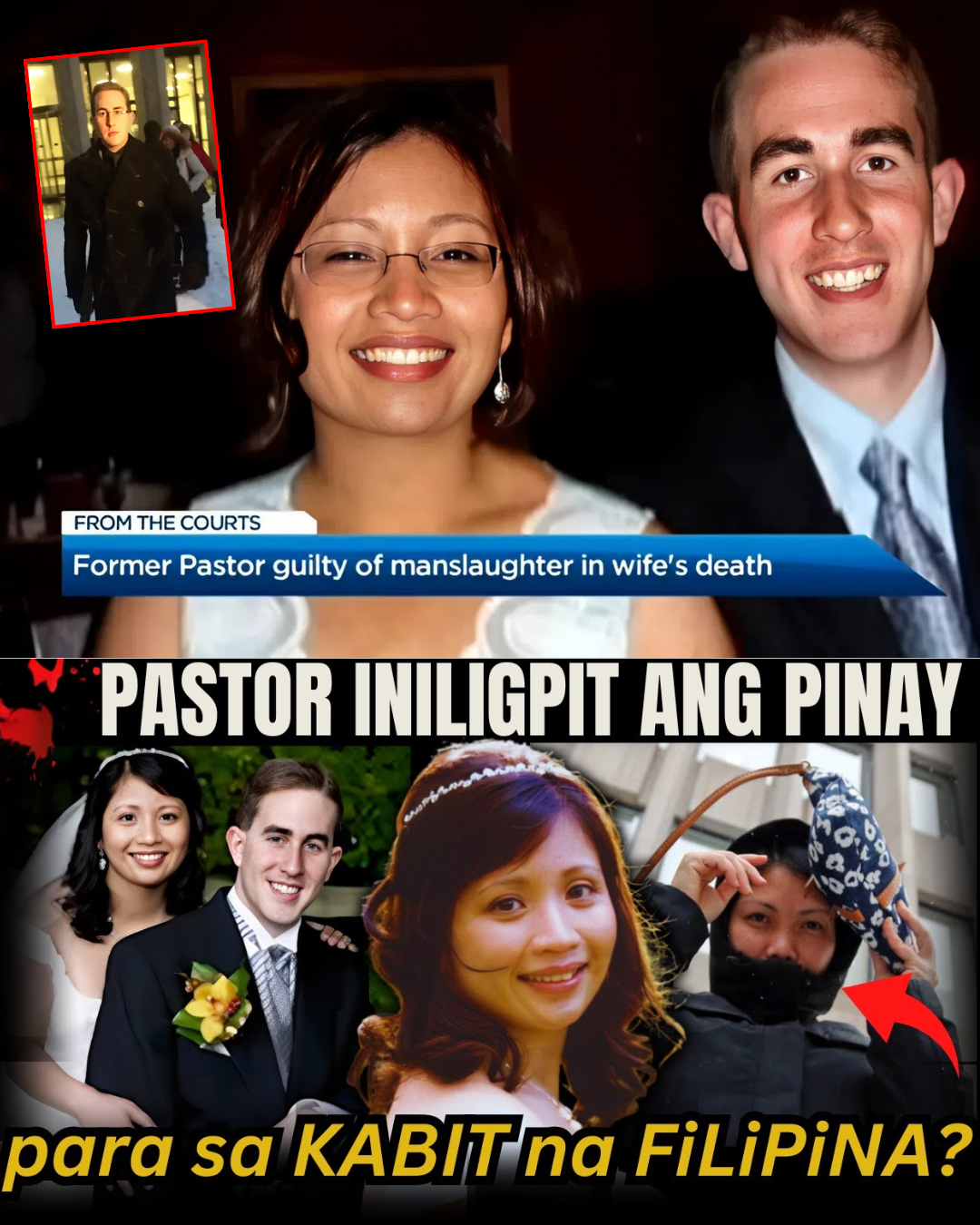
In the tight-knit Filipino-Canadian community of Toronto, Philip and Karissa Grandine were the perfect couple, a “match made in heaven.”
He was a charismatic and respected Baptist pastor, and she was a beautiful, kind, and devout woman who was active in their church. In 2011, after three years of marriage, they were joyfully expecting their first child, a baby they had already lovingly nicknamed “Jelly Bean.”
But on the night of October 17, 2011, this picture of domestic bliss was shattered by a frantic 911 call. Philip reported that he had found his 29-year-old, pregnant wife unresponsive in their bathtub.
It was a tragedy that would soon be exposed as a cold, calculated, and horrifying betrayal.
To their church community and family, Karissa’s passing, while devastating, was initially viewed as a tragic accident, perhaps complicated by a pre-existing liver condition.
Philip played the part of the grieving husband perfectly, and he was surrounded by a community eager to offer their support. But investigators were immediately troubled by a series of red flags, starting with the bizarre 911 call itself.
In the recording, Philip, a trained nurse, sounds strangely passive. He tells the operator his wife has drowned but repeatedly says he is unable to pull her 29-year-old body from the water to perform CPR, claiming she is too heavy and slippery.
It took him a full six minutes to finally remove her from the tub, a critical delay that raised immediate suspicion. The autopsy report deepened that suspicion.
While the cause of her passing was indeed drowning, the toxicology report revealed the presence of a sedative called Ativan (lorazepam) in her system—a drug her own doctor confirmed she had never been prescribed.
The investigation into Philip Grandine’s life quickly unraveled the facade of the devoted pastor and husband. He was living a secret double life.
He confessed to having a long-running affair with one of Karissa’s own friends, a woman from their church named Eileen Florentino. Karissa had discovered the affair just two months before her passing.
In an incredible act of grace and a testament to her deep faith, she had forgiven him, and the couple had begun marriage counseling to save their relationship for the sake of their unborn child.
But Philip’s secrets ran deeper than just one affair. He was also addicted to viewing explicit materials online, an obsession that was in direct conflict with his role as a spiritual leader.
He had been forced to resign from his pastoral position as a condition of their reconciliation. He wanted out of the marriage, a freedom that his pregnant wife’s forgiveness and determination to save their family was now preventing.
The most damning evidence, however, was not his affair or his addictions, but his own computer’s search history. Forensic investigators discovered a chilling digital trail.
On October 10, just one week before Karissa’s passing, Philip had been on the website WikiAnswers, searching for the lethal dosage of Ativan. His search queries included, “How many milligrams of Ativan are lethal?” and “Would 100mg of Ativan be fatal?”
Days later, after Karissa had been hospitalized for a mysterious bout of dizziness, his searches became even more specific. Just four hours after she was discharged, he was on Wikipedia, researching the properties of lorazepam, the generic name for Ativan.
The prosecution pieced together a horrifying timeline of a premeditated plot. They argued that Philip had first tested the drug on his wife a week before her passing.
Then, on the night of October 17, he drugged her again, likely by mixing the sedative into the banana smoothie that was found in her stomach during the autopsy.
Once the drug had taken effect, making her drowsy and disoriented, he had drowned his pregnant wife in their bathtub, staging the scene to look like an accident.
The legal battle that followed was long and arduous. In his first trial in 2014, a jury found him guilty of manslaughter, not first-degree murder, and he was sentenced to 15 years in prison.
In a stunning turn, that verdict was overturned on appeal due to a legal technicality involving a juror’s conduct. Philip was released on bail, and for years, the case remained in legal limbo.
But Karissa’s family never gave up their fight for justice. In a second trial in 2019, he was once again found guilty of manslaughter. After a final, failed appeal to the Supreme Court, his fate was sealed.
The pastor who had used his position of trust to conceal a dark and murderous heart was finally held accountable for the devastating betrayal of his wife and unborn child.
News

The Toxic Price of Rejection: OFW’s Remains Found in a Septic Tank After Coworker’s Unwanted Advances
South Korea, a hub for Asian development, represents a major aspiration for many Filipino Overseas Workers (OFWs), who seek employment…

The Final Boundary: How a Starving Tricycle Driver Exacted Vengeance at a Homecoming Party
On November 28, 2009, in Angat, Bulacan, a lavish homecoming party for two returning travelers ended in a catastrophic tragedy….

The 12-Year Ghost: Why the Woman Behind Vegas’s ‘Perfect Crime’ Chose Prison Over Freedom
On October 1, 1993, at the Circus Circus Casino in Las Vegas, a crime unfolded in minutes that would be…

The Fatal Soulmate: How a British Expat’s Search for Love Online Became a $1 Million Homicide Trap
In 2020, in a comfortable apartment overlooking the city of Canberra, Australia, 58-year-old British expatriate Henrick Collins lived a successful…

The Cost of Negligence: Firefighter Ho Wai-Ho’s Tragic Sacrifice in Hong Kong’s Inferno
The catastrophic fire that engulfed seven towers of the Wang Fook Court residential complex in Hong Kong was a disaster…

The KimPau Phenomenon: How “The A-List” Sparked Queen Kim Chiu’s Fierce Career Revolution
The Filipino entertainment industry is currently witnessing a stunning career metamorphosis, all thanks to the sheer, raw power of the…
End of content
No more pages to load