On the morning of February 5, 1999, the New Bilibid Prison in the Philippines became the epicenter of a national drama. Outside its heavily guarded walls, a stark portrait of a divided nation unfolded: on one side of the road, hundreds of priests and nuns in black masks held a silent, prayerful protest, their presence a solemn rejection of the state’s impending action.
On the other side, victims’ rights advocates from the group Volunteers Against Crime and Corruption lit candles, their small flames representing a demand for what they saw as ultimate justice. Inside, a 38-year-old house painter named Leo Echegaray ate his last meal, a simple request of shrimp and chicken.
His case had transcended the courtroom, becoming a powerful and painful national referendum on crime, punishment, and the morality of the ultimate penalty.
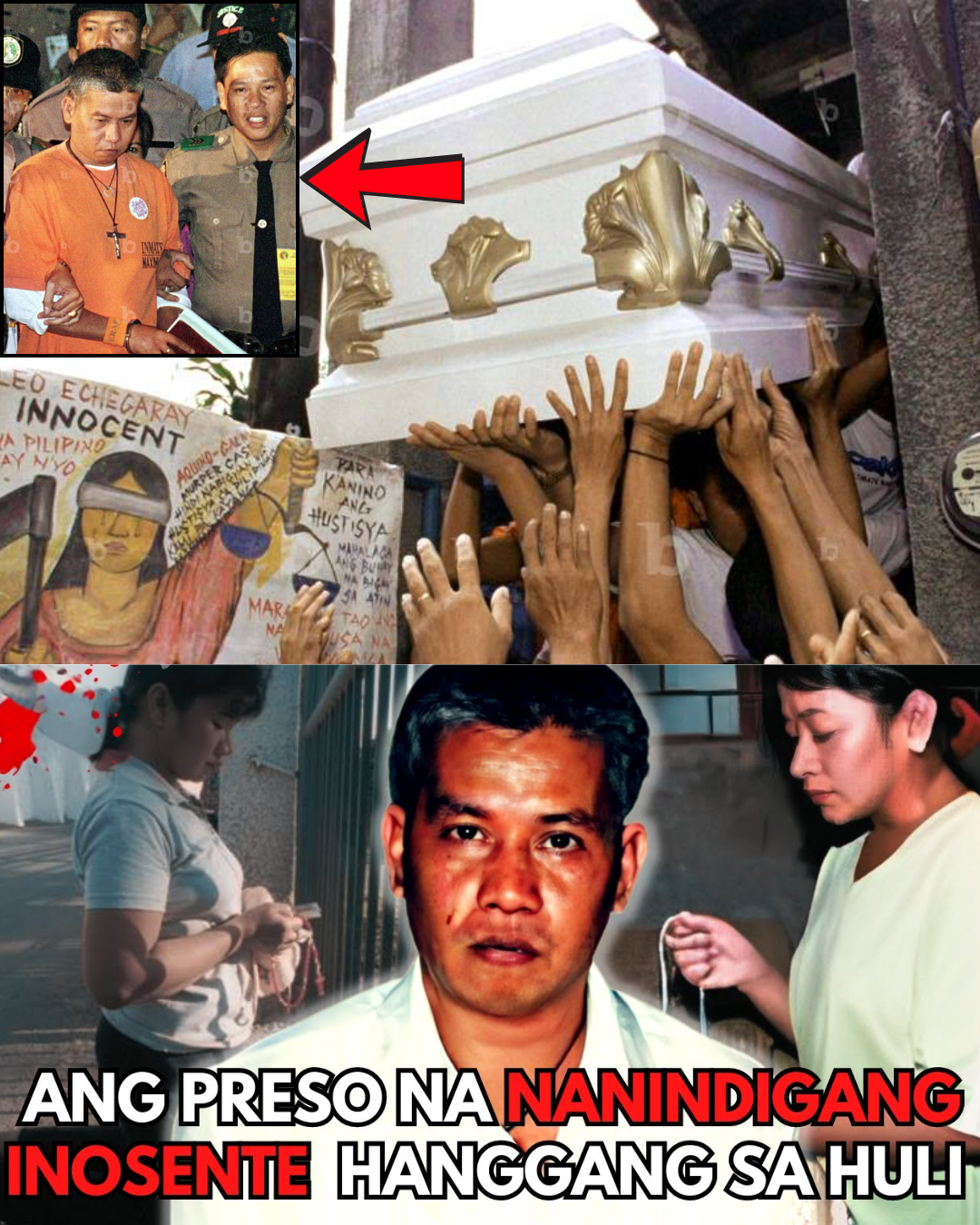
The story that led to this historic day began in April 1994, with a horrifying accusation from Echegaray’s 10-year-old stepdaughter, Rodessa. After suffering in silence through multiple instances of a terrible violation, the young girl found the courage to confide in her grandmother.
She recounted a pattern of heinous acts committed by her stepfather, who had threatened to harm her mother if she ever spoke a word. The family immediately reported the matter to the authorities, and Echegaray was arrested, setting in motion a legal battle that would captivate the country.
At his trial, Echegaray pleaded not guilty. His defense team launched an aggressive and controversial strategy aimed at completely discrediting his young accuser. They argued that the entire case was a fabrication, maliciously concocted by Rodessa’s grandmother as part of a bitter family dispute over a small piece of land. To bolster this claim, they delved into the family’s complex history.
The defense didn’t stop there; they subjected the 10-year-old victim to a brutal character assassination, bringing in witnesses who made salacious claims about her supposed “lascivious” behavior in an attempt to suggest any physical evidence was self-inflicted.
Echegaray himself presented an alibi, claiming he was working on a painting contract in a different city, a three-hour journey away, when the alleged incidents occurred.
The prosecution’s case, however, rested almost entirely on the powerful and heart-wrenching testimony of Rodessa herself. The judge, faced with a barrage of conflicting narratives, ultimately found the young girl’s account to be credible and compelling, seeing no logical reason for a child to invent such a horrifying story and endure the trauma of a public trial.
Echegaray’s alibi was deemed weak, and the attacks on the child’s character were dismissed. The court found him guilty. Under the recently reinstated Republic Act 7659, the Heinous Crimes Act, he was given the ultimate sentence.
The verdict sent shockwaves through the country and set off a years-long legal battle that would reach the highest court in the land. Echegaray’s case was appealed to the Supreme Court, which affirmed the original decision. The high court’s ruling emphasized the credibility of a child’s testimony, stating that minor inconsistencies were often a sign of a truthful, unrehearsed account rather than a lie.
His new legal team, from the prestigious Free Legal Assistance Group (FLAG), fought tirelessly, filing further motions and even questioning the constitutionality of the law itself. But every legal avenue was exhausted.
The case became a national spectacle, polarizing the public and drawing international attention from human rights groups, the European Union, and even the Pope, all of whom pleaded for clemency. It became a flashpoint in the fierce debate over capital punishment, a practice that had been dormant in the Philippines for over two decades.
On February 5, 1999, despite last-minute legal maneuvers and the protests outside, the sentence was carried out. Leo Echegaray became the first person in the Philippines to be subjected to the ultimate penalty by lethal injection since 1976. The event was covered with minute-by-minute updates across the nation as he spoke his final words and the procedure was administered. At 3:19 PM, he was pronounced to have passed away.
The legacy of his case was immediate and profound. The execution reignited a fierce national debate that would shape the country’s legal landscape for years. In 2006, after a continued and powerful push from human rights advocates and the Catholic Church, President Gloria Macapagal Arroyo signed Republic Act 9346, officially abolishing the de@th penalty in the Philippines once again.
The controversial and tragic case of Leo Echegaray, a simple house painter at the center of a legal storm, had served as the primary and most powerful catalyst for this landmark change in the nation’s history.
News

The Toxic Price of Rejection: OFW’s Remains Found in a Septic Tank After Coworker’s Unwanted Advances
South Korea, a hub for Asian development, represents a major aspiration for many Filipino Overseas Workers (OFWs), who seek employment…

The Final Boundary: How a Starving Tricycle Driver Exacted Vengeance at a Homecoming Party
On November 28, 2009, in Angat, Bulacan, a lavish homecoming party for two returning travelers ended in a catastrophic tragedy….

The 12-Year Ghost: Why the Woman Behind Vegas’s ‘Perfect Crime’ Chose Prison Over Freedom
On October 1, 1993, at the Circus Circus Casino in Las Vegas, a crime unfolded in minutes that would be…

The Fatal Soulmate: How a British Expat’s Search for Love Online Became a $1 Million Homicide Trap
In 2020, in a comfortable apartment overlooking the city of Canberra, Australia, 58-year-old British expatriate Henrick Collins lived a successful…
The Cost of Negligence: Firefighter Ho Wai-Ho’s Tragic Sacrifice in Hong Kong’s Inferno
The catastrophic fire that engulfed seven towers of the Wang Fook Court residential complex in Hong Kong was a disaster…

The KimPau Phenomenon: How “The A-List” Sparked Queen Kim Chiu’s Fierce Career Revolution
The Filipino entertainment industry is currently witnessing a stunning career metamorphosis, all thanks to the sheer, raw power of the…
End of content
No more pages to load