Maria Pilar Cruz was the embodiment of the Filipino immigrant dream in New York City. Born in the Philippines, she arrived in the US filled with ambition, earning her MBA with honors from Fordham University.
By age 35, she was a successful investment banker with a prestigious Park Avenue office, earning nearly $200,000 annually, and living in her own Upper West Side apartment. Devoutly Catholic, she was close to her family back home, even secretly planning their 50th wedding anniversary celebration.
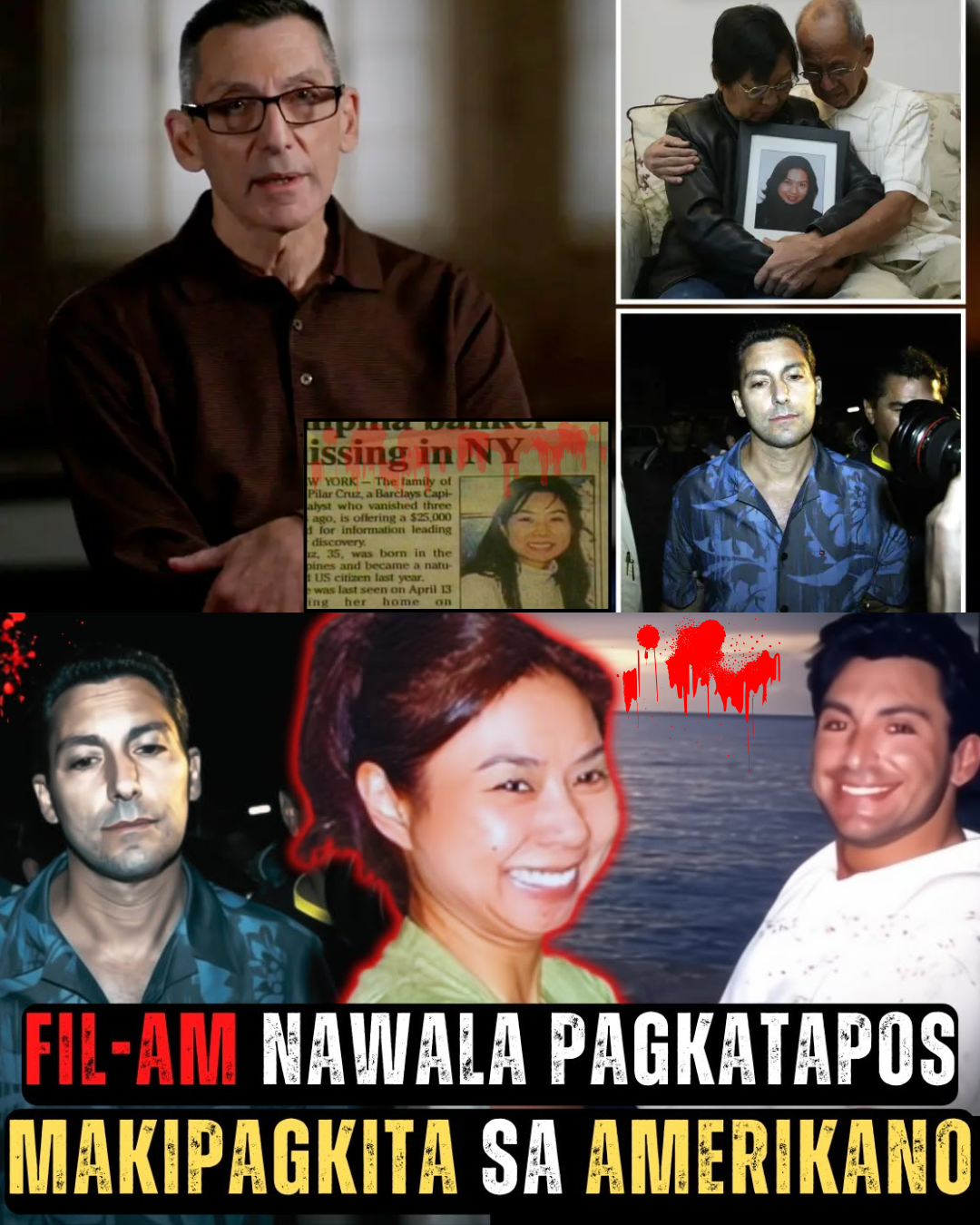
On April 13, 2003, Palm Sunday, Maria attended mass. It was the last time anyone reported seeing her alive. When she failed to show up for work on Monday and Tuesday, concerned colleagues contacted her aunt in New Jersey. Her cousins checked her apartment but found no sign of her or any disturbance. Her uncle filed a missing person report.
Police entered Maria’s apartment but found nothing amiss. They traced her last known movements: after church, CCTV showed her briefly visiting her office building, then shopping at a department store, and finally withdrawing $400 cash from an ATM.
There was no indication of coercion. The trail went cold. Maria’s siblings flew in from the Philippines, distributing flyers and offering a $25,000 reward, but weeks turned into months with no leads.
Five months after her disappearance, investigators obtained a warrant to access Maria’s emails, hoping for a clue. They found it: numerous emails exchanged with a Dean Faiello, scheduling appointments for laser treatments. Maria had visited him around 15 times. A background check on Faiello immediately raised red flags.
Dean Faiello, born in 1959, presented himself as a successful, certified electrologist (a technician specializing in hair removal). Handsome and charismatic, he had built a thriving cosmetic practice called Skin Ovations, initially operating within a dermatologist’s office and later opening his own clinics, attracting a high-end clientele.
He lived a lavish lifestyle, residing in a Newark, New Jersey mansion once owned by an opera singer, and was known for throwing extravagant parties with his partner, Greg.
However, Faiello’s success masked a darker reality. He had dropped out of engineering school, worked construction, and moonlighted as a go-go dancer. His cosmetology venture was funded by a wealthy lover.
Crucially, he was not a licensed medical professional, though he allegedly presented himself as one. His life spiraled due to an addiction to the painkiller Stadol, leading to a felony conviction in the late 1990s for forging prescriptions using his former dermatologist colleague’s name.
He served probation and entered rehab but secretly continued practicing. By October 2002, just months before Maria vanished, Faiello was forced to close his clinic due to complaints and an investigation into practicing medicine without a license.
Undercover footage showed him offering to remove moles, a procedure requiring medical expertise. He avoided jail time through a plea deal, agreeing to expose other unlicensed practitioners, but was explicitly barred from using laser equipment.
Financially ruined and estranged from his partner Greg (to whom he owed $85,000), Faiello desperately needed money. Despite the court order, he secretly began seeing former clients, including Maria Cruz, performing treatments in a friend’s apartment.
According to Faiello’s eventual confession, Maria came to the makeshift clinic on April 13, 2003, for a final laser session to treat a scar on her thigh (not, as some reports claimed, her tongue).
Faiello admitted he was high on drugs during the procedure. He administered multiple doses of lidocaine anesthetic because Maria complained of pain. Distracted and impaired, he failed to notice she was having a severe reaction and struggling to breathe until it was too late.
Panicked, he called a doctor he knew, who advised him to call 911 immediately. Faiello ignored the advice. After performing CPR failed and he confirmed Maria had no pulse (reportedly by listening to her chest, not checking her wrist), his thoughts turned solely to self-preservation. He stuffed Maria’s body into a large suitcase.
He transported the suitcase to his Newark mansion, which was then up for sale. In the garage, he dug a pit, placed the suitcase inside, and filled the hole with concrete, burying Maria’s remains beneath the floor. Shortly after, in September 2003, Faiello fled the United States for Costa Rica.
There, he lived luxuriously under the guise of being a vacationing New York doctor. US authorities eventually tracked him down, but extradition proved difficult as Faiello fought the process, even attempting to be adopted by friends in Costa Rica to gain residency. Fortunately, the extradition request moved faster, and he was returned to the US in May 2005.
Faced with overwhelming evidence, Faiello accepted another plea deal. The second-degree murder charge was reduced to first-degree assault in exchange for his guilty plea. He was sentenced to 20 years in prison. Maria’s father expressed relief at the capture but stated their family would never fully recover.
Maria’s ashes were returned to Manila in 2006 and placed in the family mausoleum at Manila Memorial Park. In a bizarre and heartbreaking epilogue, in March 2018, the urn containing her ashes was stolen from the mausoleum.
Police eventually recovered the urn after a man confessed it had been sold to him by Dionisio Layson, a former cemetery caretaker, for PHP 800. Layson was arrested, implicating two friends who remain at large.
Dean Faiello was released on parole in 2022 after serving 17 years. In his first public interview after release, he expressed remorse, apologized to the Cruz family, and claimed the tragedy led him to overcome his addiction. He stated Maria had inspired him to become a better person.
News

The Toxic Price of Rejection: OFW’s Remains Found in a Septic Tank After Coworker’s Unwanted Advances
South Korea, a hub for Asian development, represents a major aspiration for many Filipino Overseas Workers (OFWs), who seek employment…

The Final Boundary: How a Starving Tricycle Driver Exacted Vengeance at a Homecoming Party
On November 28, 2009, in Angat, Bulacan, a lavish homecoming party for two returning travelers ended in a catastrophic tragedy….

The 12-Year Ghost: Why the Woman Behind Vegas’s ‘Perfect Crime’ Chose Prison Over Freedom
On October 1, 1993, at the Circus Circus Casino in Las Vegas, a crime unfolded in minutes that would be…

The Fatal Soulmate: How a British Expat’s Search for Love Online Became a $1 Million Homicide Trap
In 2020, in a comfortable apartment overlooking the city of Canberra, Australia, 58-year-old British expatriate Henrick Collins lived a successful…
The Cost of Negligence: Firefighter Ho Wai-Ho’s Tragic Sacrifice in Hong Kong’s Inferno
The catastrophic fire that engulfed seven towers of the Wang Fook Court residential complex in Hong Kong was a disaster…

The KimPau Phenomenon: How “The A-List” Sparked Queen Kim Chiu’s Fierce Career Revolution
The Filipino entertainment industry is currently witnessing a stunning career metamorphosis, all thanks to the sheer, raw power of the…
End of content
No more pages to load